The coffee in Stuttgart always tastes like a slow morning, but today it tastes like an ending.
In the town of Grafenwöhr, the local bakery owners don't look at the spreadsheets of Washington D.C. They look at the boots on the pavement. For decades, those boots have meant stability. They meant that the rent would be paid, the schnitzel would be ordered, and the thin line between Western Europe and the ghost of the Iron Curtain remained firmly drawn. Read more on a connected topic: this related article.
But lines are being erased.
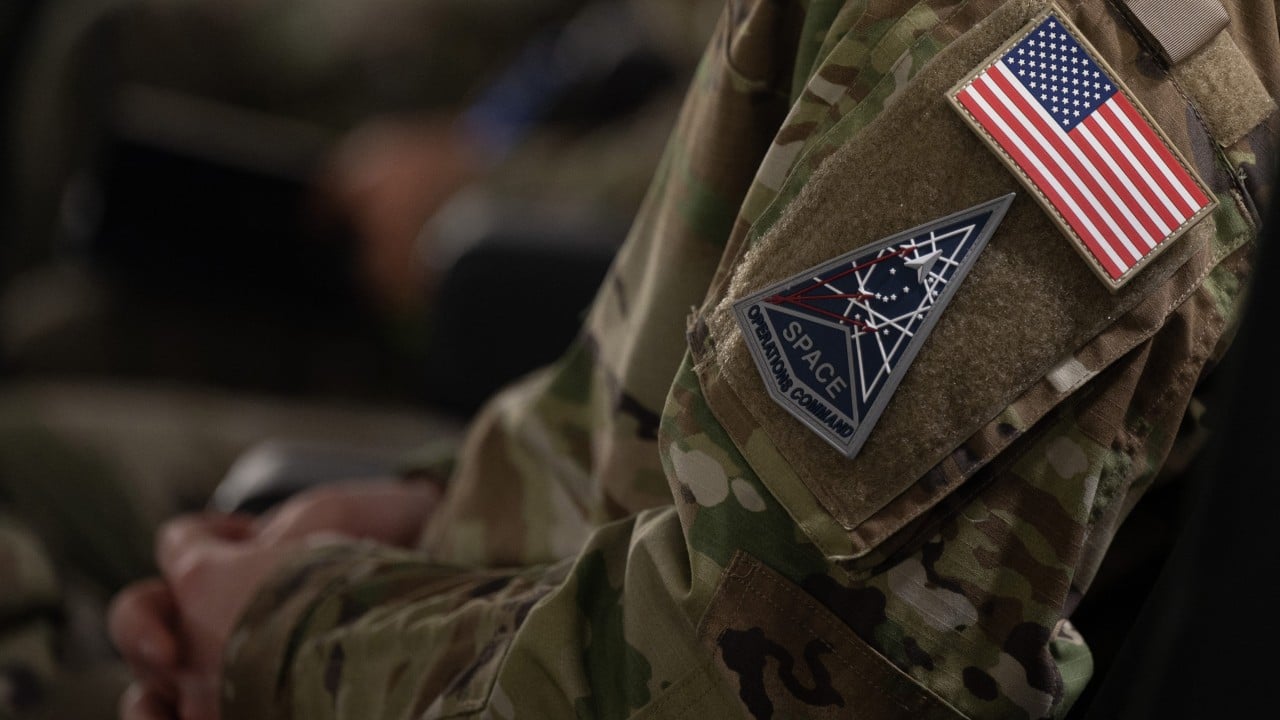
The announcement from the Pentagon wasn't just a memo about logistics or a strategic pivot. It was a seismic shift disguised as a budget line item. Twelve thousand troops are being moved. Roughly 5,600 of them are repositioning within Europe, while 6,400 are heading back across the Atlantic. For the townspeople of Vilseck and Stuttgart, this isn't a "force posture adjustment." It is a divorce. Additional analysis by The Washington Post explores related views on this issue.
The Weight of a Suitcase
Consider a soldier we’ll call Sergeant Miller. He has spent three years in Germany. His kids go to school with German children. His wife has a favorite spot for Streuselkuchen in the village square. To the bean counters in the White House, Miller is a unit of capacity. To the local economy, he is a neighbor, a consumer, and a symbol of a seventy-year-old promise.
When 5,000 troops leave a specific region, they don't just take their uniforms. They take their families. They take the car leases, the grocery bills, and the sense of security that comes with having the world’s most powerful military parked in your backyard.
The move is being framed by the administration as a response to Germany’s failure to meet NATO spending targets—the famous 2% of GDP. It is a collection call. But the currency being used isn't just Euros; it’s influence.
Moving the U.S. European Command (EUCOM) from Stuttgart to Belgium is more than a change of address. It is a physical manifestation of a growing rift. We are watching the architectural dismantling of the post-WWII era. One brick at a time.
The Sound of Silence in the Mess Hall
Geopolitics is often discussed in the abstract, but its reality is visceral.
The strategy behind this withdrawal is built on the idea of "strategic flexibility." The Pentagon argues that by rotating troops rather than basing them permanently, the military remains lean and unpredictable. They say it strengthens NATO by spreading the presence into the Baltics and Poland, closer to the Russian border.
Logic suggests that if you want to deter an aggressor, you stand as close to the fence as possible.
But there is a psychological cost to transience. A rotating force is a visiting force. A permanent base is a community. When you remove the permanence, you remove the skin in the game. The German government, caught between its own pacifist domestic politics and its reliance on American steel, now finds itself in a cold room with the heater turned off.
The numbers are staggering when you look at the local level. In some German communities, the U.S. military is the primary employer. Not because they hire every local, but because the entire ecosystem—the mechanics, the landlords, the pub owners—orbits the base. When the sun of that system moves to another galaxy, the planets freeze.
The Invisible Stakes
Why does this matter to someone sitting in a high-rise in Chicago or a farmhouse in Iowa?
It matters because the world is a series of interconnected tripwires. For seventy years, the presence of American troops in Germany has acted as a stabilizer for global markets. It ensured that the European project—the largest trading partner of the United States—remained a safe place for capital and innovation.
Peace is expensive. But it is significantly cheaper than the alternative.
By pulling back, the U.S. is signaling a shift toward isolationism that hasn't been seen in nearly a century. This isn't just about Germany "paying its fair share." It’s about whether the United States still wants to be the architect of global order or just another tenant in the building.
If the U.S. leaves, who fills the vacuum? Power is never left on the table for long. Someone always reaches for it. Whether it’s a resurgent Russia looking toward its "near abroad" or a domestic European movement toward a unified EU army, the landscape is shifting under our feet.
A Departure Without a Farewell
The logistics of moving 12,000 people are a nightmare of maritime shipping, flight manifests, and broken leases.
But the logistics of moving a relationship are even harder.
The German officials were blindsided. There were no high-level consultations, no joint press conferences to soften the blow. It was a directive delivered via the digital equivalent of a "Dear John" letter. This lack of communication creates a friction that doesn't show up on a military map but felt deeply in the halls of diplomacy.
Trust is a resource. Like oil or gold, it can be depleted.
As the transport planes begin to idle on the runways of Ramstein, the locals watch from the fences. They aren't thinking about NATO spending percentages or the nuances of the North Atlantic Treaty. They are thinking about the empty chairs at the local cafes. They are thinking about the silence that follows the roar of a departing brigade.
The barracks won't just be empty of people. They will be empty of a specific kind of certainty.
We are entering an era of the "un-mooring." The anchors that held the Western world together are being lifted, one by one. The water is getting choppier. And as the last of the 5,000 soldiers boards the plane, the world feels just a little bit larger, and a lot more lonely.
The lights in the windows of the officer's housing go dark. The keys are turned in the locks. Outside, the German wind whistles through the chain-link, carrying the scent of pine and the cold, hard reality that the shield has been lowered.
The departure isn't a parade. It’s a vanishing act.