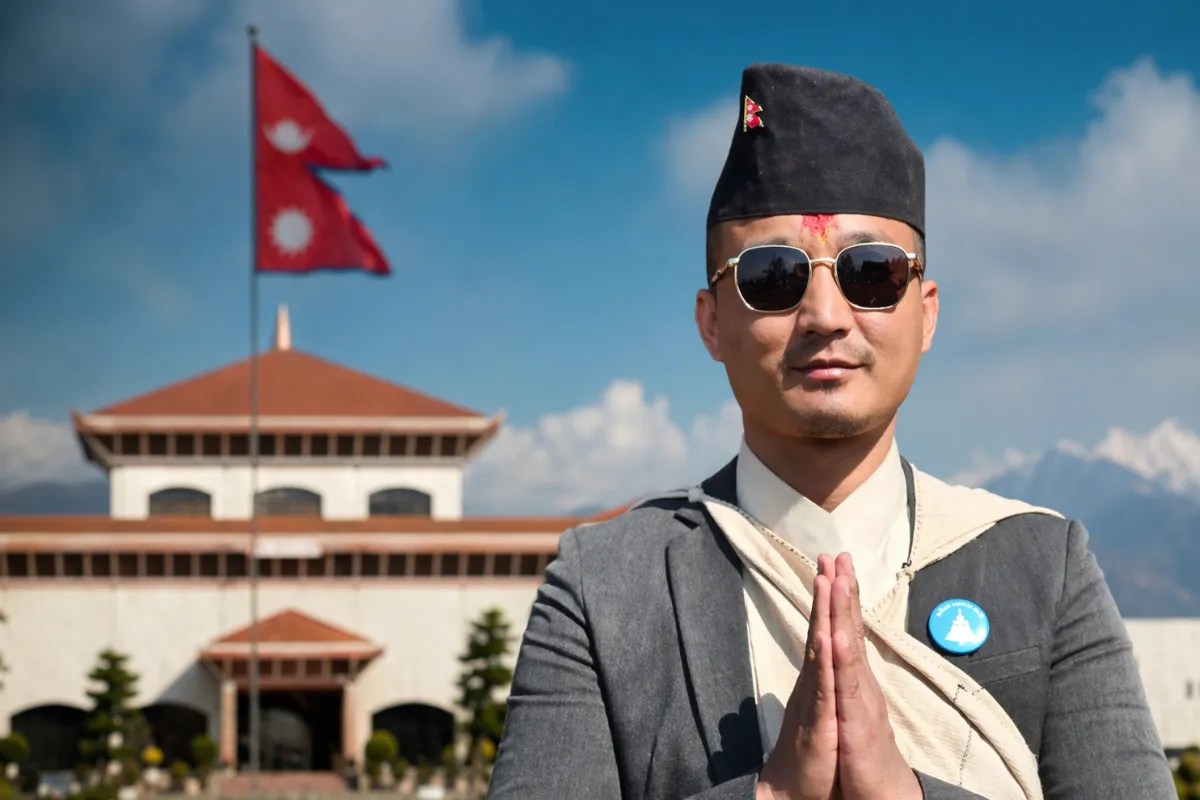
The ink on a resignation letter is usually cold, but in the high-altitude humidity of Kathmandu, it carries the weight of a thousand whispers. When Nepal’s Home Minister stepped away from his desk this week, citing "moral responsibility," he didn't just vacate an office. He punctured a hole in the heavy curtain of Himalayan politics.
Politics in Nepal is often described as a game of musical chairs played on a cliffside. Leaders rise and fall with the seasonal rhythm of the monsoons. Yet, this particular exit feels different. It isn’t the result of a forced ousting or a backroom betrayal—at least not on paper. It is an act of voluntary retreat. In a region where power is usually clutched until the fingers turn white, the act of letting go is a loud, jarring note in a silent room. In similar news, read about: Jordan Bardella and the Far Right Challenge to Spanish Migration Policy.
The Weight of the Signature
Think of the Home Ministry not as a collection of files and security briefings, but as the nervous system of the nation. It controls the police, the borders, and the very sense of safety a citizen feels when walking through the narrow alleys of Asan at dusk. When the person at the helm says, "I can no longer lead," the ripple effect goes far beyond the halls of Singha Durbar.
The facts are straightforward: an incident occurred, a shadow of doubt was cast, and the Minister chose the exit ramp. But the human reality is far more complex. Imagine the moment the pen touched the paper. It is a moment of profound isolation. Behind that signature lies the pressure of a party, the expectations of a constituency, and the sudden, sharp realization that some stains cannot be scrubbed away while staying in power. The Guardian has provided coverage on this important issue in extensive detail.
Nepal has spent decades trying to find its footing as a young republic. The transition from monarchy to democracy was bloody, chaotic, and hopeful. For the average person selling tea in a roadside stall, "moral responsibility" is an abstract term. They care about the price of petrol and the safety of their children. But when a high-ranking official resigns on ethical grounds, it sends a signal to that tea seller that the system might, just might, be capable of self-correction.
The Invisible Stakes of Accountability
We often view political shifts through the lens of power dynamics—who is up, who is down, and who is waiting in the wings. This is a mistake. The real story is about the erosion and rebuilding of trust.
Trust is a fragile currency in Kathmandu. It has been traded, devalued, and inflated for years. When a leader resigns to "preserve the integrity" of an investigation or an office, they are attempting to stop the bleeding. They are making a bet that the office is more important than the person occupying it.
Consider a hypothetical citizen named Ramesh. Ramesh moved to the city from the hills, hoping that the new government would mean a life where merit mattered more than connections. Every time a scandal breaks without a consequence, Ramesh’s hope thins. It becomes a transparency that eventually vanishes. When a Minister resigns, it offers Ramesh a momentary pause. It suggests that there is still a floor beneath the political basement.
The "moral responsibility" cited here is a heavy cloak to wear. It implies that even if one did not pull the trigger or sign the illicit check, the failure happened on their watch. It is an admission of fallibility that is rare in the modern world.
A History Written in Resignations
To understand why this matters, we have to look at the ghosts of Nepal’s past. This is a country that has seen its royal family wiped out in a single night and its constitution rewritten in the heat of protest. Stability is the one thing that has always remained just out of reach.
Every resignation in the Home Ministry acts as a stress test for the country's institutions. Can the police function without a political shadow? Can the bureaucracy continue to breathe while the lungs of the ministry are being swapped?
The skeptics, of course, will say this is theater. They will argue that a resignation is just a way to avoid a more painful firing, or a tactic to return stronger in the next cycle. And they might be right. But even as theater, the performance of accountability is necessary. It sets a standard. It creates a precedent that future leaders will be measured against. If this Minister resigned for this reason, why didn't the last one? Why won't the next one?
The Echo in the Streets
The news didn't arrive with a bang. It filtered through smartphones and radio broadcasts, competing with the noise of motorbikes and temple bells. In the tea shops, the conversation shifted. People stopped talking about the "what" and started talking about the "why."
There is a specific kind of tension that grips a city when a major cabinet post goes empty. It is a feeling of being untethered. The Home Minister is the face of the state's authority. Without that face, the state becomes a collection of buildings and uniforms.
The departure was not just about a single person. It was about the friction between the old way of doing business—where scandals were buried under layers of bureaucracy—and a newer, more demanding public consciousness. The Nepali public is no longer content to watch the mountain from afar; they want to know what is happening in the base camp.
The Price of the Promised Conscience
Giving up power is expensive. It costs influence, it costs protection, and it costs the future. When a politician walks away, they are effectively declaring themselves a private citizen again, vulnerable to the very laws they once oversaw.
This resignation is a reminder that the heart of a nation isn't found in its GDP or its military strength. It’s found in the quiet moments of transition. It’s found in the decision to step down when the weight of the office becomes heavier than the desire to hold it.
The empty chair in the Home Ministry is currently a symbol of a system in flux. It represents a vacuum, yes, but also a possibility. It is a space where a new kind of leadership could sit—one that understands that authority is a loan from the people, not a gift from a party.
As the sun sets over the valley, the lights in the ministry buildings flicker on. The work goes on. Files are moved. Orders are given. But the air in the corridors is thinner now. The departure of a leader on the grounds of "morality" leaves a cold draft. It forces everyone else in the building to pull their coats a little tighter and wonder if they, too, are prepared to pay the price of their conscience.
The mountains don't care about the rise and fall of ministers. They have seen empires crumble and republics born. But for the people living in their shadow, the integrity of a single man or woman can be the difference between a country that is merely surviving and one that is beginning to find its soul.
The chair is empty. The letter is signed. The rest is history yet to be written.