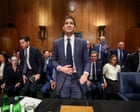
The United States Senate is poised to confirm Kevin Warsh as the next chair of the Federal Reserve this week, marking a scorched-earth transition that effectively ends the era of central bank autonomy as we knew it. While the headline suggests a standard change in leadership, the reality is a fundamental restructuring of how the world's most powerful economic engine operates. Warsh is not just moving into the Eccles Building; he is bringing a mandate from the White House to dismantle the institutional walls that have protected monetary policy from political whims since the 1970s.
Warsh replaces Jerome Powell, whose final months were defined by a bruising legal and political battle with the administration. The strategy was clear: replace a chair who prioritized data with one who prioritizes a specific economic doctrine. By confirming Warsh, the Senate is signaling its consent for a Fed that functions as an extension of executive branch policy rather than a neutral arbiter of inflation and employment. You might also find this related coverage useful: Ukraine Is Not Selling Drones It Is Selling Survival Beta Tests.
The Price of Admission
The path to this confirmation was paved with significant concessions. In his 2026 testimony, Warsh faced intense questioning regarding his sudden shift from a long-time inflation hawk to an advocate for aggressive rate cuts. His metamorphosis is the price of his nomination. For years, Warsh was the man who warned that the Fed’s post-2008 stimulus was a "dangerous game" that would eventually debase the dollar. Now, he argues that a massive productivity boom—driven by artificial intelligence—provides the "necessary cover" to slash rates despite sticky inflation in the service sector.
This "AI exception" is the cornerstone of the Warsh doctrine. He contends that because AI will theoretically lower the cost of production across the board, the Fed can afford to keep liquidity high without triggering a 1970s-style price spiral. It is a massive gamble. If the productivity gains don't materialize at the speed he predicts, the resulting inflation could become structural and impossible to dislodge without a severe recession. As extensively documented in latest reports by Harvard Business Review, the implications are significant.
Dismantling the Balance Sheet
Beyond interest rates, the most radical changes will occur in the Fed’s plumbing. Warsh has spent a decade criticizing the size of the Fed’s balance sheet, which remains bloated from years of quantitative easing. He plans to shrink it faster and more aggressively than any of his predecessors.
While shrinking the balance sheet is theoretically sound for long-term stability, doing so while simultaneously lowering interest rates is an untested maneuver. Usually, these two levers move in the same direction to either tighten or loosen the economy. Warsh is attempting to "right-size" the institution’s footprint while "juicing" the economy with cheap debt. This creates a volatile environment for commercial banks that have relied on the Fed's "ample reserves" framework for the last decade.
The Puppet or the Architect
The most persistent criticism from the Senate floor is that Warsh is a "sock puppet" for the presidency. This characterization is a bit too simple. Warsh is an ambitious intellectual who has long believed the Fed is "broken" and "over-extended." He isn't just following orders; he is seizing an opportunity to implement a reformist agenda that he has been drafting in op-eds for fifteen years.
However, his refusal to answer basic questions during his confirmation hearings—such as acknowledging the legitimacy of previous election results—suggests a political alignment that goes beyond mere economic theory. The risk isn't that he will be told what to do every Tuesday morning; it is that he has already agreed to a specific outcome in exchange for the chair.
The Market's Silent Panic
Wall Street is currently pricing in a 99% certainty of his confirmation, and while the markets initially rallied on the prospect of lower rates, the bond market is showing signs of deep anxiety. Term premiums on long-dated Treasury notes are rising. Investors are starting to demand a "political risk premium" for holding US debt, fearing that a politicized Fed will eventually choose to inflate away the national debt rather than protect the value of the dollar.
The Institutional Fallout
The internal culture of the Federal Reserve is also at a breaking point. Jerome Powell’s decision to remain on the Board of Governors as a regular governor—a move intended to protect the staff from political purges—has created two centers of power. We are looking at a "Shadow Fed" within the institution.
- The Warsh Contingent: Focused on rapid rate cuts and balance sheet reduction.
- The Institutionalists: Led by the remaining governors who view Warsh’s AI productivity theory as a "fantasy-based" policy.
This internal friction will lead to more leaks and public dissent than we have seen in fifty years. The era of the "unanimous" FOMC statement is over.
The Global Domino Effect
Central banks around the world, from the ECB to the Bank of Japan, have historically looked to the Fed for a signal of stability. With the Fed now explicitly aligned with a "Nationalist Economic" agenda, other nations will likely follow suit, abandoning their own versions of independence to protect their currencies and trade balances. This is how a global currency war begins.
Warsh’s confirmation this week is the final seal on a new economic order. The transition from a data-dependent Fed to a doctrine-dependent Fed is complete. We are no longer managing an economy based on what the numbers say today, but on what a specific political vision needs the numbers to be tomorrow. The bill for this shift will not arrive this quarter, or even this year. But when it does, the Federal Reserve may find that it has sacrificed the one thing it cannot print: credibility.