For eight decades, the international order rested on a single, unspoken certainty. Germany and Japan, the industrial engines of Europe and Asia, would remain military ghosts. They would build cars, refine chemicals, and master semiconductors, but they would never again wield the sword. That era is over. Driven by the erosion of American security guarantees and the aggressive expansionism of neighbors, Berlin and Tokyo are dismantling their pacifist identities with a speed that would have been unthinkable five years ago.
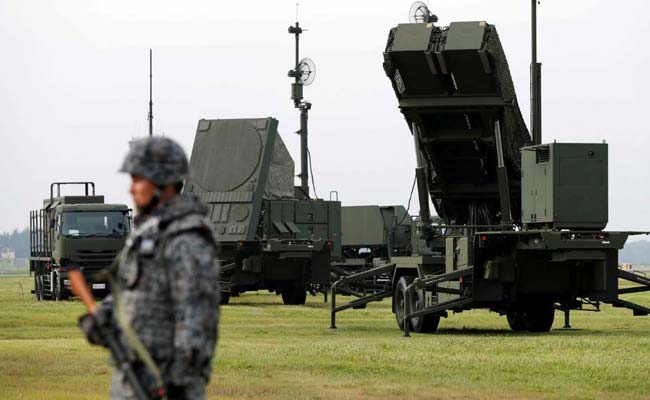
This isn't a minor policy shift. It is a fundamental rewiring of global power. Germany has committed to a €100 billion defense fund and the goal of making its military the "backbone" of European defense. Japan, meanwhile, is doubling its defense spending to 2% of GDP and acquiring "counterstrike" capabilities that can reach deep into Chinese or North Korean territory. They aren't just buying weapons. They are building the infrastructure for a world where the United States can no longer be the sole guarantor of safety.
The Death of the Peace Dividend
The comfortable insulation of the 1990s and 2000s allowed both nations to underinvest in their own protection. Germany relied on Russian gas for its industry and the American nuclear umbrella for its borders. Japan relied on a pacifist constitution—penned by American occupiers—to avoid the messy complexities of regional power dynamics.
The invasion of Ukraine shattered the German illusion. It proved that economic interconnectedness is not a shield against a determined aggressor. In Tokyo, the realization was equally stark. Seeing a permanent member of the UN Security Council attempt to erase a neighbor’s sovereignty forced a rethink of the "Taiwan contingency." If the rules-based order could fail in Europe, it could certainly fail in the Pacific.
Japan’s shift is particularly visceral. For years, the Japanese Maritime Self-Defense Force was a navy in all but name, restricted by Article 9 of the constitution. Today, they are converting "helicopter destroyers" into full-fledged aircraft carriers capable of launching F-35B stealth fighters. They are moving from a defensive crouch to a proactive stance. This is not about nostalgia for the Imperial past. It is about the cold, hard math of survival in a neighborhood dominated by a rapidly modernizing People’s Liberation Army.
Industrial Rebirth and the New Arms Race
The economic implications of this rearmament are staggering. We are witnessing the birth of a new military-industrial complex in two of the world’s most efficient manufacturing economies. When Germany buys F-35s or builds new tank production lines, it isn't just a government expenditure. It is an infusion of capital into a defense sector that has been starved for decades.
Companies like Rheinmetall and Mitsubishi Heavy Industries are no longer niche players. They are becoming central pillars of national strategy. Germany’s Zeitenwende—the "turning point"—demands a level of readiness that the Bundeswehr hasn't seen since the height of the Cold War. Currently, German ammunition stocks are reportedly so low they would last only two days in a high-intensity conflict. Fixing that requires more than money. It requires a total overhaul of the German bureaucratic machine, which has become notoriously sclerotic in its procurement processes.
Japan’s Technology Edge
Japan is taking a different route by focusing on high-end asymmetric tech. They are investing heavily in hypersonic glide vehicles and autonomous underwater drones. Tokyo understands it cannot match China ship-for-ship or soldier-for-soldier. Instead, it is betting on technological superiority.
The integration of civilian tech into military hardware is where Japan excels. The same precision engineering used in their robotics and automotive sectors is now being channeled into missile guidance and satellite surveillance. By 2027, Japan will have the third-largest defense budget in the world. This spending surge is a massive signal to the markets that the Japanese "lost decades" of stagnation might be countered by a state-led industrial surge in the defense sector.
The American Withdrawal Symptom
Why now? The answer lies in Washington as much as it does in Berlin or Tokyo. For the last decade, American foreign policy has been characterized by a "pivot to Asia" that was often more rhetorical than real, followed by an "America First" isolationism that shook the foundations of NATO and the U.S.-Japan Security Treaty.
Both nations realized they were vulnerable to the whims of the American electoral cycle. A future U.S. administration might decide that defending the Suwalki Gap or the Senkaku Islands isn't worth the cost. By building their own "robust" military capabilities, Germany and Japan are essentially buying insurance. They are making themselves indispensable partners so that the U.S. remains engaged, while simultaneously preparing for the day it might not be.
This is a precarious balance. If Germany becomes too dominant militarily, it unnerves its European neighbors, particularly Poland and the Baltic states, who have historical reasons to be wary of a militarized Berlin. However, the threat from the East is now so great that these historical fears are being pushed aside. Poland is arming itself even faster than Germany, creating a new center of gravity for European security in the East.
The Nuclear Question
There is a ghost in the room that no one wants to talk about, but investigative reality demands it. As the American nuclear umbrella appears more frayed, whispers of "strategic autonomy" are growing louder.
In Japan, the "three non-nuclear principles" (not possessing, not producing, and not permitting the introduction of nuclear weapons) remain official policy. But the technical hurdles to Japan developing a deterrent are virtually non-existent. They have the plutonium, the rocket technology, and the engineering prowess. In Germany, the debate is more focused on "nuclear sharing"—the arrangement where German planes carry American bombs. If the U.S. were to withdraw those weapons, Germany would face an existential crisis. Would it rely on the French force de frappe, or would it seek its own path?
The mere fact that these questions are being asked in serious policy circles shows how far the needle has moved. The taboo is not just cracked. It is shattered.
The Friction of Rearmament
It isn't all smooth sailing. Germany faces a recruitment crisis. Generations of Germans have been raised with a deep-seated skepticism of the military. The Bundeswehr is often mocked for its broken equipment and lack of basic supplies. Overcoming this cultural pacifism is a generational task. It requires more than a speech in the Bundestag. It requires a shift in the national psyche.
Japan faces a similar hurdle with its aging population. Who will man the new ships and fly the new jets? With a shrinking workforce, the Japanese military must rely more on automation and AI than any other force on earth. Their rearmament is a race against their own demographics.
The New Supply Chain Reality
The military buildup is also forcing a decoupling from Chinese and Russian supply chains. Germany is painfully weaning itself off Russian energy, while Japan is leading the "China Plus One" strategy to move manufacturing out of the mainland. This shift is expensive. It adds layers of cost to every tank, every missile, and every chip.
| Country | 2021 Defense Budget | 2027 Projected Budget | Primary Focus |
|---|---|---|---|
| Germany | €53 Billion | €80+ Billion | Land Forces, NATO Integration |
| Japan | $48 Billion | $300 Billion (5-year total) | Maritime/Air Superiority, Missiles |
The Brink of a New Era
We are not entering a new Cold War. This is something more complex and multi-polar. In the previous century, the world was divided into two clear camps. Today, we have a fragmented landscape where mid-sized powers are forced to become heavyweights to survive.
The rearming of Germany and Japan is the final piece of the post-Cold War puzzle falling into place. It signals the end of the "End of History." The world is returning to its natural state: a place where hard power is the only currency that truly matters in the final accounting.
Berlin and Tokyo have spent eighty years proving they can win at peace. Now, they are being forced to prove they can prepare for war. The factories are spinning up. The budgets are signed. The ships are launching. The ghosts are gone, and in their place stand two nations that have realized that in the twenty-first century, pacifism is a luxury they can no longer afford.
The world they are entering is one of calculated risks and narrow margins. There is no turning back to the quiet decades of the late twentieth century. The industrial giants of the Axis have returned to the arena, not as conquerors, but as the new, reluctant guardians of an order that is rapidly slipping away.