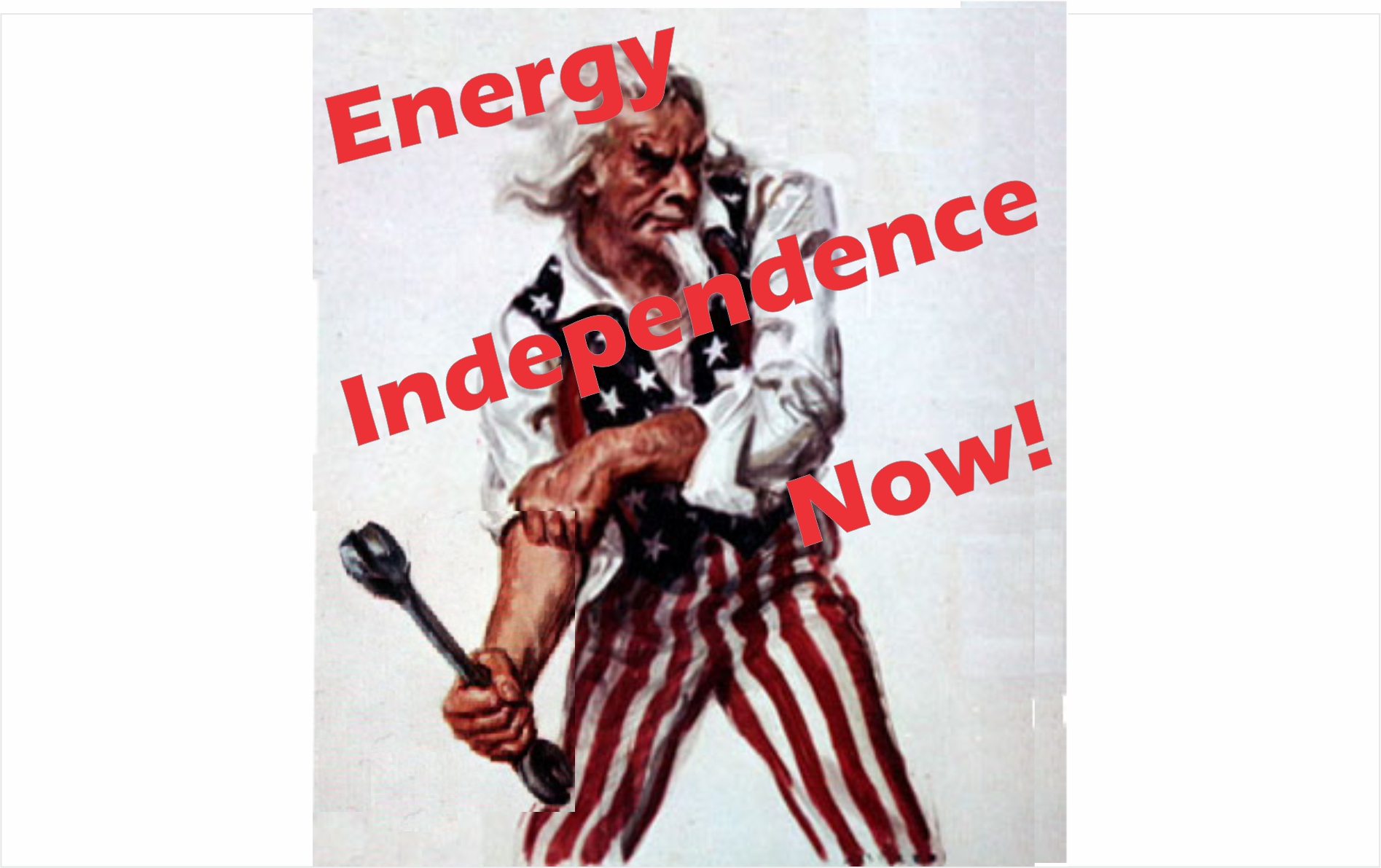
Energy independence is a ghost. It is a statistical hallucination that politicians use to tuck voters in at night. The prevailing "lazy consensus" suggests that because the United States is a net exporter of petroleum, a regional war involving Iran would be a golden ticket for American shale. The logic is simple, seductive, and entirely wrong: war chokes global supply, prices skyrocket, and Texas drillers laugh all the way to the bank.
That isn't how the plumbing of global finance works. I have watched analysts fall for this trap for a decade. They look at a spreadsheet showing the U.S. producing roughly 13 million barrels per day and assume we are insulated from the chaos of the Strait of Hormuz. We aren't. We are more exposed than ever.
The Global Price Floor Is a Trap
The core mistake is the belief that producing your own oil makes you immune to the price of someone else's. Oil is a fungible global commodity. If the Strait of Hormuz—the artery for 20% of the world’s liquid energy—is constricted, the price of West Texas Intermediate (WTI) doesn't stay local. It hitches a ride on the back of Brent Crude and goes vertical.
Domestic production does not equate to domestic price control. If gasoline hits $6.00 a gallon in London because of a regional conflict involving Iran, it will hit $5.50 in Chicago. The U.S. oil companies are public entities. They do not sell oil to American citizens at a discount out of a sense of patriotism. They sell to the highest bidder on the global market.
The "benefit" of higher prices for the oil industry is a poisoned chalice. While the upstream sector (the drillers) sees a temporary revenue spike, the downstream sector (refining and chemicals) gets gutted. Input costs for everything from plastics to fertilizers explode. This isn't a "win" for the economy; it is a massive, regressive tax on every single American consumer and manufacturer.
The Refined Product Reality Check
Here is the technical nuance the "oil crisis" headlines ignore: the U.S. doesn't even refine most of the oil it produces.
American shale yields "light, sweet" crude. Most U.S. refineries, particularly the massive complexes on the Gulf Coast, were built decades ago to process "heavy, sour" crude from places like Venezuela, Mexico, and the Middle East.
- Export: We export our light crude because we can't process all of it.
- Import: We import heavy crude to keep our refineries running efficiently.
If a war in the Middle East cuts off heavy crude supplies, our refineries don't just "switch" to shale overnight. It requires massive capital expenditure and years of retooling. A conflict involving Iran doesn't just raise prices; it creates a structural mismatch in the global refining system that could leave the U.S. with a surplus of oil it can't use and a shortage of the diesel and jet fuel it actually needs.
Shale’s Fatal Flaw: The Wall Street Pivot
The old "shale boom" playbook is dead. In 2014 or 2018, a price spike would have triggered a "drill, baby, drill" frenzy. Not anymore.
Investors have spent the last five years demanding capital discipline. They are tired of seeing their money burned in the Permian Basin to chase volume. Today, when oil prices jump, U.S. producers don't rush out to hire more rigs. They use the cash to pay down debt and issue dividends.
Imagine a scenario where oil hits $150 per barrel. In the old world, production would surge. In the current world, production creeps up while the industry sits on its hands to satisfy BlackRock and Vanguard. This means the U.S. cannot "fill the gap" left by a Middle Eastern crisis. We lack the spare capacity. Only Saudi Arabia has meaningful spare capacity, and in a war scenario involving Iran, that capacity is the primary target.
The Inflationary Death Spiral
The "benefit" argument ignores the Federal Reserve. A war-driven oil spike is the ultimate "supply-side shock." It drives up the cost of shipping, farming, and manufacturing simultaneously.
When energy costs spike, the Fed has one tool: interest rates. They will hammer the economy into a recession to kill the inflation caused by that $150 barrel. For the U.S., the "benefit" of a few extra billion in oil exports is completely wiped out by a broader economic contraction, a housing market freeze, and a decimated consumer base.
I’ve seen this movie. The industry celebrates the $100 barrel for three months before realizing they’ve killed the customer.
The Logistics of Vulnerability
The U.S. Strategic Petroleum Reserve (SPR) is at its lowest level since the 1980s. We used that ammunition to fight the price hikes of 2022. If a genuine war breaks out tomorrow, the buffer is gone. We are entering a period of maximum volatility with a minimum safety net.
People often ask: "Doesn't a higher price accelerate the transition to renewables?"
Perhaps. But the "unconventional advice" here is to realize that the transition itself is energy-intensive. You can't build wind turbines or mine lithium for batteries without cheap diesel and massive amounts of heat—heat currently provided by the very fossil fuels that would be soaring in price. A war-induced oil crisis doesn't speed up the green future; it bankrupts the companies trying to build it.
The Geopolitical Backfire
Finally, consider the dollar. Oil is priced in USD. When oil prices skyrocket, the demand for dollars increases as nations struggle to pay their energy bills. This sounds like a win for U.S. hegemony, but it’s actually a catalyst for "de-dollarization."
When the cost of staying in the dollar-based energy system becomes ruinous, nations like China, India, and Brazil find ways to trade outside of it. A war that spikes oil prices doesn't solidify U.S. power; it forces the rest of the world to build a financial bypass.
The U.S. is not a fortress. It is a node in a hyper-connected, fragile network. When the Middle East bleeds, the American economy catches a fever. Anyone telling you that war is a "net positive" for the U.S. energy sector is selling you a 1970s perspective in a 2026 world.
Stop looking at production charts. Start looking at the debt markets, the refining constraints, and the empty SPR. We aren't the winners of the next oil crisis. We are just the most expensive house in a neighborhood that’s on fire.



