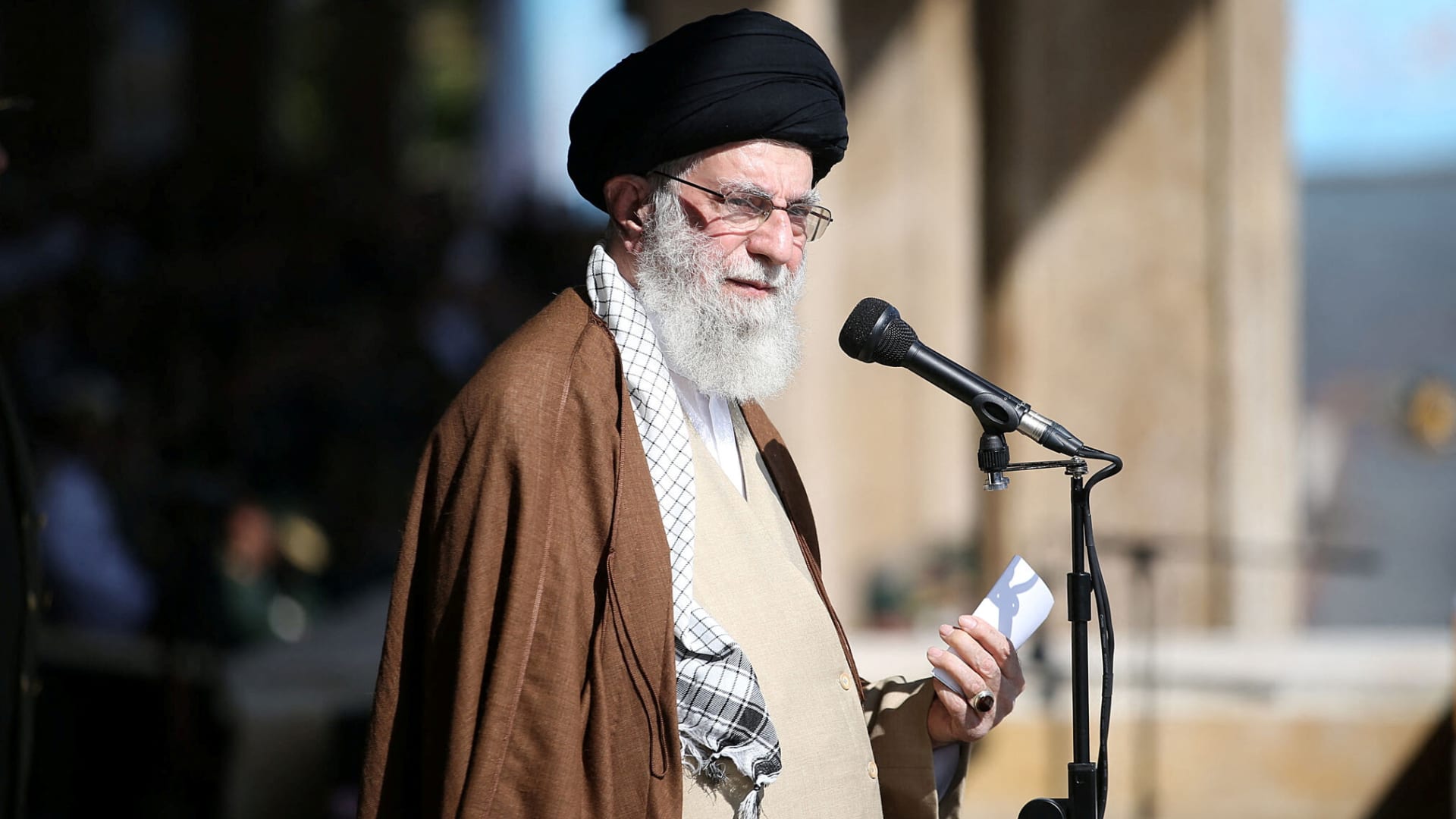
Mansoureh Khojasteh Bagherzadeh, the wife of Iran’s assassinated Supreme Leader Ali Khamenei, died on March 2, 2026, after succumbing to injuries sustained during a massive US-Israeli decapitation strike. Her death, confirmed by state media outlets including Tasnim and Press TV, follows the February 28 targeted killing of her husband and several high-ranking family members. While her passing is being framed as "martyrdom" by the remnants of the clerical establishment, it represents the final, physical dissolution of the inner sanctum that governed Iran for nearly four decades.
The strikes on the Khamenei compound did more than just eliminate the political head of the Islamic Republic. They systematically dismantled the bloodline that many believed was being groomed for a dynastic succession. Reports indicate that the February 28 attack also claimed the lives of Khamenei’s daughter, son-in-law, and granddaughter. Zahra Haddad Adel, the wife of Khamenei’s influential son Mojtaba, was also among the dead. The death of Mansoureh Khojasteh Bagherzadeh, 79, marks the end of a forty-eight-hour window in which the most powerful family in the Middle East was essentially erased from the board.
The Ghost of the Islamic Republic
For over fifty years, Mansoureh Khojasteh Bagherzadeh was the silent shadow behind the most powerful man in Iran. Unlike the more public-facing wives of regional leaders, she inhabited a world of strict domesticity and religious seclusion. Born in Mashhad to a wealthy merchant family, her marriage to Ali Khamenei in 1964 was a union of religious prestige and business capital.
She remained a ghost in the machinery of state. While the wives of previous revolutionary figures occasionally dabbled in charitable or social causes, Bagherzadeh was almost never seen. This was not an accident; it was a curated expression of the regime’s traditionalist values. Her invisibility served as a metaphor for the Islamic Republic’s idealized woman—devoted to the home, shielded from the "corruption" of public life, and entirely subservient to the patriarchal structure of the Velayat-e Faqih.
Her death in a hospital bed two days after the strike highlights the brutal reality of the 2026 conflict. The "decapitation" was literal. By targeting the residence and the immediate family, the coalition forces signaled that the traditional rules of engagement—which often spared family members of heads of state—had been discarded in favor of total regime collapse.
The Succession Crisis in the Rubble
The timing of these deaths creates a vacuum that the Islamic Revolutionary Guard Corps (IRGC) is currently struggling to fill. Before the strikes, the path to succession was increasingly tilting toward Mojtaba Khamenei, the Supreme Leader’s second son. The death of Mojtaba’s wife and the injuries or deaths of other key family members have shattered the "hereditary" narrative that had been quietly gaining steam within the clerical assemblies.
With the matriarch and patriarch both gone, the IRGC has reportedly moved to appoint an interim leader, Alireza, though details remain scarce and the legitimacy of such an appointment is being challenged on the streets. This isn't just a leadership transition; it is a total breakdown of the symbolic legitimacy that the Khamenei name provided.
The Iranian public’s reaction has been a jarring mix of state-mandated mourning and spontaneous, clandestine celebration. While state television broadcasts images of "martyrdom" and calls for a 40-day mourning period, social media is flooded with videos of citizens in Tehran and Mashhad lighting fireworks. For the younger generation, the death of the Khamenei family is not a tragedy but the removal of a lid that has been held down by force since the 1989 succession.
A Legacy of Silence and Steel
The legacy Mansoureh Khojasteh Bagherzadeh leaves behind is one of complicity through silence. While she never signed a decree or ordered a crackdown, she was the bedrock of the domestic life that sustained Ali Khamenei through the 2009 Green Movement, the 2022 "Woman, Life, Freedom" protests, and the final, violent escalations of 2026.
Her brother, Hassan Khojasteh Bagherzadeh, used his position at the state broadcaster IRIB to cement the regime’s propaganda machine. The family was not just a group of relatives; they were a corporate entity that owned the narrative of the Iranian state. The destruction of this entity in a single weekend is a geopolitical shockwave that will redefine the Middle East for the next century.
The technical execution of the strikes suggests a level of intelligence penetration that is unprecedented. To hit the Supreme Leader’s private quarters with such precision that the matriarch survived for two days while the patriarch was killed instantly speaks to a frighteningly accurate mapping of the regime's most private spaces.
The question is no longer about who will lead Iran, but whether the institution of the Supreme Leader can survive the total evaporation of the family that defined it. The transition from a clerical autocracy to whatever comes next is now being written in the chaos of the Tehran streets.
Watch the IRGC's next moves closely, as they are likely to bypass the clerical assembly entirely to secure their own survival.