The current wave of synchronized explosions across Iran, Israel, and the Gulf Cooperation Council (GCC) states represents a failure of traditional deterrence and the activation of a pre-planned regional escalation ladder. While initial media reports focus on the chaotic nature of simultaneous detonations, the underlying logic suggests a "Total Theater Engagement." This is not a series of isolated incidents but a systemic stress test of integrated air defense systems (IADS) and the logistical limits of rapid-response kinetic warfare.
The Triad of Kinetic Friction
The geography of these explosions—stretching from the Iranian interior to the urban centers of Saudi Arabia and the UAE—reveals three distinct operational layers.
- Deep Penetration Strikes (Iran): Targets within Iran, specifically reported near Isfahan and Natanz, indicate an attempt to degrade command-and-control (C2) and nuclear infrastructure. The precision required for these strikes suggests the use of low-observable (stealth) platforms or long-range hypersonic cruise missiles capable of bypassing legacy S-300 and S-400 batteries.
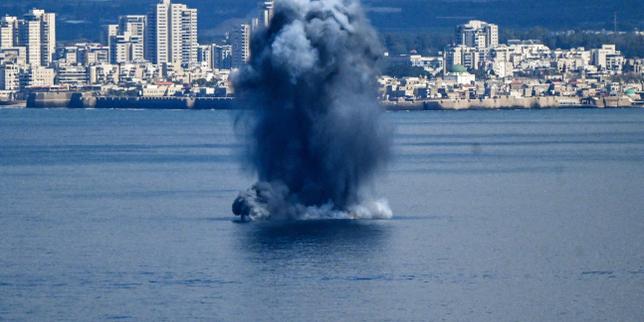
- Saturation Intercepts (Israel and the Levant): Explosions heard in Israel are likely the result of high-altitude interceptions by the Arrow-3 and David’s Sling systems. When an incoming ballistic missile is neutralized in the exo-atmosphere or upper atmosphere, the resulting shockwave and debris field can be heard across multiple municipalities, creating the illusion of successful ground impacts.
- Proxy and Asymmetric Responses (The GCC Corridor): Reports from Riyadh, Abu Dhabi, and Kuwait City point to a secondary front. This involves the activation of regional proxies utilizing "one-way" attack drones (loitering munitions) and short-range ballistic missiles (SRBMs) intended to punish US-aligned partners and disrupt global energy markets.
The Architecture of Integrated Air Defense
Understanding why explosions are occurring in Saudi Arabia and Bahrain simultaneously with those in Iran requires a look at the "Regional Security Architecture." Under various data-sharing agreements, radar signatures picked up by a TPY-2 radar in one country are instantly transmitted to interceptor batteries in another.
The "Cost-Per-Interceptor" (CPI) becomes the primary constraint here. While a ballistic missile may cost roughly $100,000 to $500,000 to produce in a decentralized Iranian facility, an SM-3 or a PAC-3 MSE interceptor used by Saudi Arabia or the US Navy costs between $3 million and $10 million. The strategic intent of the current barrage is likely to force an "Interceptor Depletion Event." If the GCC and Israel exhaust their magazines against low-cost decoys or older-generation Scuds, the second wave of precision-guided munitions faces a significantly weakened defense perimeter.
Signal vs. Noise in the Information Vacuum
The lack of immediate official confirmation from Tehran or Jerusalem is a deliberate tactical choice known as "Strategic Ambiguity." By not acknowledging the extent of the damage, the target nation denies the aggressor a "Battle Damage Assessment" (BDA). This forces the attacker to either waste more munitions on potentially destroyed targets or hesitate, fearing the first strike failed.
The explosions heard in Bahrain and Qatar are particularly significant due to the presence of the US 5th Fleet and Al Udeid Air Base. In these sectors, the "Noise" often stems from:
- Sonic Booms: Scrambled F-35 or Rafale jets breaking the sound barrier to intercept incoming threats.
- Point Defense Systems: Phalanx CIWS (Close-In Weapon Systems) creating a high-decibel "curtain of lead" against low-flying drones.
- Electronic Warfare (EW): High-energy bursts intended to fry the GPS guidance of incoming missiles, which can sometimes result in secondary explosions of the projectile’s fuel cells mid-air.
The Energy Bottleneck and Market Calibration
The immediate reaction in Brent Crude pricing reflects the "Strait of Hormuz Risk Premium." However, the data-driven analyst must look past the headline price. The real risk lies in the "Repair Cycle" of desalination plants and oil processing facilities in the GCC.
Unlike military bases, which are hardened, civilian infrastructure in Kuwait and the UAE is "Soft." A single successful strike on a stabilizer tower or a water distillation unit creates a cascading economic failure. The explosions heard in these regions suggest that the "Rules of Engagement" have shifted from purely military-to-military (counter-force) to military-to-economy (counter-value).
Structural Limitations of the Current Conflict
Three bottlenecks prevent this from escalating into a continuous, month-long campaign:
- Logistical Resupply: Neither side has the "Deep Magazine" required for a high-intensity missile war lasting more than 14 to 21 days. The production lead time for high-end interceptors is measured in years, not weeks.
- Cyber-Kinetic Synchronicity: Any physical strike is likely accompanied by a cyber-attack on the power grid. If the explosions are not followed by widespread blackouts, it suggests the defensive cyber-posture of the targeted nations held, limiting the "Force Multiplier" effect of the kinetic strike.
- The Nuclear Threshold: As strikes move closer to Iranian hardening sites, the "Use it or Lose it" dilemma intensifies. This creates a ceiling on how much damage the attacking force can inflict before risking a desperate, non-conventional response.
Mapping the Escalation Curve
We are currently at "Step 7" of a standard 10-step escalation ladder.
- Step 8 would involve the targeting of high-ranking political leadership (Decapitation Strikes).
- Step 9 would be the total blockade of the Strait of Hormuz and the Bab el-Mandeb.
- Step 10 is full-scale ground mobilization, which remains unlikely given the geographic barriers and the current over-extension of regional land forces.
The "Live" nature of this event means the data is evolving. However, the mechanical reality is that for every explosion heard, there is a data point indicating whether the IADS functioned as intended or whether a "leaker" hit its target. The sheer volume of simultaneous reports suggests a saturation tactic designed to paralyze the decision-making cycle of regional commanders.
Strategic asset allocation should now prioritize the protection of "Fixed Economic Nodes" over "Mobile Military Assets." The military assets can reposition; the desalination plants and refineries cannot. The focus for regional players must shift from "Point Defense" to "Area Denial," utilizing long-range electronic jamming to disrupt the mid-course guidance phase of the incoming salvos. Failure to secure the GCC airspace immediately will result in a flight of capital and a long-term increase in the regional "Risk Coefficient," regardless of the military outcome in Iran.