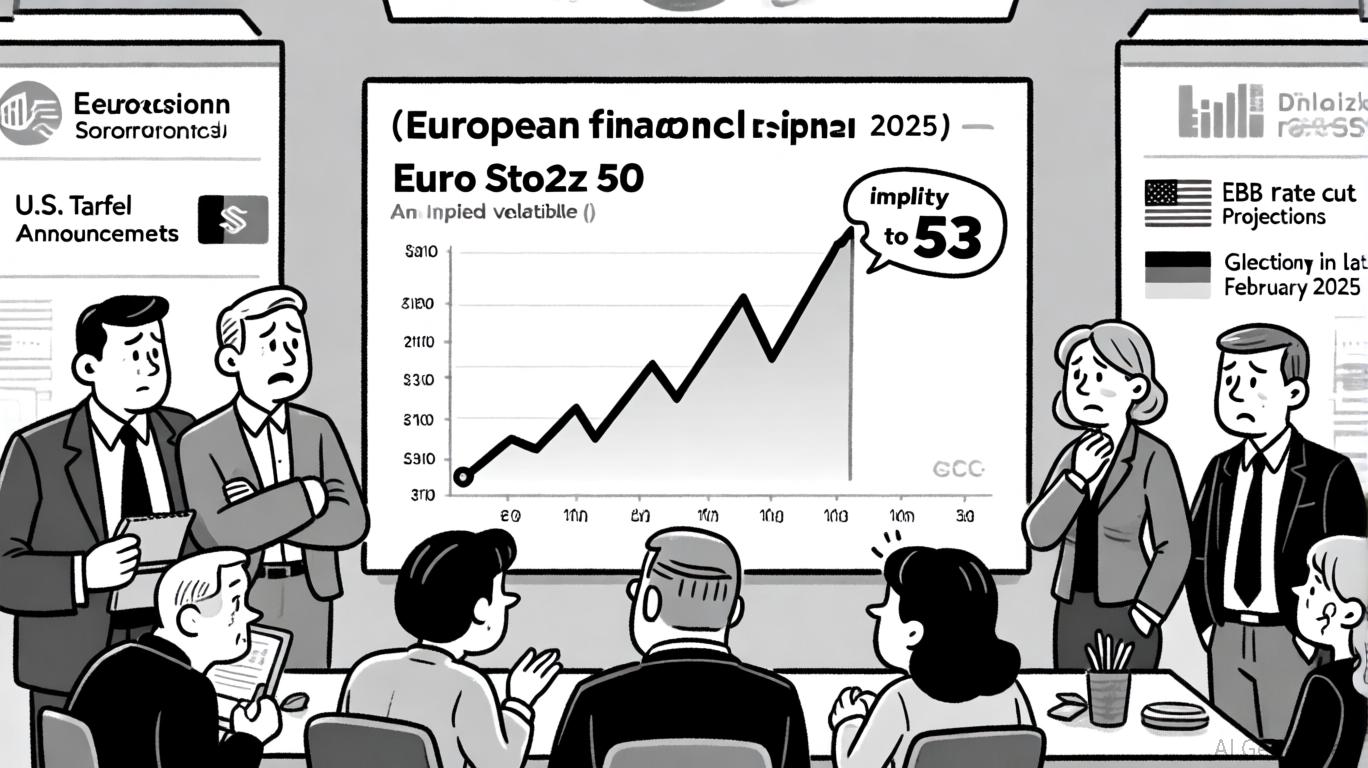
European equity markets are currently undergoing a structural repricing driven by the intersection of energy dependency, fiscal divergence, and the "Trump Put" in Middle Eastern diplomacy. When the Euro Stoxx 50 or the DAX retreats in response to a G7 ministerial meeting or a shift in Iranian sanctions policy, it is not merely a "sell-off." It is an algorithmic adjustment to the discount rate applied to European cash flows. The fundamental problem for European investors is the inability to decouple regional growth from exogenous geopolitical shocks, specifically those originating in the Persian Gulf and the White House.
The Mechanics of the Geopolitical Risk Premium
European markets operate with a higher sensitivity to geopolitical friction than their American counterparts due to a lack of energy sovereignty. While the United States has transitioned into a net exporter of hydrocarbons, Europe remains a price-taker on the global margin. Consequently, any escalation in the Middle East—or even the rhetorical threat of such escalation—manifests as an immediate tax on European industrial production.
The current market contraction follows a logic of three distinct risk vectors:
- The Supply Chain Bottleneck: Conflict in the Middle East threatens the Suez Canal and the Strait of Hormuz. For European manufacturers, this creates a dual-pronged crisis: increased input costs for raw materials and delayed delivery of finished goods to Asian markets.
- The Inflationary Feedback Loop: European central banking policy is trapped. If energy prices spike due to Iranian instability, the European Central Bank (ECB) faces "stagflationary" pressure—rising prices coupled with stagnant growth. This limits their ability to cut interest rates to stimulate a flagging economy.
- The Security Subsidy Deficit: As U.S. foreign policy fluctuates between isolationism and interventionism, European nations face the reality of "defense spending catch-up." Every Euro redirected toward military readiness is a Euro removed from capital investment or consumer spending.
Analyzing the Trump Hiatus on Iran Sanctions
The decision by the U.S. administration to extend the hiatus on Iran strikes provides a temporary reprieve from physical kinetic warfare but creates a "Volatility Trap." Markets hate uncertainty more than they hate bad news. By maintaining a status quo of "deferred escalation," the administration forces analysts to price in a permanent, high-probability tail risk.
This creates a Cost of Carry for Risk. Investors holding European stocks must demand a higher expected return to compensate for the possibility of a sudden, overnight policy shift that could disrupt global oil markets. When the G7 ministers meet against this backdrop, they are not just discussing diplomacy; they are attempting to coordinate a fiscal floor to prevent a total exit of capital from the Eurozone.
The G7 Coordination Problem
The G7 meetings often fail to produce market rallies because they highlight the fragmentation of Western economic policy. There are three primary points of friction that prevent a unified European recovery:
- Divergent Inflation Targets: The U.S. is focused on preventing an overheated labor market, while Germany is grappling with an industrial recession. A single G7 communique cannot bridge the gap between these two economic realities.
- Energy Transition Asynchrony: Europe's aggressive shift toward renewables has left its heavy industry vulnerable during the transition phase. This makes European stocks more volatile than U.S. tech-heavy indices, which are less reliant on gas-intensive manufacturing.
- Regulatory Drag: The "Brussels Effect" ensures that European companies operate under a heavier compliance burden than their global peers. In times of geopolitical stress, this lack of agility becomes a measurable drag on equity valuations.
Quantifying the Correlation Between Crude and the DAX
The relationship between Brent Crude prices and the DAX index is often misunderstood as a simple inverse correlation. In reality, it is a non-linear relationship. Small increases in oil prices are often absorbed by corporate margins. However, once oil crosses a specific threshold—historically around $85 to $90 per barrel—the impact on European consumer confidence triggers a sharp, accelerated sell-off.
Current market behavior suggests that traders are front-running this threshold. They are selling European equities not because oil is at an unmanageable price today, but because the probability of it reaching that price has increased following the G7’s inability to provide a definitive security framework.
The Liquidity Drain to the Dollar
As European stocks fall, capital does not simply vanish; it migrates. This is the Flight to Quality mechanism. When geopolitical tensions rise, the U.S. Dollar serves as the global "safe haven." This creates a secondary pressure on European equities:
- Currency Depreciation: As investors sell Euros to buy Dollars, the Euro weakens. While a weaker Euro can help exporters in the long run, the immediate effect is to increase the cost of imported energy and raw materials, further squeezing margins.
- Yield Competition: Higher U.S. Treasury yields, driven by a hawkish Fed and a strong Dollar, make the dividend yields of European blue-chip companies look less attractive. Why risk capital in a German automaker sensitive to Iranian oil shocks when you can get a guaranteed 4-5% return on U.S. debt?
Structural Vulnerability in the Automotive and Chemical Sectors
The current downturn is concentrated in the two sectors that define the European economic engine: Automotive and Chemicals. These sectors are the most "geopolitically sensitive."
In the chemical sector, gas is both an energy source and a raw material. An Iranian strike or a tightening of sanctions directly increases the cost of "feedstock." For automotive companies, the risk is centered on the global consumer. If the Middle East destabilizes, global sentiment drops, and luxury purchases—like high-end European vehicles—are the first to be cut from household budgets.
The Failure of Traditional Hedging
Many institutional investors have found that traditional hedges are failing in this environment. Diversification within Europe provides no protection because the risk is systemic. Buying gold is a common response, but gold does not produce cash flow. The only effective hedge has been a direct rotation into U.S. energy and defense stocks, further hollow-out the European equity base.
The "Trump Hiatus" acts as a psychological ceiling for the market. Investors are unwilling to commit new capital to European "value" stocks while the threat of a sudden, unilateral U.S. policy shift remains. This creates a Liquidity Trap, where stocks stay cheap not because they lack value, but because the cost of "waiting for the recovery" is too high.
Strategic Capital Allocation for Volatile Environments
To navigate this period, the focus must shift from "growth" to "resilience." The companies that will outperform are those with:
- Low Energy Intensity: Software, high-end services, and decentralized finance.
- Geographic Revenue Diversification: European companies that earn more than 60% of their revenue in North America or Southeast Asia, effectively decoupling their cash flows from the Eurozone's energy crisis.
- Strong Balance Sheets: Firms with low debt-to-equity ratios that can survive a prolonged period of high interest rates and slow growth.
The G7's current trajectory suggests a preference for managed decline over radical intervention. Until a credible, long-term security and energy framework is established for the Eurozone, European equities will continue to trade at a "geopolitical discount."
The strategic move for the current quarter is a defensive pivot into "Short-Duration Equities"—companies with high immediate cash flows and low long-term capital expenditure requirements. Avoid "Deep Value" plays in European manufacturing until the Brent Crude volatility index (OVX) stabilizes below the 25-point mark. The risk of a "bull trap" in the DAX remains high as long as the Iranian diplomatic situation remains in this state of suspended animation. Investors should prioritize liquidity and maintain a high cash-to-equity ratio to capitalize on the forced liquidations likely to occur if the "Trump Hiatus" ends abruptly.