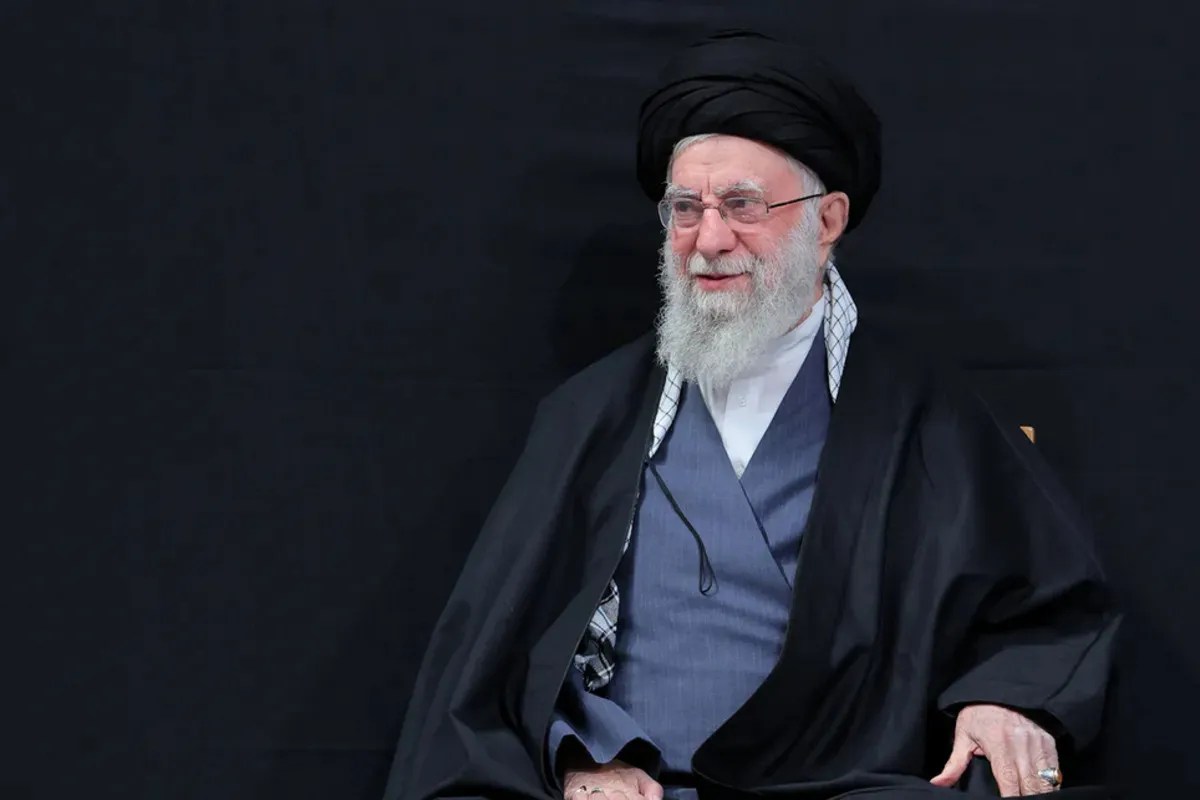
The global obsession with the "omnipotent" Iranian Supreme Leader is a masterpiece of geopolitical fiction. Watch the major media outlets today, and they will tell you the same tired story: a singular, god-like autocrat sits atop a pyramid, pulling strings, issuing decrees, and holding the fate of eighty million people in his hands.
It is a convenient narrative. It is clean. It is binary. And it is completely detached from the operational reality of the Islamic Republic.
Stop treating Tehran like a centralized Pahlavi-era monarchy or a Western-style presidential office. The moment you define the Supreme Leader as a CEO or a dictator, you fail to understand why the regime hasn't collapsed under the weight of decades of internal crisis and external pressure. The system isn't a top-down hierarchy; it’s a distributed, compartmentalized, and fiercely redundant power ecosystem.
The Myth of the Unilateral Ruler
The standard critique focuses on Article 110 of the Iranian Constitution, which grants the Leader authority over the armed forces, judicial appointments, and key oversight bodies. Analysts point to these articles as evidence of a "totalitarian" command structure.
This is structural illiteracy.
Imagine a scenario where a CEO has total legal authority to fire anyone, but doing so would trigger a revolt from the company’s internal factions, potentially burning the office to the ground. That power is technically absolute, but operationally constrained.
The Supreme Leader acts as a balancing node—a final arbiter whose primary function is not to dictate, but to manage elite deadlock. When you see the Iranian state move slowly, it isn’t because of clerical incompetence. It is because the system is designed to prevent unilateral action. Competing power centers—the IRGC, the clerical establishment in Qom, the security apparatus, and the various bonyads (economic foundations)—are intentionally designed to overlap and check one another. The Supreme Leader sits in the center of this tension, absorbing shocks to ensure the system doesn’t shatter.
The IRGC and the Fire at Discretion Doctrine
If the Supreme Leader is the "center" of the system, why is the Islamic Revolutionary Guard Corps (IRGC) so frequently viewed as a mere extension of his will?
This ignores the command philosophy of Ātash be Ekhtiār—literally, "fire at your own discretion."
This is not just a slogan; it is the operational backbone of the regime. The IRGC is designed to function autonomously when higher authority is ambiguous, silent, or under duress. This decentralized command structure is the ultimate anti-decapitation defense. In the wake of major military strikes or the sudden removal of leadership, this doctrine ensures that the military doesn't wait for a central order to continue the fight. They are hard-coded to survive, adapt, and retaliate.
The Western assumption that removing one individual—even the most senior—induces total systemic collapse is a relic of the Shah's era. It assumes Iran is a single-node failure point. It is not. It is a mesh network.
The Selection Process Isn't A Theocratic Ritual
The Assembly of Experts is described in almost every mainstream article as a body that "discovers" the divine choice for leadership. This is a fairy tale.
The selection process is an elite consensus-building exercise, often negotiated in smoke-filled rooms, driven by the immediate requirements of the security state. The transition currently underway—following the death of the previous leader—highlights this perfectly. When the system is under existential pressure, it does not prioritize theological purity; it prioritizes institutional survival.
The "experts" aren't just reading scriptures to find the most pious candidate. They are assessing who among the elite can hold the competing factions together without triggering an internal coup. If a candidate happens to be a relative of a former leader, it isn't necessarily because of some monarchical desire for a dynasty; it is because that individual represents a pre-existing nexus of support that is already deeply integrated into the security and economic apparatus.
Why You're Asking the Wrong Questions
You aren't looking at a stable dictatorship; you are looking at a system optimized for constant, controlled crisis.
If you want to understand where Iran is heading, stop watching the rhetoric of the Supreme Leader’s office and start mapping the movement of capital within the bonyads and the shifting loyalties within the IRGC’s regional commanders. These are the indicators that actually dictate the state's trajectory.
The regime’s survival isn't rooted in the charisma of one man. It is rooted in a collective interest among the elite to prevent the fragmentation that would surely follow if the system were to open up. They know the risks. They have seen what happens when the "center" fails to hold—the 1979 revolution was the primary education for every player currently in the room.
The next phase of the Iranian state will not be defined by a single figure of absolute authority. You will likely see a move toward a more collective leadership model, where authority is further diluted across the security and military institutions. The title of "Supreme Leader" might remain, but the function has already fundamentally changed.
The machine is not its operator. If you think the machine stops when the operator is removed, you’ve never looked at the gears.
The real story isn't the replacement of the leader. It is the evolution of the apparatus that allows the state to continue functioning despite the loss of its most visible component. Stop betting on the collapse of a system you haven't bothered to take apart.