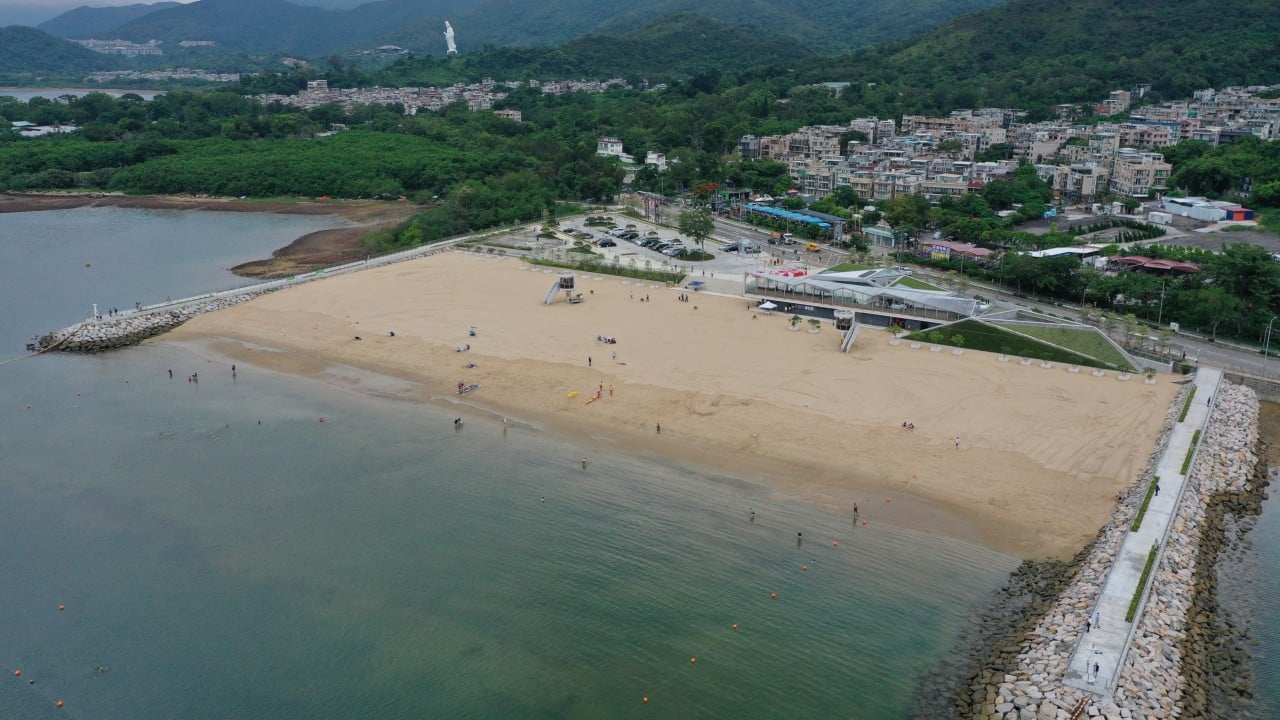
The headlines follow a predictable, somber script. An 84-year-old man enters the water at Lung Mei Beach for a morning swim. He is found unconscious. Resuscitation fails. The public offers a collective sigh of grief, and the news cycle moves on to the next tragedy.
Standard reporting treats these events as unavoidable accidents—statistical anomalies in an otherwise safe urban environment. They focus on the response times of emergency services or the presence of lifeguards. This perspective is not just lazy; it is dangerous. It masks a fundamental failure in how we perceive risk, public infrastructure, and the aging process in a city obsessed with the veneer of "managed safety."
We need to stop pretending that a red flag or a lifeguard tower creates a sanctuary. Lung Mei Beach, Hong Kong’s first man-made bathing beach in Tai Po, is a masterclass in artificial security that invites disaster by its very design.
The Synthetic Trap of Man-Made Environments
Lung Mei is not a natural coastline. It is a $200 million engineered project. When you build an artificial beach, you create a psychological "safe zone" that lures the vulnerable into a false sense of security. Natural beaches have shifting sands, unpredictable currents, and visible indicators of danger that keep the unseasoned swimmer wary.
Artificial beaches like Lung Mei offer a sanitized, pool-like aesthetic. This visual lie encourages the elderly—a demographic with declining physiological reserves—to overextend themselves. They assume the water is as controlled as the concrete promenade they walked on to get there.
I have spent years analyzing urban risk management. The trend is always the same: the more "engineered" a public space becomes, the less personal responsibility the user exercises. We have traded situational awareness for a government-issued shark net and a whistle.
The Myth of the "Morning Swim" Health Halo
Society views the "morning swimmer" with a certain reverence. It is seen as the pinnacle of geriatric health—a disciplined, life-extending ritual. We need to dismantle this romanticized image immediately.
For an 84-year-old, a solo swim is not just exercise; it is a high-stakes cardiovascular stress test. The human body does not handle thermal shocks or sustained physical exertion at 8:00 AM the same way at eighty as it does at thirty.
- Silent Pathologies: Many elderly deaths in the water are labeled as "drowning," but the water is often just the medium where a pre-existing cardiac event occurs.
- The Refusal to Adapt: There is a stubborn pride in the "I've done this for forty years" mindset. But the ocean—and even the artificial bay—doesn't care about your streak.
- Isolation as a Policy: We allow our seniors to perform high-risk activities alone under the guise of "independence."
If an 84-year-old were to attempt a solo marathon or a mountain climb, we would discuss the risks. Because it is a beach, we call it a "tragedy." It is time to call it a failure of risk assessment.
Why Lifeguards Are Not the Solution
The knee-jerk reaction to a drowning is to demand more lifeguards, longer hours, and more towers. This is a classic "security theater" response.
Lifeguards are trained to spot active drowning—the splashing, the "climbing the ladder" motion of a panicked swimmer. They are significantly less effective at spotting the silent, passive descent of a senior citizen whose heart has stopped or who has slipped into unconsciousness due to a stroke. By the time a body is spotted floating or submerged in a crowded or murky artificial bay, the window for neurological survival has usually slammed shut.
Expecting a 20-year-old lifeguard to be the fail-safe for the systemic health failures of an aging population is a displacement of responsibility. We are asking teenagers to be geriatric nurses in swimming trunks.
The Problem with Lung Mei’s Geography
Lung Mei was controversial from its inception due to water quality and ecological impact. But the safety issues are more structural.
- Stagnation: Artificial bays often lack the vigorous flushing of open water. This can lead to visibility issues. If you can't see the bottom, you can't see a person who has quietly sunk.
- The "Pool" Effect: Because the water is sheltered by groynes and breakwaters, swimmers venture further out than they would on an exposed coast like Shek O or Big Wave Bay. They get far from the shore, thinking they are in a protected pond, until a cramp or a chest pain proves otherwise.
A Brutal Truth About Age and Water
We live in a culture that refuses to acknowledge limits. We tell the elderly they can do anything. This is a lie.
Water is an unforgiving environment. It requires a level of physical autonomy that declines sharply after the seventh decade. The "status quo" is to let people choose their risks, which I support. But let’s be honest about what those risks are. An elderly man swimming alone at Lung Mei isn't just "taking a dip." He is engaging in a solo expedition into an environment that his body is no longer equipped to handle if even one thing goes wrong.
Stop Asking the Wrong Questions
The "People Also Ask" section of the internet will inevitably search for: Is Lung Mei Beach safe?
That is the wrong question. The beach is as safe as any body of water can be. The question should be: Why do we encourage high-risk demographics to utilize unsupervised or semi-supervised water without a buddy system?
We need to move away from the "government must protect me" mindset and toward a "competence-based" reality. If you are over 75, swimming alone should be treated with the same gravity as driving a car with failing eyesight. It isn't an "accident" when the inevitable happens; it is a predictable outcome of ignored biological reality.
The Strategy for Real Safety
If we actually wanted to prevent these deaths, rather than just grieving them, we would implement radical changes that the public would likely hate:
- Mandatory Buddy Systems: No one over a certain age—or under a certain age—swims alone. Period.
- Wearable Tech Requirements: Integrated waterproof heart rate monitors that trigger an alarm. If we can have "Find My iPhone," we can have "Find My Vitals" for swimmers in public gazetted beaches.
- End the Illusion: Post signs that don't just say "No Lifeguard on Duty," but explicitly state: "Your physical health is your own responsibility. The water does not care about your age or experience."
We won't do these things. We will keep the artificial sand, the white towers, and the red flags. We will keep pretending that the beach is a playground rather than a wilderness. And as a result, the morning swim will continue to be a lottery that some will eventually lose.
The death at Lung Mei wasn't a failure of the beach. It was a failure of the narrative that we can engineer our way out of human frailty.