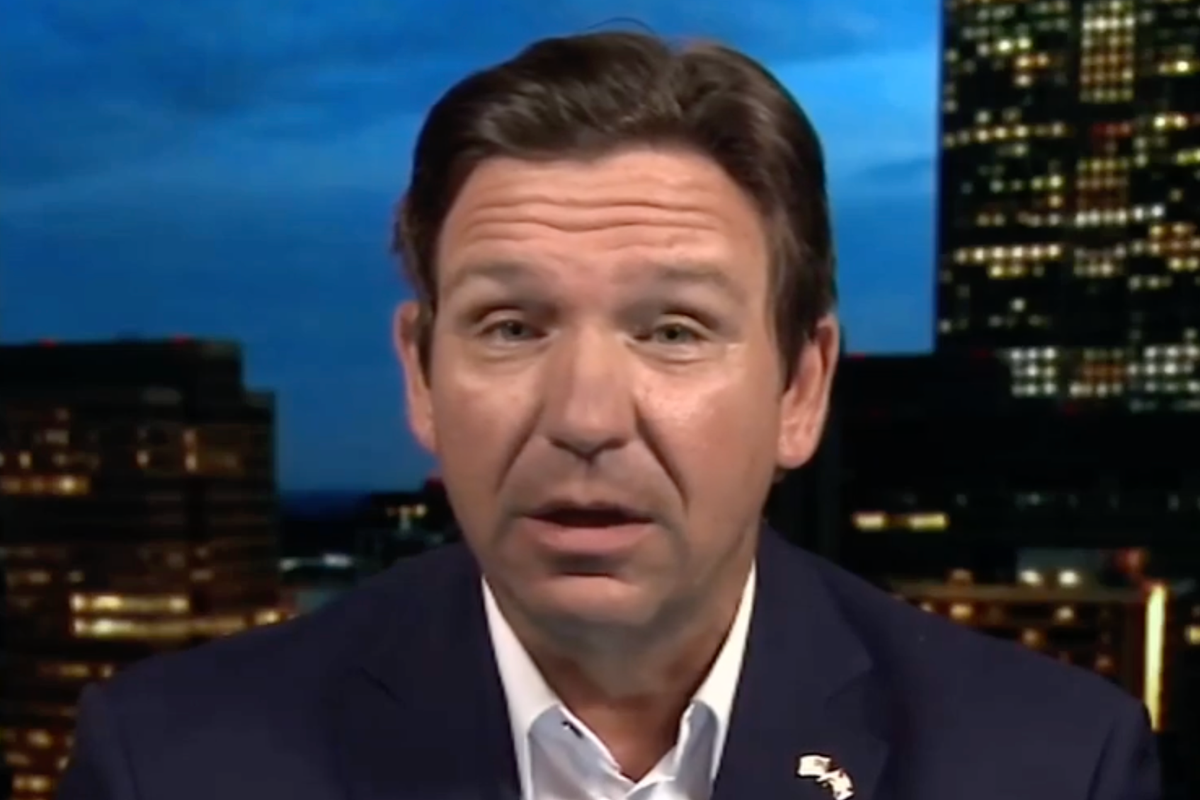
Florida remains one of the few states where first cousins can legally marry, a reality that recently put Governor Ron DeSantis in a defensive crouch during a high-profile exchange with Sean Hannity. While the state explicitly bans marriage between parents, children, siblings, and even aunts or uncles, first cousins are notably absent from the "prohibited" list under Florida Statute Section 741.21. This legislative gap has turned the Sunshine State into a destination for couples seeking to bypass stricter laws in the 25 states where such unions are entirely criminalized.
The Legislators Who Ran Out of Time
In early 2026, Republican State Representative Dean Black attempted to shutter this loophole once and for all. His proposal, House Bill 733, sought to reclassify first-cousin unions as incestuous, stripping them of legal recognition and prohibiting the issuance of marriage licenses to such couples. Black argued that in a state with over 22 million people, finding a partner outside of one’s immediate bloodline should not be a difficult task. Discover more on a related issue: this related article.
Despite the clear moral and biological arguments presented, the bill died in the state Senate in March 2026. The failure was not due to a sudden surge of support for cousin marriage, but rather the friction of legislative gridlock. Lawmakers simply ran out of time as the session expired, buried under debates regarding property taxes and the state budget. Because Florida does not currently view these unions as a violation of public policy, it also continues to recognize cousin marriages performed in other permissive states, like Colorado or California.
The Biology and the Bias
The opposition to cousin marriage often stems from concerns over genetic abnormalities. While the risk of birth defects in children of first cousins is higher than in the general population—roughly 4% to 7% compared to 2% to 3%—some analysts argue the legal bans in other states are rooted more in 19th-century social engineering than modern science. Further reporting by USA Today delves into related perspectives on this issue.
Historically, the push to ban these marriages in the U.S. began around the Civil War, with Kansas leading the charge in 1858. Interestingly, while many Americans associate the practice with rural or isolated communities, global data shows it is common in parts of the Middle East and North Africa, and it remains entirely legal throughout Europe.
A Fractured Legal Map
The United States is currently a patchwork of conflicting rules.
- Permissive States: Florida, Georgia, and New York allow these unions with no restrictions.
- Conditional States: Arizona and Wisconsin only allow it if at least one partner is over 65 or infertile.
- Prohibitive States: Texas and Ohio classify these unions as criminal incest.
This inconsistency creates a legal nightmare for couples who marry in Florida and then move to a state like Arizona, which often considers such out-of-state marriages "void" upon entry.
Governor DeSantis has recently signaled a desire to revisit the issue, aligning himself with advocates who believe the law should reflect modern social norms. However, until a standalone bill survives the gauntlet of the Florida legislature, the state will remain a sanctuary for a practice that much of the country has long since moved to outlaw.