The coffee in Quito is different when the air turns cold with political friction. It tastes of high-altitude grit and unspoken anxiety. On a Tuesday that felt like any other in the Andean capital, the silence from the Palacio de Carondelet was broken not by a speech, but by a countdown. Forty-eight hours. That is the time it takes to pack a life into a suitcase, to shred sensitive documents, and to realize that the ground beneath your feet is no longer yours to stand on.
Ecuador’s decision to expel the Cuban ambassador and the entire diplomatic mission was a surgical strike. It wasn't just a disagreement over trade or a minor protocol breach. This was a severing of a tether that had become too frayed to hold. When a government tells a foreign mission to leave within two days, they aren't asking for a transition. They are slamming a door.
Imagine a mid-level diplomat at the Cuban embassy. Let’s call him Mateo. He has spent three years navigating the steep, winding streets of Quito. His children go to school here. He has a favorite spot for llapingachos in the Mariscal district. Suddenly, his phone buzzes. The notification isn't a routine briefing. It is an eviction notice for an entire nation’s representation. By Thursday afternoon, the flag must be folded. The lease on the building is effectively void. The diplomatic plates on the cars become targets rather than shields.
The official reason often hides behind phrases like "interference in internal affairs" or "unacceptable activities." In the world of high-stakes geopolitics, these are the polite ways of saying "we caught you doing something we cannot ignore." Ecuador’s government reached a breaking point where the presence of the Cuban mission was viewed not as a bridge, but as a breach.
This tension didn't spring from a vacuum. It is the result of a slow-motion collision between two different visions of what Latin America should be. For years, the relationship between Quito and Havana fluctuated like a fever dream. There were seasons of intense cooperation and winters of deep suspicion. When the current administration decided that the Cuban presence was fueling domestic unrest or overstepping the bounds of sovereignty, the "persona non grata" status was the only card left to play.
It is a brutal mechanism. Declaring an ambassador persona non grata is the nuclear option of diplomacy. It is a formal statement that a person is no longer welcome on a country's soil, stripping away the usual courtesies and replacing them with a stopwatch.
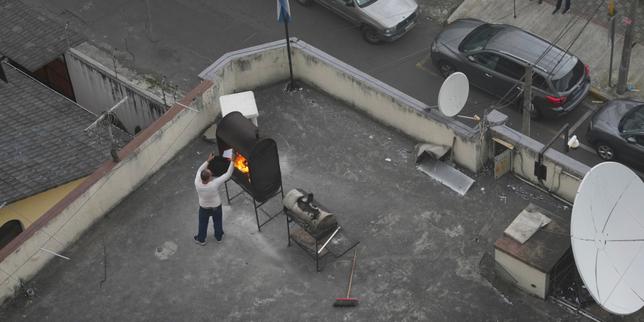
Consider the logistics of a forty-eight-hour exit. It is a frantic, unglamorous scramble. There are files that cannot be left behind, encrypted servers that must be wiped, and local staff who are suddenly out of a job, left to face the fallout alone. The human cost is often buried under the headlines about "state sovereignty" and "international law."
The streets around the embassy usually become a theater of the quiet. Police cordons appear. The neighbors watch from behind curtains, wondering if the people they’ve seen every morning for years were who they claimed to be. In Quito, where the mountains always seem to be leaning in, the atmosphere of surveillance becomes physical. You feel it in the back of your neck.
Why forty-eight hours? Why not a week? Or a month?
The short window is a psychological tool. It is designed to prevent the departing mission from organizing a counter-narrative or scrubbing their tracks too thoroughly. It is a message to the world that the host country is in total control. It creates a sense of emergency that justifies the harshness of the move. If you give someone a month to leave, it’s a policy change. If you give them two days, it’s a purge.
History shows us that these breaks are rarely clean. When the Cuban mission leaves Quito, they leave behind ghosts. They leave behind unfinished business, disgruntled intelligence assets, and a vacuum that someone else will inevitably fill. The departure is a signal to other neighbors—Venezuela, Colombia, Peru—that the old alliances are shifting. The tectonic plates of South American politics are grinding against each other, and Ecuador has decided it would rather deal with the earthquake than stay in a house it no longer trusts.
The silence that follows a diplomatic expulsion is the loudest part. After the suitcases are latched and the black SUVs have sped toward Mariscal Sucre International Airport, the building stands empty. The plaque is removed. The neighborhood returns to its routine, but the air remains heavy.
We often think of international relations as a game of chess played by giants. We see the maps, the flags, and the signatures on treaties. We forget that it is actually a series of broken promises and frantic phone calls at 3:00 AM. It is the sound of a heavy door locking for the last time. It is the sight of a man like Mateo looking out of a plane window at the lights of a city that used to be his home, knowing he can never go back.
The countdown doesn't just end a mission. It ends a certainty. When the sun sets over the Pichincha volcano forty-eight hours after the decree, the city looks the same, but the map has changed forever.
The flag is gone. The door is locked. The conversation is over.
Would you like me to look into the specific historical events that led up to this diplomatic break to provide more context?