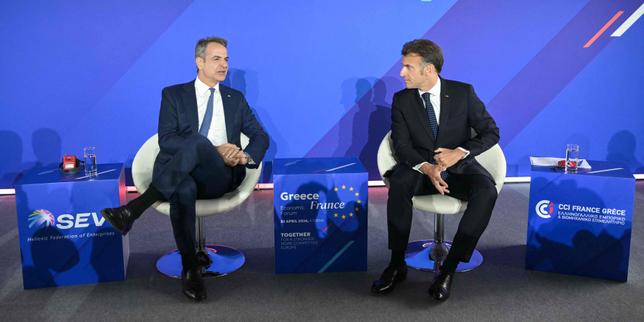
The convergence of French state-led industrial policy and the Greek economic recovery is not a product of diplomatic sentiment, but a calculated response to the structural shift in European energy and security supply chains. As the European Union transitions away from Northern dependencies, Greece has transformed from a fiscal liability into a geostrategic pivot point for logistics, decarbonization, and defense procurement. The presence of high-level executive delegations in Athens signals a pivot from crisis-management lending to capital-intensive equity positions in infrastructure that will define the Eastern Mediterranean for the next two decades.
The Tripartite Architecture of the Investment Thesis
The bilateral economic relationship currently rests on three distinct pillars of capital deployment. Each pillar addresses a specific failure in the previous European economic model while attempting to capture long-term rent in the Greek market.
- The Defense-Industrial Integration: Unlike standard procurement, current French defense exports to Greece—specifically the Belharra-class frigates and Rafale jets—function as a technological lock-in. These contracts necessitate long-term maintenance, repair, and overhaul (MRO) ecosystems within Greek territory, effectively integrating Hellenic Aerospace Industry (HAI) into the French supply chain.
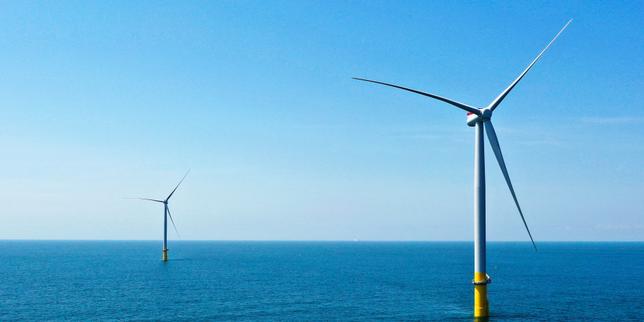
- The Energy Connectivity Corridor: Greece is positioning itself as the "Green Gateway" for Europe. French firms, led by entities like TotalEnergies and Engie, are targeting the Greek offshore wind potential and the Interconnector Greece-Bulgaria (IGB) infrastructure. The logic here is arbitrage: capturing low-cost renewable generation in the South to offset industrial energy deficits in the North.
- The Logistic and Infrastructure Revaluation: The privatization of Greek ports and regional airports has created a secondary market for French construction and management firms. VINCI and CMA CGM are not merely buying assets; they are securing nodes in a revised maritime route that bypasses traditional Northern Range ports in favor of shorter Suez-to-Europe transit times.
Decoding the Risk-Premium Compression
For the past decade, the "Greek Discount" was driven by high sovereign bond yields and a fragmented banking sector. The current strategic push by the French presidency aims to institutionalize the "Greece Premium." This transition is visible in the compression of the spread between Greek and German 10-year bonds, but the real metric for businesses is the Weighted Average Cost of Capital (WACC) for projects on Greek soil.
Investors must account for the Regulatory Velocity Variable. Greece has streamlined its licensing processes for Strategic Investments (Law 4864/2021), reducing the time from application to groundbreaking by roughly 60% compared to the 2010–2015 period. This reduction in "bureaucratic friction" acts as a hidden subsidy for French firms, allowing them to deploy capital faster than domestic or non-EU competitors who lack the same diplomatic air cover.
The Energy Transition as a Macro-Economic Catalyst
Greece’s National Energy and Climate Plan (NECP) requires approximately €165 billion in investment by 2030. French participation is concentrated in high-complexity sub-sectors where the barrier to entry is technical rather than purely financial.
- Pumped Hydro and Storage: As Greece nears 50% renewable penetration in its electricity mix, the marginal utility of new solar PV drops without storage. French expertise in hydroelectric systems (EDF) provides the balancing capacity required to stabilize the Hellenic Electricity Transmission System (IPTO).
- Offshore Wind Scoping: The Aegean Sea possesses some of the highest capacity factors for wind in the Mediterranean. However, the depth of the seabed requires floating wind technology. This creates a technical monopoly for French engineering firms that have pioneered floating platforms in the Atlantic, turning a geographical constraint into a French competitive advantage.
Strategic Friction and the Bottleneck of Local Absorption
While the macro-level alignment is clear, the micro-level execution faces a significant "Absorption Bottleneck." The Greek labor market, following a decade of "brain drain," lacks the mid-level technical management required to execute five concurrent multi-billion-euro infrastructure projects.
French firms entering the market are forced to adopt a Vertical Integration Strategy. Instead of outsourcing to local subcontractors, they are increasingly importing their own project management frameworks and establishing internal training academies. This creates a dual-speed economy within Greece: a high-productivity "Enclave Sector" driven by foreign capital, and a traditional "Domestic Sector" that remains capital-starved.
The sustainability of French investment depends on whether these two sectors can eventually merge. If the Enclave Sector remains isolated, it will trigger local inflationary pressures on wages and materials, eventually eroding the very cost-advantages that drew French firms to Athens in the first place.
The Geopolitical Insurance Policy
A critical, though often unspoken, component of this investment surge is the "Security-Investment Feedback Loop." By increasing the footprint of French corporate assets in Greek territory—ranging from shipyard stakes to data centers—France creates a de facto security guarantee that transcends EU treaties.
When a French firm owns 30% of a critical port or a significant portion of the energy grid, any regional instability becomes a direct threat to French national interest. This "Embedded Defense" model is highly attractive to the Greek state, which seeks to diversify its security dependencies. For the French strategist, this is an exercise in Strategic Autonomy. By anchoring Greece to the French industrial base, France secures a permanent Mediterranean outpost that balances against both non-EU regional powers and the economic dominance of Northern European neighbors.
Quantitative Targets and the Shift to Digitalization
Beyond heavy industry, the focus has shifted to the "Dematerialized Economy." French tech giants and the "French Tech" ecosystem are looking at Greece as a hub for regional R&D. The cost of a senior software engineer in Athens is roughly 40-50% lower than in Paris, while the time zone and legal framework remain identical.
The Greek "Digital Transformation Bible" (2020-2025) outlines over 400 projects aimed at digitizing the state. For French IT and cybersecurity firms (Thales, Atos), this represents a predictable pipeline of public procurement. The logic here is Platform Capture: by building the digital backbone of the Greek state, French firms ensure that future upgrades and integrations will inherently favor French-compliant standards.
The Structural Limitation of the Hellenic Market
Any analysis that ignores the constraints of the Greek market is incomplete. Greece remains a relatively small economy with a GDP of approximately €220 billion. The ceiling for internal consumption is low. Therefore, the most successful French investments are those that use Greece as a Re-export Hub.
- Logistics: Moving goods through Piraeus and Thessaloniki to the Balkans and Central Europe.
- Energy: Exporting hydrogen or green electricity via the Great Sea Interconnector to Cyprus and Israel, or northward to Italy.
- Defense: Using Greek shipyards as the primary repair hub for all French naval assets operating in the Levant.
Investment strategies that rely solely on the Greek domestic consumer will likely underperform. The alpha lies in the "Trans-Hellenic" flows—using Greece as the physical and digital conduit for broader EMEA trade.
The Strategic Recommendation for Market Entry
The window for "First-Mover" advantages in the Greek recovery is closing. To capitalize on the current alignment, French and international firms must move from a transactional mindset to a Structural Partnership Model. This involves three specific actions:
- Equity-over-Debt: Prioritize taking minority stakes in Greek mid-cap firms that are poised for consolidation. This provides local intelligence while benefiting from the macro-revaluation of the Greek economy.
- Labor Arbitrage Reinvestment: Instead of repatriating the savings from lower Greek labor costs, reinvest that capital into local R&D centers to secure the talent pool before US and Chinese firms drive up the clearing price for engineers.
- Regulatory Hedging: Engage directly with the Greek Ministry of Development’s "Fast Track" programs. The geopolitical alignment between Paris and Athens is currently at its zenith; using this "Diplomatic High" to clear long-term permits is the most effective way to de-risk projects against future political shifts.
The Greek-French axis is the first working model of a new European "Industrial Realism." It recognizes that in a fragmented global economy, security, energy, and capital must be bundled into a single, cohesive strategy. Firms that recognize this bundling will find that Greece is no longer a peripheral risk, but the new center of Mediterranean value creation.