Paris is currently walking a tightrope that's fraying at both ends. For months, the Quai d'Orsay has been working overtime to prevent Lebanon from sliding into a total regional conflagration. It’s not just about historical ties or the "Mandate" nostalgia that critics often bring up. It's about a very real, very dangerous security vacuum on Israel’s northern border that threatens to pull the entire Eastern Mediterranean into a void. If you think this is just another round of "thoughts and prayers" diplomacy, you haven't been watching the specific levers Emmanuel Macron is trying to pull.
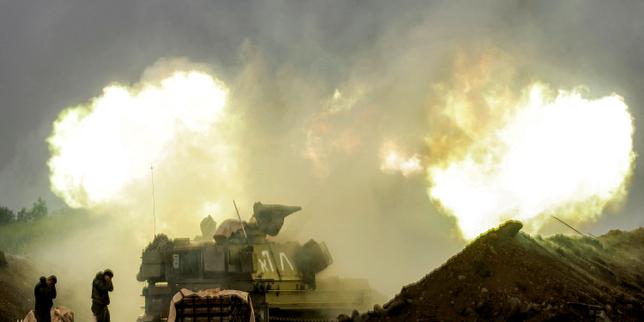
The French strategy isn't a simple call for a ceasefire. It’s a complex, multi-stage blueprint that relies on a specific interpretation of UN Security Council Resolution 1701. Essentially, France is trying to convince Israel that its security can be guaranteed through Lebanese state institutions rather than through a scorched-earth military campaign. It's a hard sell. When you look at the facts on the ground, the Israeli Defense Forces (IDF) are focused on degrading Hezbollah’s infrastructure. Meanwhile, Paris is arguing that only a reinforced Lebanese Armed Forces (LAF) can actually hold that territory in the long run.
The Push for a Buffer Zone Without the Bloodshed
The core of the French proposal involves a phased withdrawal of Hezbollah fighters to about 10 kilometers from the Blue Line. This isn't a new idea, but the French "non-paper"—a diplomatic term for an informal proposal—adds a layer of monitoring that wasn't there before. They aren't just asking Hezbollah to move; they’re trying to set up a joint mechanism between the UN peacekeeping force (UNIFIL) and the Lebanese Army to ensure the area stays demilitarized.
Israel remains skeptical. From their perspective, 1701 was never truly enforced since 2006. Why should they trust it now? I've seen this play out in diplomatic circles before. The Israelis want "freedom of action," which basically means the right to fly over or strike Lebanon whenever they perceive a threat. France is pushing back on this, arguing that violating Lebanese sovereignty only weakens the very state institutions that need to replace Hezbollah’s influence. It’s a classic Catch-22.
Why the Lebanese Army is the Only Real Solution
You can't talk about Lebanese stability without talking about the LAF. They’re the only institution in the country that still has a shred of cross-sectarian legitimacy. France knows this. That’s why Jean-Yves Le Drian and other French envoys spend so much time talking about "institutional support."
The French plan requires the deployment of at least 15,000 additional Lebanese soldiers to the south. But there’s a massive problem. The Lebanese state is broke. These soldiers can barely afford food or fuel for their transport. France has been rallying international donors to literally pay the salaries of Lebanese troops. It sounds crazy, but foreign powers are subsidizing a national army just to keep the peace. Without this financial injection, the LAF collapses, and if the LAF collapses, the only organized force left in the south is Hezbollah.
Dealing with the Hezbollah Reality
Paris takes a different approach to Hezbollah than Washington. While the US maintains a strict "no-contact" policy with the political wing of the group, France talks to everyone. This is often a point of friction between the two allies. France argues that you can't solve a crisis in Lebanon by ignoring the most powerful political and military actor in the country.
The French diplomatic "shuttle" involves constant messaging to Nabih Berri, the Speaker of the Lebanese Parliament and a key ally of Hezbollah. The goal is to get Hezbollah to decouple the Lebanese front from the Gaza front. Right now, Hezbollah says they won't stop firing until there’s a ceasefire in Gaza. France is trying to find a "Lebanon-first" window. It’s a long shot. It requires Hezbollah to admit that the cost of Lebanese destruction outweighs their "unity of fields" doctrine.
The American Shadow over French Efforts
Let’s be honest. France can’t do this alone. They need the heavy lifting that only the US can provide. Amos Hochstein, the US envoy, has been working on a parallel track, focusing heavily on border demarcation. The French and Americans are supposedly "coordinated," but there’s a clear difference in tone. Paris is more concerned with the survival of the Lebanese state; Washington is more focused on the immediate tactical security of Israel.
This friction sometimes slows things down. When France tries to include European partners in the peacekeeping expanded mandate, the US often prefers a more direct bilateral arrangement with Israel. Yet, the French have a unique "ground feel" in Beirut that the Americans lack. They understand the nuances of the Maronite church, the concerns of the Sunni business elite, and the internal pressures within the Shia community. This cultural intelligence is France’s biggest asset.
What Happens if Diplomacy Fails
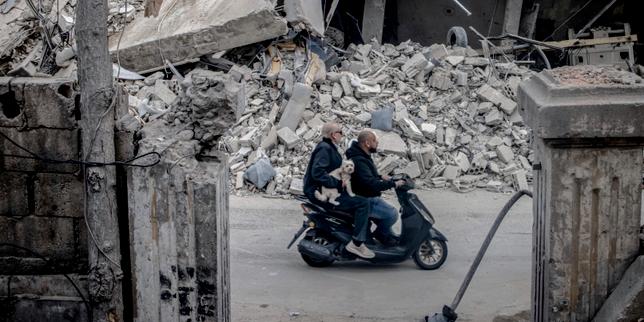
If these maneuvers don’t work, we’re looking at a "Gaza-style" operation in Southern Lebanon. We’ve already seen the preliminary signs: targeted assassinations, the use of white phosphorus (as reported by organizations like Human Rights Watch), and the displacement of nearly 100,000 people on both sides of the border.
France is warning that a full-scale war wouldn't just be a localized conflict. It would likely draw in regional proxies and perhaps even direct Iranian involvement. That’s the nightmare scenario Paris is trying to avoid. They aren't just being "pro-Lebanon." They're being anti-chaos.
Key Obstacles in the Current Framework
- The Presidency Vacuum: Lebanon hasn't had a president in over a year. France is pushing for a "package deal" where a ceasefire is tied to the election of a consensus president, likely Army Chief Joseph Aoun.
- Israeli Domestic Pressure: Prime Minister Netanyahu is under intense pressure from displaced northern residents to "finish the job." Diplomacy looks like weakness to a population that can't go home.
- Iranian Influence: Tehran still holds the remote control for Hezbollah's long-range munitions. France’s influence in Tehran is limited, despite occasional back-channel attempts.
The Immediate Roadmap
The next few weeks are critical. France is hosting another round of ministerial meetings to shore up the "Contact Group" for Lebanon. If you’re following this, watch the language regarding the "Technical Committee" for the border. If the parties agree to a committee, it’s a sign that they're moving toward a diplomatic out-ramp.
Don't expect a grand signing ceremony. This will be a series of quiet, "coordinated de-escalations." It starts with a reduction in the depth of strikes. Then, a pull-back of elite units like the Radwan Force. Finally, the deployment of the LAF.
French diplomacy is often mocked as being too "grand" and not "practical" enough. But in Lebanon, where everyone is armed to the teeth and nobody trusts anyone, having a persistent, annoying, and deeply informed mediator like France is sometimes the only thing preventing a total explosion. They're playing a high-stakes game of geopolitical chess with pieces that don't always want to move.
Keep an eye on the specific movements of the Lebanese 5th and 7th Brigades. Their movement toward the south will be the first real indicator that the French maneuvers are actually biting. If those troops don't move, the talk is just talk. Stay updated on the UNIFIL mandate renewals in New York, as that's where the legal teeth for any French-led deal will eventually be sharpened. This isn't just about Lebanon; it’s about whether the old rules of international diplomacy can still hold back the tide of modern warfare.