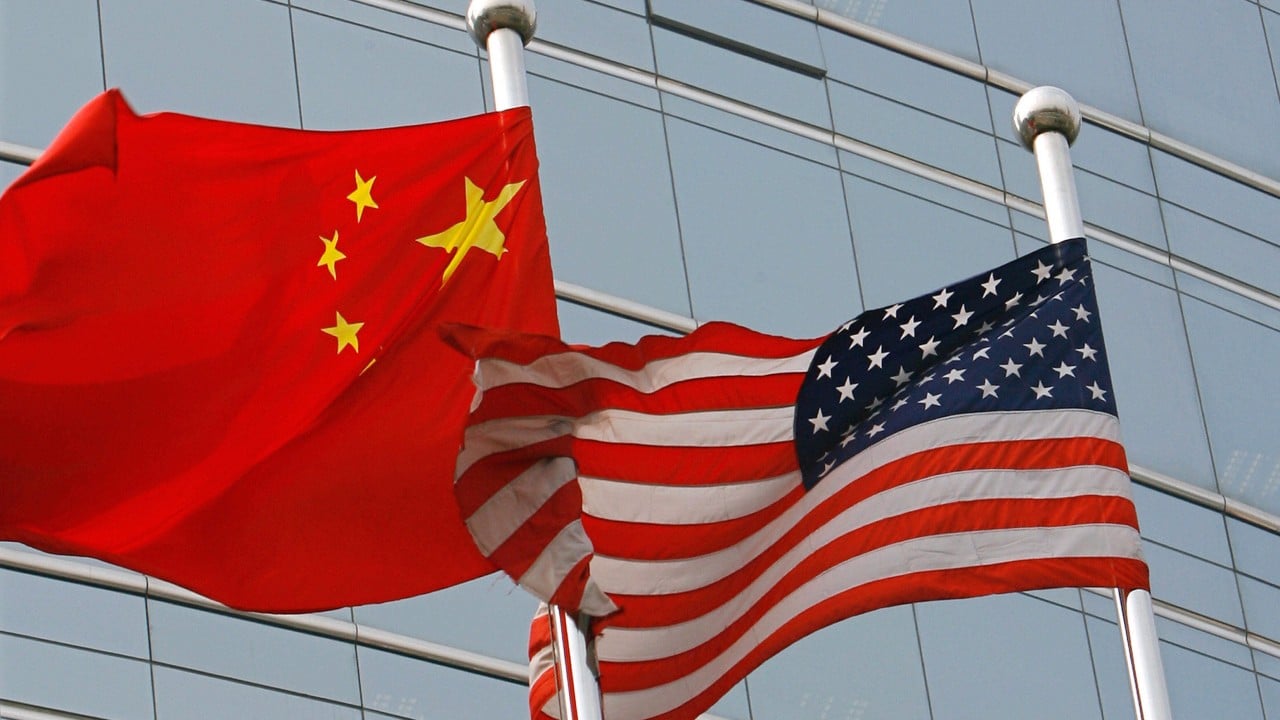
China’s decision to initiate formal investigations into United States trade practices signifies a transition from reactive diplomacy to a structured doctrine of "Legalized Retaliation." This shift is not merely a political gesture; it is a calculated application of domestic law—specifically the Foreign State Subsidies and Unfair Trade Practices frameworks—designed to mirror and neutralize Western "de-risking" strategies. By analyzing the timing, the targeted sectors, and the underlying economic logic, one can map the precise mechanism of China’s escalation.
The Triad of Strategic Timing
The "Why Now" question is answered by the convergence of three distinct pressures that have forced Beijing to abandon its previous posture of "quiet protest" in favor of documented legal warfare. For a deeper dive into similar topics, we suggest: this related article.
1. The Threshold of Cumulative Constraint
For years, the U.S. has utilized the "Entity List" and Section 301 investigations to throttle Chinese access to critical technologies, specifically in the sub-7nm semiconductor space and AI hardware. Beijing’s internal assessment suggests that the cost of inaction has finally surpassed the risk of escalation. When the marginal cost of losing market access to high-end chips exceeds the potential damage of a trade war, retaliation becomes the rational economic choice.
2. Pre-emptive Leverage for Election Cycles
Data-driven geopolitical strategy requires accounting for the volatility of U.S. domestic politics. By launching investigations now, Beijing creates a "negotiation buffer." These investigations take months to conclude, providing China with a suite of ready-made tariffs or restrictions that can be deployed as bargaining chips depending on the outcome of U.S. policy shifts or upcoming administration changes. For broader context on this issue, extensive analysis is available on Financial Times.
3. Domestic Industrial Oversupply
China is currently navigating a period of significant domestic overcapacity in "New Three" industries: electric vehicles (EVs), lithium-ion batteries, and solar products. As the U.S. introduces the Inflation Reduction Act (IRA) provisions to exclude Chinese components, Beijing is using these trade investigations to argue that U.S. subsidies are the actual distortion in the global market, thereby providing a legal defense for its own state-led industrial policy at the WTO level.
The Mechanics of Law as a Weapon
Unlike previous broad-brush bans, these new investigations utilize a sophisticated legal framework. They focus on "Reciprocal Accountability," a concept where China applies the same definitions of "national security" and "unfair subsidies" that Washington has championed.
The Burden of Proof Shift
Traditionally, the U.S. Trade Representative (USTR) placed the burden of proof on Chinese state-owned enterprises (SOEs). China’s new investigative stance reverses this. By targeting U.S. firms operating within China, Beijing is demanding granular data on U.S. federal and state-level grants, tax breaks, and R&D credits. This creates an information asymmetry:
- Discovery Risk: U.S. firms must either disclose sensitive financial ties to their home government or face immediate "Unreliable Entity" designations.
- Operational Friction: The mere existence of an investigation increases the "Risk Premium" for U.S. companies, driving up their cost of capital for China-based operations.
Sector-Specific Targeting: The Surgical Strike
The investigations are rarely aimed at low-value commodities. Instead, they focus on sectors where the U.S. maintains a high dependency on Chinese processing or mid-stream manufacturing.
- Critical Minerals: By investigating U.S. trade practices in high-tech manufacturing, China signals its ability to restrict the export of processed gallium, germanium, and graphite—elements where it controls over 80% of the global supply chain.
- Agriculture as a Pressure Point: Targeting U.S. agricultural exports is a classic move to exert pressure on specific U.S. congressional districts, but the current iteration adds a layer of "Biosafety" and "Standards Compliance" investigations to make the barriers harder to challenge at the WTO.
The Cost Function of Reciprocity
To quantify the impact of these investigations, we must look at the Total Cost of Compliance (TCC) for multinational corporations. The formula for the impact on a firm can be visualized as:
$$Impact = (P_{loss} \times M_{share}) + (C_{legal} + R_{premium})$$
Where:
- $P_{loss}$ is the probability of a total market ban.
- $M_{share}$ is the percentage of revenue derived from the Chinese market.
- $C_{legal}$ represents the ballooning costs of navigating dual-sanction environments.
- $R_{premium}$ is the increased interest rate or equity discount applied by investors due to geopolitical volatility.
The Erosion of "Grandfathered" Operations
In the past, established U.S. firms in China enjoyed a "legacy status" that protected them from the brunt of geopolitical spats. These investigations signal the end of that era. Every U.S. entity is now being viewed through the lens of its home country’s policy. This creates a "Bifurcation of Assets," where companies are forced to legally and operationally decouple their China branches from their global headquarters to survive the investigation phase.
Strategic Asymmetry in Dispute Resolution
A critical failure in most analyses is the assumption that China wants a quick resolution. In reality, the "Process is the Punishment."
The Strategic Delay
By mirroring the U.S. investigative timeline, China ensures that the cloud of uncertainty remains over U.S. tech firms for 12 to 18 months. This delay serves two purposes:
- It allows Chinese domestic competitors (like Huawei, BYD, or SMIC) to capture market share while the U.S. firm is tied up in regulatory audits.
- It discourages new Foreign Direct Investment (FDI) from Western venture capital, which fears the unpredictable nature of an ongoing probe.
Standard-Setting as Sovereignty
These investigations are often precursors to China setting its own technical standards. If an investigation "finds" that U.S. software contains security vulnerabilities or that U.S. medical devices are overpriced due to subsidies, China uses these findings to justify new "National Standards." Once these standards are set, they act as a permanent, non-tariff barrier that persists long after the specific trade investigation has closed.
The Structural Bottleneck of the WTO
The effectiveness of China’s move is amplified by the current paralysis of the World Trade Organization’s Appellate Body. Since the U.S. has blocked the appointment of new judges, the formal mechanism for resolving these trade disputes is effectively broken.
This creates a "Lawless Equilibrium" where:
- Might is Right: Both nations act as judge, jury, and executioner within their own jurisdictions.
- Regionalism Over Globalism: Trade flows are diverted to third-party "neutral" hubs like Vietnam, Mexico, or Thailand to obfuscate the origin of goods—a process known as "Transshipment."
The Logical Conclusion for Corporate Strategy
For executives and strategists, the launch of these investigations is the definitive signal that the "Golden Age of Arbitrage"—where firms could profit from U.S. IP and Chinese manufacturing without friction—is dead.
The strategy must move from Efficiency-First to Resilience-First. This involves:
- Synthetic Decoupling: Creating independent, China-specific IP stacks that do not rely on U.S. federal funding, thereby removing the "Subsidized" label that triggers these investigations.
- Multi-Sovereign Compliance: Developing a legal "Dual-Track" system where the company can pass a U.S. Section 301 audit and a Chinese Unfair Trade Practice investigation simultaneously.
- Commodity Hedging: For firms reliant on critical minerals, the only defense against a "Retaliatory Investigation" is the immediate diversification of mid-stream processing outside of the China-centric ecosystem.
The current investigations are not a temporary flare-up; they are the foundation of a new era of "Regulated Conflict." The entities that survive will be those that treat geopolitical risk not as an outlier, but as a core variable in their operational cost models. Firms must immediately audit their exposure to U.S. government subsidies—be it through the CHIPS Act or the IRA—and prepare a comprehensive "Subsidy Defense File" that meets Chinese regulatory scrutiny before the formal subpoena arrives. Failure to do so will result in a mandatory "Unreliable Entity" listing, effectively terminating the ability to operate within the world's second-largest economy.
Would you like me to develop a risk-assessment framework specifically for firms utilizing CHIPS Act funding to evaluate their exposure to these new Chinese trade investigations?