Domestic political rhetoric regarding "endless wars" often masks the underlying mechanical reality of modern geopolitical friction. When legislative leaders signal a pivot away from direct kinetic engagement with Iran, they are not merely expressing a populist sentiment; they are responding to a shifting cost-benefit ratio in the global projection of power. The traditional doctrine of containment has reached a point of diminishing returns where the marginal cost of maintaining a credible military threat now outweighs the strategic utility of the outcomes produced. To understand the transition from "endless war" to "strategic detachment," one must deconstruct the three systemic pressures currently devaluing the interventionist model.
The Asymmetric Attrition Model
The primary driver of the shift in American posture is the breakdown of traditional escalation dominance. In classic 20th-century doctrine, a superpower maintained peace through the credible threat of overwhelming force. This model assumes a linear relationship between investment and security. However, the current environment in the Middle East operates on a logic of asymmetric attrition, where the cost to disrupt a system is orders of magnitude lower than the cost to defend it.
- The Interdiction Gap: Protecting global shipping lanes in the Red Sea or the Strait of Hormuz requires the deployment of Carrier Strike Groups (CSGs) and advanced Integrated Air and Missile Defense (IAMD) systems. The interceptor missiles utilized—such as the SM-2 or SM-6—cost between $2 million and $4 million per unit. Conversely, the loitering munitions and anti-ship cruise missiles deployed by regional proxies often cost between $20,000 and $100,000.
- Resource Exhaustion: This fiscal disparity creates a "cost sink." A state can effectively paralyze a superior military force by forcing it to expend high-value, low-inventory munitions against low-value, high-volume targets.
- Logistical Vulnerability: The footprint required for "endless" containment creates static targets. Every forward-operating base acts as a liability that requires its own defensive perimeter, further diluting the offensive capability of the force.
The legislative push to avoid "endless war" is an acknowledgement that the US is currently on the wrong side of the entropy curve. Maintaining the status quo requires infinite energy, while the opposition requires only periodic, localized disruptions to achieve their strategic goals.
The Displacement of Energy Hegemony
Historically, the American appetite for Middle Eastern intervention was anchored in the "Petrodollar" framework and the necessity of securing hydrocarbon flows. The strategic calculus has been fundamentally altered by the decoupling of American economic health from Gulf stability.
The United States has transitioned from a net importer to a leading global producer of crude oil and natural gas. While global pricing remains interconnected, the existential threat of an energy embargo has been mitigated by domestic production capacity. This shift removes the "Economic Necessity" pillar that previously supported long-term military deployments. When political figures argue that the public does not want a war with Iran, they are implicitly stating that the perceived "Price of Liberty" no longer includes a $100-per-barrel oil insurance policy paid in blood and treasury.
Furthermore, the emergence of the "Green Transition" as a national security priority redirects capital away from protecting fossil fuel transit points and toward securing mineral supply chains in South America, Africa, and Southeast Asia. The geography of conflict is moving. The Strait of Hormuz is being superseded by the "Lithium Triangle" and semiconductor manufacturing hubs in the Pacific. Continuing a conflict in Iran is viewed by strategists not just as a risk, but as an opportunity cost that prevents the US from pivoting to more critical theaters of the 21st century.
The Logic of Proxy Envelopment
The phrase "endless war" is often used as a pejorative, but in a structural sense, it describes a failure to achieve a "Terminal State." In Iraq and Afghanistan, the lack of a defined exit condition led to mission creep. In the case of Iran, the complexity is compounded by the "Networked Adversary" model.
Iran does not fight as a centralized state entity in the traditional sense; it operates through a distributed network of autonomous and semi-autonomous actors. This creates a "Hydra Effect."
- Decentralized Command: Striking a central node in Tehran does not necessarily disable the capabilities of regional affiliates.
- Plausible Deniability: The blurred line between state and non-state actors allows for perpetual low-boil conflict that never triggers a formal declaration of war but constantly drains the opponent’s resources.
- Political Constraints: Modern democratic electorates have a low tolerance for "Grey Zone" casualties. Because these conflicts lack a clear "V-Day" or a formal surrender ceremony, they are perceived as failures of leadership rather than successes of containment.
The Schumer-led stance reflects a realization that conventional military might is an imprecise instrument for deconstructing a decentralized network. Using a multi-billion dollar platform to play "Whac-A-Mole" with regional militias is a category error in strategy.
The Failure of Economic Kineticism
For two decades, the United States attempted to replace kinetic warfare with "Economic Kineticism"—the use of sanctions as a primary weapon of war. The theory held that total isolation would force a regime change or a fundamental shift in behavior without the need for boots on the ground. This strategy has reached its logical limit.
The efficacy of sanctions is predicated on the dominance of the US dollar and the SWIFT banking system. As the target nation (Iran) and its primary trade partners (China, Russia) develop "Parallel Infrastructures," the impact of sanctions diminishes. We are seeing the rise of a "Sanction-Proof Bloc" that utilizes non-dollar trade, local currency swaps, and physical gold transfers.
- Weaponization Fatigue: Over-reliance on financial sanctions has incentivized the world’s largest economies to seek alternatives to the USD, potentially eroding the long-term structural power of the US Treasury.
- Regime Resilience: Sanctions often consolidate power within the targeted state by destroying the independent middle class and making the remaining population entirely dependent on the state for subsidized goods.
- The "Nothing to Lose" Threshold: When a nation is already under "Maximum Pressure" sanctions, the US loses its primary non-military lever. If the economic punishment is already at 100%, there is no further deterrent short of physical invasion.
Structural Constraints of Legislative Authorization
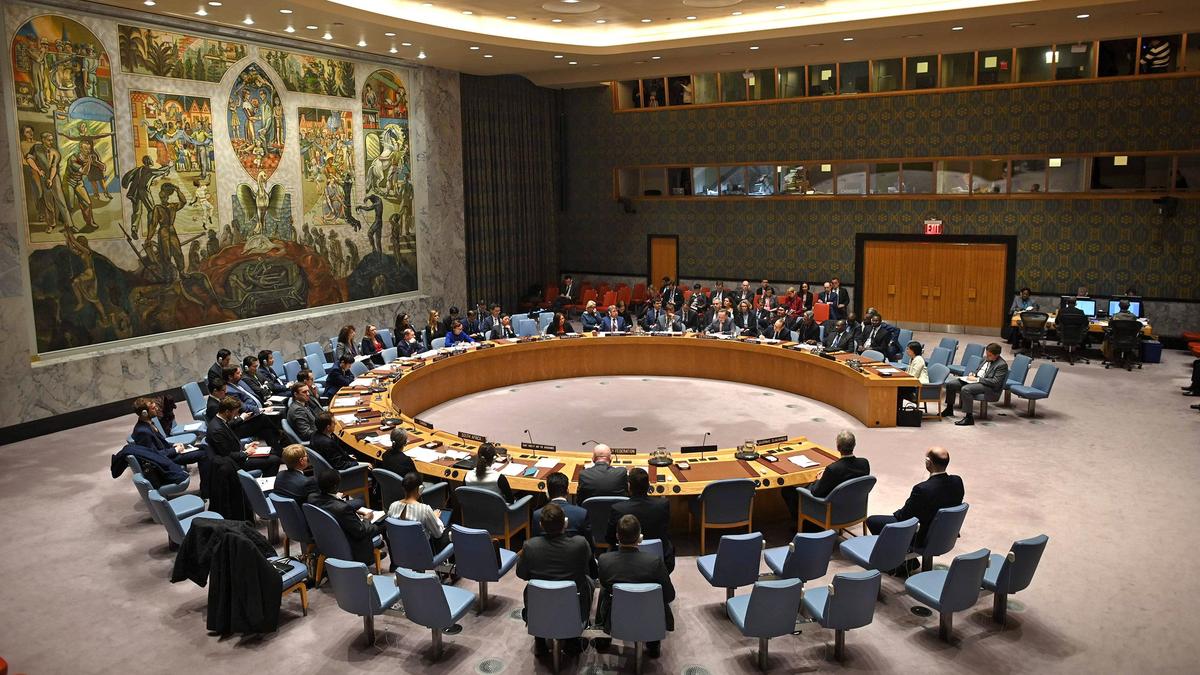
The debate over the Authorization for Use of Military Force (AUMF) is the legal theater where the battle against "endless war" is fought. The 2001 and 2002 AUMFs have been stretched to cover operations in over a dozen countries against groups that did not exist when the legislation was passed.
The move to sunset these authorizations is a reassertion of Article I powers—the Congressional right to declare war. This is not just a constitutional nicety; it is a mechanism for forcing a "Sunset Clause" on military engagements. By requiring specific, time-bound authorizations for any action against Iran, the legislature creates a "Friction Point" that prevents the executive branch from drifting into a multi-decade entanglement.
This creates a high bar for entry. In a polarized domestic environment, obtaining a new AUMF for a war with Iran is a near-impossibility. This political reality acts as a "Hard Cap" on military adventurism, regardless of the rhetoric coming from the Pentagon or the State Department.
The Strategic Play: Aggressive Realism
The pivot away from Iranian confrontation should not be interpreted as a move toward isolationism, but rather as a transition to "Aggressive Realism." This strategy prioritizes "Offshore Balancing" over "Direct Hegemony."
The objective is to move the burden of regional security onto local actors. By facilitating normalization between regional powers (e.g., the Abraham Accords and subsequent diplomatic ripples), the US can maintain a favorable balance of power without the massive overhead of a permanent garrison.
- Technology Transfer: Replace troop presence with high-end sensor arrays, drone technology, and intelligence-sharing agreements.
- Economic Corridors: Build interdependence between regional neighbors that makes kinetic conflict too expensive for all parties involved.
- Cyber-Kinetic Parity: Shift the focus of deterrence from the physical realm to the digital and electoral realms, where the cost-per-impact is more favorable for a technologically advanced power.
The path forward requires a cold-blooded assessment of where American power is most effective. Spending the next decade engaged in a war of attrition in the Persian Gulf is a recipe for strategic bankruptcy. The superior play is to allow the regional architecture to find its own equilibrium while the US focuses its capital—both financial and political—on the technological and economic competitions that will actually define the balance of power in the 2030s.
The most effective "war" against an adversary like Iran is not found in a desert campaign, but in the accelerated development of fusion energy, the hardening of global financial systems against non-aligned blocks, and the maintenance of a technological lead that makes asymmetric disruption irrelevant. Any move toward kinetic engagement in the current climate is a tactical victory for the adversary, as it tethers the superpower to a dying theater of operations while the rest of the world moves on.
Direct legislative action to curtail the executive's war-making powers must be coupled with an immediate surge in domestic industrial policy. The only way to truly end "endless war" is to remove the dependencies that make the conflict theater relevant. This means doubling down on the "Silicon Shield" and energy independence. The strategic recommendation is clear: disengage from the friction of the past to win the competition of the future.