The survival of the current ceasefire in Lebanon depends less on diplomatic sentiment and more on the structural alignment of internal security vacuums and external kinetic signaling. While headlines focus on the fragility of peace, a rigorous analysis reveals that the instability is a direct result of "Kinetic Spillover"—a phenomenon where unresolved regional tensions seek outlets in secondary theaters when primary objectives are blocked. The recent strikes across Lebanon and the Gulf States are not random escalations; they are calibrated data points within a broader competition for regional hegemony. To understand why a ceasefire remains elusive, one must evaluate the three structural pillars currently under systemic stress: The Enforcement Paradox, The Transnational Escalation Loop, and The Sovereign Security Deficit.
The Enforcement Paradox: Why Monitoring Fails
Ceasefires are frequently treated as legal documents, but in high-friction zones, they function as resource-allocation pauses. The fundamental failure of the current arrangement lies in the Enforcement Paradox: the entities tasked with monitoring the peace lack the mandate or the physical capacity to disrupt the specific tactical maneuvers that lead to a breach. Discover more on a similar issue: this related article.
- Mechanism of Failure: Monitoring bodies typically rely on technical sensors or human observation to report violations post-facto. This creates a lag between the kinetic event and the diplomatic response, allowing actors to achieve "fait accompli" territorial gains or hardware positioning before any international pressure can be applied.
- The Incentive Mismatch: For non-state actors, the cost of a ceasefire violation is often lower than the perceived cost of strategic stagnation. If an actor believes their adversary is using the lull to fortify, the incentive for a preemptive "spoiler strike" increases exponentially.
- Buffer Zone Friction: The physical space between opposing forces—often a demilitarized or restricted zone—becomes a theater of "grey zone" activity. Small-scale incursions, drone surveillance, and logistical tunneling occur below the threshold of a full-scale war, yet they degrade the ceasefire’s integrity until a single high-profile strike triggers a systemic collapse.
The Transnational Escalation Loop
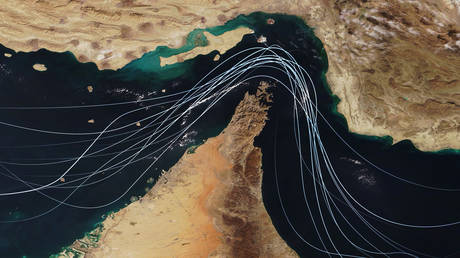
The strikes in Lebanon cannot be viewed in isolation from the concurrent activities in the Gulf. This connectivity represents a Transnational Escalation Loop, where the geography of the conflict is no longer bounded by the immediate frontline. This loop is driven by three specific variables.
- Proximate Signaling: When a regional power cannot strike a primary adversary directly due to the risk of total war, it targets a secondary theater (Lebanon) or a logistics hub (the Gulf) to signal capability and intent.
- Maritime Chokepoint Pressure: The Gulf States serve as the world’s energy lungs. By introducing kinetic uncertainty into this region, actors increase the global economic cost of the Lebanon conflict. The intent is to force international mediators to prioritize a resolution by threatening global energy price stability.
- Hardware Proliferation: The use of similar drone and missile architectures across both Lebanon and the Gulf suggests a unified supply chain and command-and-control logic. This technological standardization means that a tactical breakthrough in one theater can be instantly replicated in the other, shortening the window for defensive adaptation.
The Sovereign Security Deficit
At the core of the Lebanese instability is a chronic Sovereign Security Deficit. A state is traditionally defined by its monopoly on the legitimate use of physical force. When that monopoly is fragmented between a national military, non-state militias, and external interventionists, the state loses its ability to guarantee its own borders. Additional journalism by BBC News highlights similar perspectives on the subject.
This deficit manifests as a "Trigger Asymmetry." A single non-state group can initiate a strike that drags the entire nation into a retaliatory cycle, regardless of the central government’s stated policy. The cost of this asymmetry is borne by the civilian infrastructure and the national economy, while the tactical actors remain insulated within their own command structures. This creates a moral hazard where the actors with the most power to break the peace bear the least responsibility for the resulting national ruin.
The Cost Function of Regional Attrition
The strategy of "Controlled Escalation" is currently being tested. Each strike in Lebanon or the Gulf is a calculation of the adversary’s pain threshold. However, this model assumes all parties are rational actors with perfect information—a dangerous fallacy in the Levant.
The economic cost function for Lebanon is already in a state of terminal decline. The destruction of logistics hubs and agricultural land in the south creates a long-term "reconstruction debt" that no international package can currently cover. For the Gulf States, the cost is measured in "Risk Premiums." Even unsuccessful strikes increase insurance rates for shipping and deter foreign direct investment, stalling the economic diversification projects critical to their long-term survival.
The current ceasefire is not a bridge to peace; it is a tactical breathing room. For a durable cessation of hostilities to occur, the underlying Enforcement Paradox must be solved through a "Hardened Monitoring" framework. This would require:
- Real-Time Interdiction Mandates: Moving from "observe and report" to "active disruption" of hardware transfers within restricted zones.
- Economic Cross-Default Clauses: Linking reconstruction aid not just to the absence of war, but to the verifiable dismantling of non-state launch sites.
- Regional De-escalation Synchronicity: A ceasefire in Lebanon will remain inherently unstable as long as the Gulf remains a theater for kinetic signaling. Diplomacy must address the "Transnational Escalation Loop" as a single integrated system rather than two separate regional issues.
The immediate outlook suggests a period of "Violent Stasis." Strikes will continue to occur at the margins of the ceasefire’s definitions, testing the endurance of the monitors and the patience of the populations. The strategic move for international stakeholders is to pivot from broad diplomatic appeals toward the technical fortification of the border’s monitoring infrastructure. Peace in this context is not the absence of tension, but the mastery of its containment. Failure to address the Sovereign Security Deficit will ensure that any pause in fighting is merely a refueling stop for the next cycle of regional attrition.
The next 72 hours of kinetic telemetry will determine if the current breaches remain outliers or if they signal the return to high-intensity maneuvers. Strategists should monitor the movement of precision-guided munitions (PGMs) into the Beqaa Valley as the primary lead indicator of a total ceasefire collapse. If PGM density increases despite the diplomatic lull, the ceasefire is effectively dead, regardless of the official rhetoric in Beirut or Riyadh.