The selection of two Pakistani astronauts for a mission to the Tiangong space station is not a symbolic gesture of friendship; it is a high-stakes stress test for China’s Manned Space Agency (CMSA) and its ability to export orbital infrastructure. By integrating foreign nationals into the CSS (Chinese Space Station) ecosystem, Beijing is attempting to standardize its technological stack as the global alternative to the International Space Station (ISS). This move provides a blueprint for how China intends to utilize the Tiangong platform as a tool of orbital diplomacy and technological dependency.
The Tri-Pillar Framework of CSS Internationalization
China’s strategy to populate Tiangong with international partners rests on three distinct operational pillars. Each pillar represents a layer of technical or political integration that a partner nation must navigate.
1. Hardware Synchronization and Procedural Standardization
The most immediate hurdle is the technical interface. Unlike the ISS, which was built on a foundation of interoperability between NASA, Roscosmos, ESA, and JAXA, Tiangong is a monocultural environment. All interfaces, life support systems, and software protocols are Chinese-centric.
- Operational Language: While English is the de facto language of the ISS, CMSA requires proficiency in Mandarin for Tiangong operations. This creates a cognitive barrier and a long-term training requirement that locks partner nations into a specific educational pipeline.
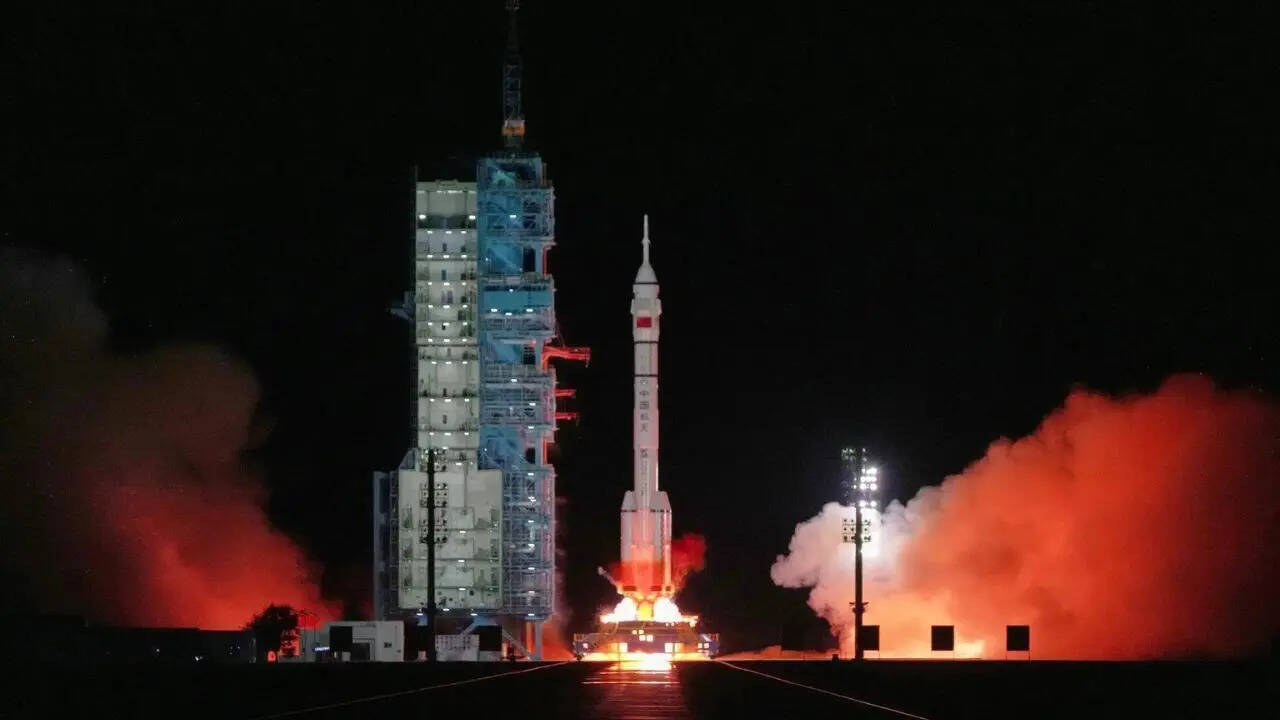
- Safety Protocols: Pakistani candidates must adapt to the "Shenzhou" spacecraft architecture. This involves mastering the specific G-load tolerances and emergency abort sequences unique to Long March 2F launch vehicles.
2. Geopolitical Alignment and Data Sovereignty
Space missions are data-intensive. The telemetry, experimental results, and biological data generated during a mission to Tiangong flow through the Chinese Ground Segment.
- The Dependency Loop: A nation that sends astronauts via CMSA becomes reliant on Chinese tracking and data relay satellite systems (Tianlian).
- Strategic Signal: For Pakistan, this mission reinforces a decoupling from Western space frameworks and a consolidation of the "all-weather" strategic partnership on a vertical axis.
3. The Economic Logic of Orbital Participation
Sending an astronaut is a capital-intensive endeavor. However, for a developing economy like Pakistan, the cost of indigenous manned flight is prohibitive. China offers a "Spaceflight-as-a-Service" model.
- Fixed Costs: CMSA handles the R&D, launch vehicle manufacturing, and station maintenance.
- Variable Costs: The partner nation pays for specific training modules and seat costs, though these are often subsidized through broader bilateral trade agreements or Belt and Road Initiative (BRI) credit lines.
Technical Constraints of the Pakistani Selection Process
The selection of two candidates from an initial pool is a winnowing process dictated by the biological and technical rigors of the CSS environment. The candidates are not merely passengers; they are experimental subjects and system operators.
Human Factors and Physiological Variables
Tiangong operates at a specific atmospheric mix and pressure. The candidates must pass a "centrifuge-to-orbit" pipeline that tests:
- Neuro-vestibular Adaptation: The ability to function in microgravity without debilitating Motion Sickness (SMS), which can compromise mission safety during the critical first 48 hours of docking.
- Psychological Resilience: The isolation of the Tianhe core module requires a specific personality profile—low neuroticism and high cooperation—to ensure that foreign guests do not disrupt the highly structured workflow of the permanent Chinese crew.
The Experimental Payload Bottleneck
The value of an astronaut mission is measured by the science returned. Pakistan’s mission will likely focus on three areas:
- Microgravity Biology: Testing the effects of the space environment on seeds or biological samples indigenous to Pakistan’s agricultural sector.
- Earth Observation: Utilizing Tiangong’s vantage point for localized telemetry over the South Asian subcontinent, which has direct implications for disaster management and resource mapping.
- Materials Science: Testing the behavior of specific alloys or polymers in a vacuum, providing data for Pakistan’s domestic industrial base.
The Logistics of the Shenzhou Pipeline
The deployment of Pakistani astronauts requires a synchronized timeline that mirrors the Chinese "six-month rotation" cycle. The Shenzhou spacecraft, while based on the Soyuz architecture, has undergone significant upgrades in its avionics and docking systems.
Launch Vehicle Reliability
The Long March 2F (CZ-2F) is the workhorse of the Chinese manned program. Its reliability is predicated on a redundant escape tower system and a high degree of automation. The Pakistani candidates enter a system where the "human-in-the-loop" requirement is minimized during launch but maximized during orbital research.
Orbital Residency Dynamics
Onboard Tiangong, the Pakistani astronauts will occupy the Wentian or Mengtian laboratory modules. These modules are equipped with standardized racks (similar to the ISS International Standard Payload Racks), but they are optimized for Chinese power voltages and data connectors. This necessitates that any hardware Pakistan brings to the station must be "China-spec," further cementing the technological lock-in.
Strategic Risks and Systemic Friction
While the mission is a technical milestone, it introduces several points of friction that neither party can ignore.
The Security Dilemma
Integrating foreign nationals into a station controlled by the People's Liberation Army (PLA) poses security challenges. There is a "need-to-know" barrier regarding certain station subsystems. This creates a tiered access system where international astronauts may be restricted from specific sensitive areas of the core module, potentially complicating emergency procedures.
Sustainability of the Manned Program
A one-off mission is a PR victory; a sustained program is a strategic asset. Pakistan faces the challenge of maintaining a pipeline of trained personnel and funding. If the partnership does not evolve into a regular rotation, the "knowledge rot" within Pakistan’s space agency (SUPARCO) will render the initial investment obsolete within five years.
The Structural Displacement of the ISS
The Tiangong-Pakistan mission serves as an empirical proof of concept for the Asia-Pacific Space Cooperation Organization (APSCO). It demonstrates that the CSS is a viable destination for nations that find the ISS entry requirements too high or politically unpalatable.
The End of the Unipolar Orbit
As the ISS approaches its 2030 decommissioning date, the CSS stands as the only operational modular station. By securing Pakistan as a first-mover, China is positioning itself to capture the "unaligned" market of space-faring nations. The selection of these two candidates is the opening move in a broader campaign to relocate the center of gravity for orbital research from the West to the East.
Standardizing the Frontier
If multiple nations follow Pakistan’s lead, Chinese orbital standards (from docking latches to data protocols) will become the global norm for the next generation of space infrastructure. This is not just about exploring the stars; it is about who writes the rules for the 400-kilometer altitude economy.
Strategic Recommendation for Regional Observers
Nations observing this integration must recognize that the Pakistani mission is a template, not an anomaly. To mitigate the resulting shift in orbital influence, competing space powers must:
- Lower Entry Barriers: Develop modular, lower-cost access programs for developing nations to prevent a total monopoly by the CMSA.
- Formalize Inter-Station Protocols: Prioritize the development of universal docking adapters that would allow future stations to remain interoperable, preventing a "fragmented orbit" where Western and Chinese stations cannot assist one another in emergencies.
- Quantify Orbital Diplomacy: Treat space participation as a core component of diplomatic and economic statecraft, recognizing that an astronaut in orbit is a thirty-year commitment to a specific technological and political ecosystem.
The mission of the Pakistani astronauts is the first operational validation of the Chinese Space Station as a global utility. The success of this integration will determine whether Tiangong remains a Chinese outpost or becomes the hub of a new, Beijing-led international orbital order.