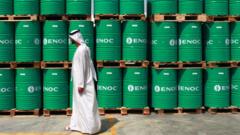
The Strait of Hormuz functions as the singular physical bottleneck for 20% of the world’s liquefied natural gas (LNG) and nearly 25% of total global oil consumption. While public discourse often centers on energy price volatility, the actual threat to the Indian economy is structural rather than just inflationary. India’s dependence on this corridor is dual-faceted: it serves as the primary conduit for the raw materials of the physical economy (energy and aluminum) and the physical substrate of the digital economy (subsea fiber-optic cables).
The Kinetic Threat to Subsea Architecture
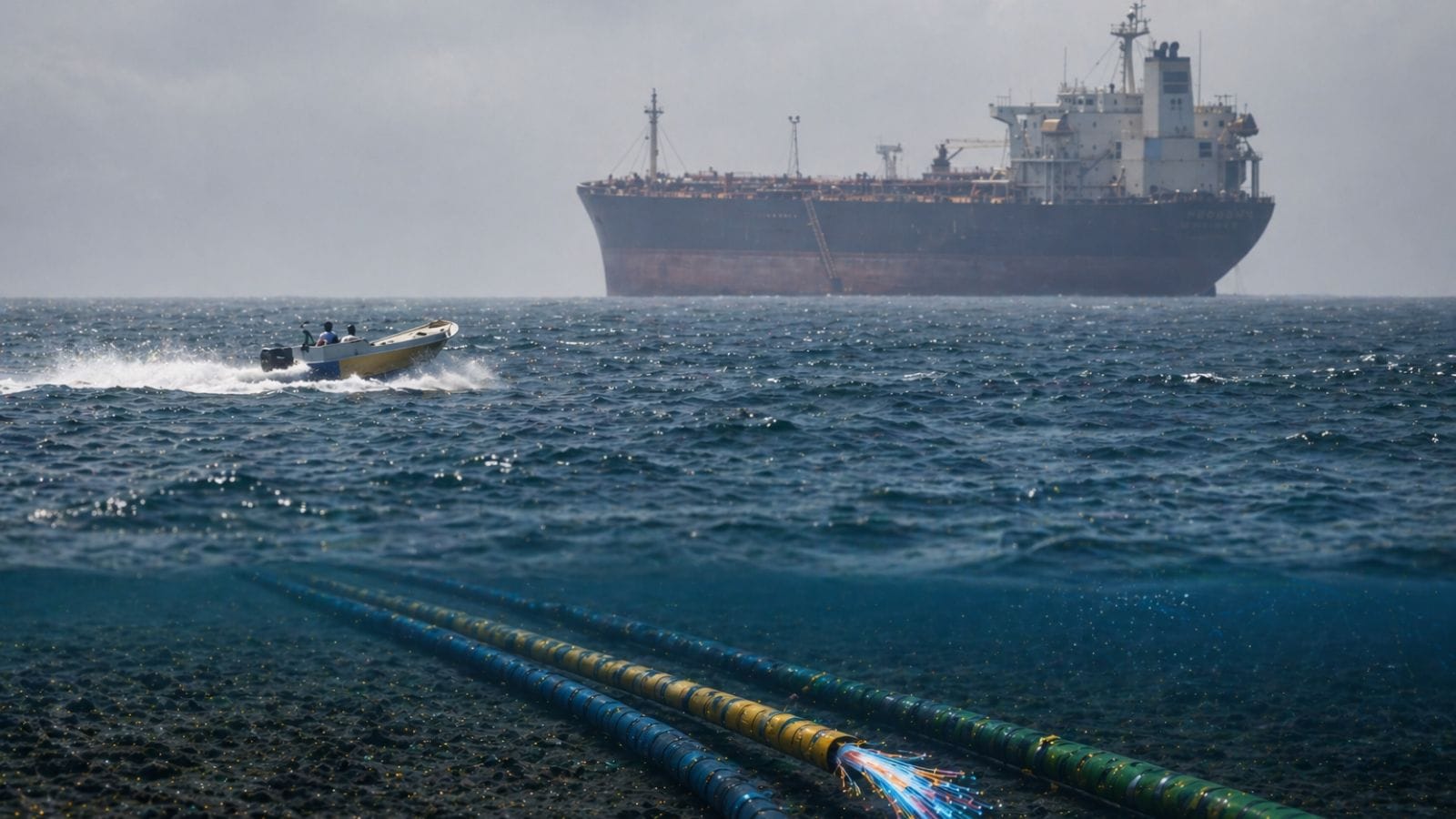
The assumption that internet connectivity is "cloud-based" obscures the reality that 99% of international data is transmitted via subsea fiber-optic cables. The geography of the Persian Gulf and the Arabian Sea creates a high-density cluster of these cables, many of which land in Mumbai and Chennai.
The vulnerability of this infrastructure in the context of Iran-Israel or Iran-US tensions is defined by two technical factors:
- Bathymetric Constraints: The Strait of Hormuz is shallow, with depths often less than 100 meters. This makes cables easier to target via bottom-trawling, anchors, or deliberate sabotage compared to deep-ocean cables.
- Repair Latency: Under kinetic conflict conditions, specialized cable-repair ships—of which there is a global shortage—cannot enter contested waters. A single break can be bypassed via rerouting, but multiple simultaneous breaks in the Red Sea and the Strait of Hormuz would lead to massive packet loss and latency spikes for Indian IT services and financial markets.
The "Red Sea-Hormuz Nexus" represents a systemic failure point. If cables in both corridors are compromised, India loses its lowest-latency paths to Europe. The traffic must then be rerouted through terrestrial cables across China or much longer subsea routes via the Cape of Good Hope, increasing latency to levels that disrupt high-frequency trading and real-time cloud operations.
The Aluminum Arbitrage: Energy as a Raw Material
Aluminum production is effectively the export of electricity in solid form. Since energy accounts for approximately 30% to 40% of the cost of smelting aluminum, any disruption in the Strait of Hormuz directly impacts the global cost curve.
India is the world’s second-largest aluminum producer. However, the Indian industry relies on a mix of domestic coal and imported energy inputs. The threat here is not just the lack of supply, but the Cost of Carry. When tensions rise in the Strait:
- Insurance Premiums (War Risk): Shipping companies apply "War Risk Surcharges" to vessels entering the Gulf. This increases the landed cost of bauxite and alumina.
- The LME Feedback Loop: The London Metal Exchange (LME) reacts to Hormuz tensions by pricing in a "disruption premium." Even if Indian smelters have physical stock, the global price volatility creates hedging nightmares and narrows the margins for downstream Indian manufacturers in the automotive and aerospace sectors.
The strategic risk for India lies in the "just-in-time" nature of its industrial supply chain. Smelters cannot be turned off and on; a power interruption caused by a sudden fuel shortage can lead to the "freezing" of electrolytic cells, a catastrophic technical failure that takes months and millions of dollars to remediate.
The Logistics of Energy Asymmetry
India imports over 80% of its crude oil, with a significant portion transiting the Strait. The Indian government has attempted to mitigate this via Strategic Petroleum Reserves (SPR), but the current capacity covers roughly 9.5 days of national demand. This is a fragile buffer when compared to the 90-day reserves maintained by many IEA member nations.
The mechanism of disruption follows a predictable escalation ladder:
- The Shadow War Phase: Limpet mine attacks or drone strikes on tankers (as seen in 2019 and 2021). This increases freight rates but does not stop flow.
- The Seizure Phase: Implementation of "legalistic" seizures of vessels by the IRGC. This forces ships to reroute, adding 10-15 days to transit times if they avoid the Gulf entirely.
- The Total Blockade: A kinetic closure using anti-ship cruise missiles (ASCMs) and naval mines. While the US Fifth Fleet is positioned to prevent a permanent closure, even a temporary 72-hour shutdown creates a global maritime logjam that takes months to clear.
Mapping the Indirect Cascades
The competitor narrative often misses the secondary effects of Hormuz tensions on Indian domestic policy. When energy prices spike due to Strait volatility, the Indian Rupee (INR) faces immediate depreciation pressure against the USD.
The logic flows as follows: Higher oil prices lead to an expanded Current Account Deficit (CAD). An expanding CAD weakens investor confidence in the INR. To defend the currency, the Reserve Bank of India (RBI) must either burn through FX reserves or raise interest rates. Therefore, a conflict in the Persian Gulf directly leads to higher borrowing costs for a small business owner in Bangalore or Delhi.
Furthermore, India’s "Look West" policy involves heavy integration with the Gulf Cooperation Council (GCC) for labor exports. Over 8 million Indians work in the Gulf. A full-scale conflict doesn't just threaten energy; it threatens the $80 billion+ annual remittance flow that stabilizes India’s balance of payments.
The Fallacy of Neutrality
India has traditionally maintained a "de-hyphenated" relationship with Iran and the Arab world. However, the Strait of Hormuz crisis forces a breakdown of this neutrality. If Indian-flagged vessels require naval escorts (Operation Sankalp), India is effectively forced into a maritime security role that requires coordination with the US-led Combined Maritime Forces (CMF), even if it does not formally join them.
The technical limitation of this strategy is the Destroyer-to-Tanker Ratio. The Indian Navy cannot provide close-in protection for every merchant vessel. Consequently, the strategy shifts to "Zone Defense," which is susceptible to asymmetric swarming tactics by fast-attack craft.
Strategic Imperatives for the Indian State
The current vulnerability is a result of geographic destiny, but the response must be structural. To de-risk the Hormuz-India pipeline, the following transitions are mandatory:
- Trans-Oceanic Cable Redundancy: Aggressive investment in the IAX (India-Asia-Xpress) and IEX (India-Europe-Xpress) systems to provide high-capacity routes that avoid the Persian Gulf entirely, utilizing land-based transit through the Mediterranean or deeper southern Indian Ocean routes.
- Coal-to-Nuclear for Smelters: Decoupling the aluminum industry from imported gas/oil volatility by establishing dedicated Small Modular Reactors (SMRs) or ultra-mega coal projects for heavy industry.
- The Chabahar Bypass: Accelerating the International North-South Transport Corridor (INSTC) via the port of Chabahar. While Chabahar is an Iranian port, it sits outside the Strait of Hormuz (in the Gulf of Oman). Moving the point of entry for Indian goods further east reduces the "Hormuz Risk" for land-based trade into Central Asia.
The Indian private sector must move away from the "Hormuz is an Oil Problem" mindset. It is a "Total System Risk." Companies must audit their Tier-2 and Tier-3 suppliers for energy-sensitive dependencies and latency-critical digital infrastructure. The Strait of Hormuz is no longer a distant geopolitical concern; it is a direct variable in the CAPEX and OPEX calculations of every major Indian enterprise.
India must prioritize the completion of its Phase II Strategic Petroleum Reserve program, adding 6.5 MMT of capacity in Odisha and Karnataka. Without this physical buffer, the Indian economy remains a hostage to the tactical decisions of mid-level naval commanders in the Persian Gulf. The transition from a reactive posture to a resilient one requires the immediate capitalization of these storage facilities and the diversification of subsea landing points away from the concentrated Mumbai cluster.