The global energy market relies on a single maritime artery that facilitates the passage of approximately 21 million barrels of oil per day, representing 21% of global petroleum liquid consumption. The Strait of Hormuz is not merely a geographical bottleneck; it is a primary lever of geopolitical kinetic energy where the friction between regional hegemony and international commodity stability is most acute. Understanding the risk of disruption requires moving beyond historical anecdotes of "tanker wars" and instead quantifying the structural vulnerabilities, the escalation ladder of maritime interdiction, and the actual efficacy of bypass infrastructure.
The Physical and Legal Constraints of Flow
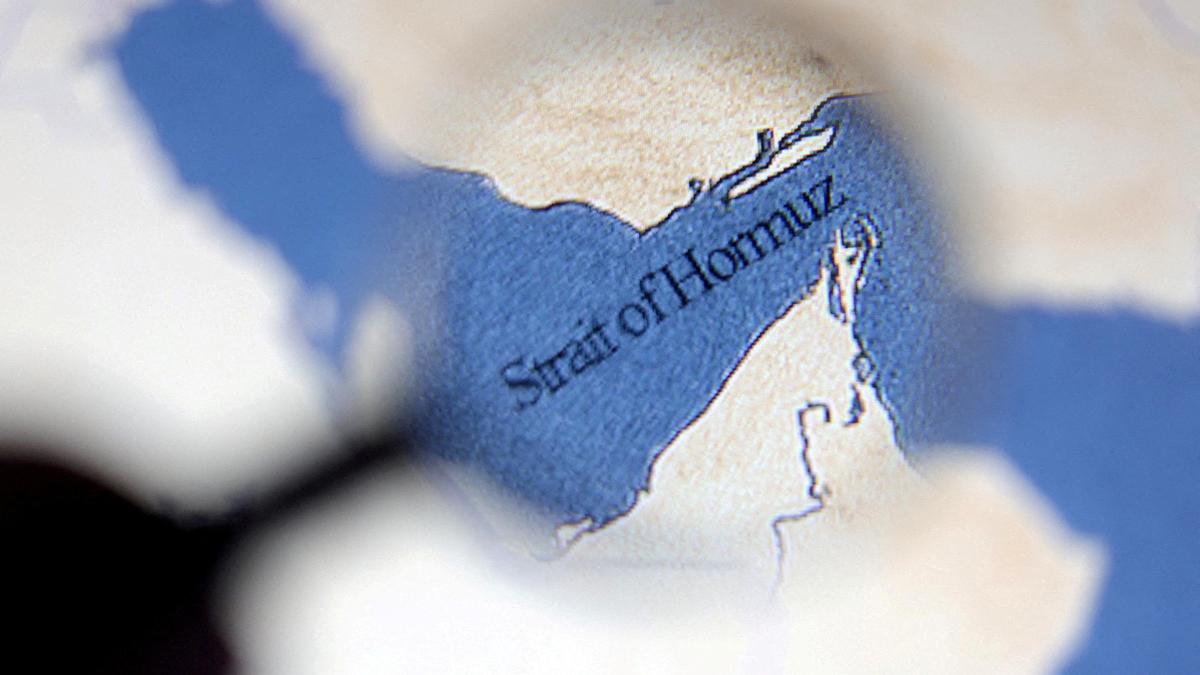
The Strait of Hormuz functions under a specific set of physical and legal constraints that dictate the feasibility of any blockade or disruption. At its narrowest point, the strait is 21 miles wide, but the shipping lanes—consisting of two-mile-wide channels for inbound and outbound traffic separated by a two-mile buffer zone—are much tighter. These lanes are situated within the territorial waters of Iran and Oman.
Under the 1982 United Nations Convention on the Law of the Sea (UNCLOS), ships enjoy the right of "transit passage," which is more permissive than "innocent passage." It allows vessels to move through the strait solely for the purpose of continuous and expeditious transit. Iran, while a signatory to UNCLOS, has not ratified it, leading to a persistent legal friction point: Tehran argues that only signatories are entitled to transit passage rights, while the United States maintains that these rights are enshrined in customary international law. This legal ambiguity provides the foundational pretext for "regulatory" interdictions, where vessels are seized under the guise of maritime accidents, environmental violations, or legal disputes.
The Escalation Ladder: Modes of Disruption
Disruptions in the Strait do not occur as a binary "open or closed" state. Rather, they exist on a spectrum of kinetic and non-kinetic interference designed to manipulate the risk premium of Brent Crude and global insurance rates.
1. The Cost of Shadow Warfare and Harassment
The most frequent mode of disruption involves high-speed IRGC (Islamic Revolutionary Guard Corps) naval craft conducting "swarm" maneuvers around commercial tankers. While these actions rarely stop the flow of oil, they increase the "War Risk" surcharges imposed by underwriters like the Joint War Committee (JWC) in London. When a vessel enters a designated high-risk area, insurance premiums can spike from 0.01% to 0.5% of the hull value for a single voyage. For a Very Large Crude Carrier (VLCC) valued at $100 million, this represents a $500,000 increase in operational cost per transit, regardless of whether a shot is fired.
2. Mining and Asymmetric Interdiction
The 1980s "Tanker War" demonstrated the efficacy of bottom-dwelling and moored mines. Unlike direct missile strikes, mines provide a degree of plausible deniability and create a persistent psychological deterrent. The deployment of "limpet mines"—magnetically attached explosives—allows for targeted damage that disables a vessel without sinking it, thereby avoiding a catastrophic environmental disaster that would alienate regional allies, yet effectively signaling that no hull is safe.
3. Total Blockage: The Maximum Pressure Scenario
A full closure of the Strait would require a sustained naval presence or the sinking of several large vessels within the shipping lanes. While frequently threatened, this is the least likely scenario because it is economically suicidal for the disruptor. Iran relies on the Strait for its own imports of refined products and its "shadow' exports of crude. A total blockage triggers two immediate responses:
- The Strategic Petroleum Reserve (SPR) Release: The IEA member countries hold approximately 1.5 billion barrels in public stocks. A coordinated release can offset a 100% loss of Hormuz flow for roughly 70 days.
- Military Escort Operations: As seen in Operation Earnest Will (1987-1988) and the recent International Maritime Security Construct (IMSC), the global community reacts to total blockage with direct naval escorts, transitioning the conflict from economic pressure to conventional naval warfare.
The Fallacy of Alternative Routes
Market analysts often point to pipelines as a mitigating factor for Hormuz risk. However, the capacity of these bypasses is structurally insufficient to replace the Strait.
- The Habshan–Fujairah Pipeline (UAE): This is the most viable bypass, capable of carrying 1.5 million barrels per day (bpd) from Abu Dhabi fields to the Gulf of Oman, bypassing the Strait entirely. Its operational capacity is roughly 60-70% of its nameplate 1.8 million bpd capacity.
- The East-West Pipeline (Petroline, Saudi Arabia): Running from the Abqaiq complex to the Red Sea, this line has a nominal capacity of 5 million bpd. However, using this route requires tankers to then navigate either the Bab el-Mandeb (another chokepoint) or the Suez Canal. Furthermore, the pipeline is often used for domestic supply, reducing the actual exportable surplus capacity to approximately 2 million bpd.
- The Goreh-Jask Pipeline (Iran): Iran’s own bypass project terminates at the port of Jask, outside the Strait. While theoretically capable of 1 million bpd, it lacks the storage infrastructure and pumping station redundancy to handle a sustained diversion of Iranian exports.
Combined, the world’s current bypass capacity sits at approximately 6.5 million bpd. This leaves a structural deficit of nearly 15 million bpd that cannot reach the market if the Strait is closed. The math dictates that any disruption beyond a minor skirmish results in an immediate global supply shock that cannot be engineered away through land-based infrastructure.
The Cost Function of Global Volatility
The price of oil reacts to Hormuz tension through three distinct mechanisms: the physical supply loss, the speculative risk premium, and the freight/insurance spike.
During periods of heightened tension, the "Hormuz Premium" typically adds $5 to $10 to the price of a barrel of Brent Crude. In a scenario of total closure, models suggest prices could surge past $150 or $200 per barrel within weeks. The economic damage is not distributed equally. East Asian economies—specifically China, India, Japan, and South Korea—are the most vulnerable. They receive nearly 80% of the crude flowing through the Strait. Consequently, a disruption in the Persian Gulf is effectively a tax on Asian manufacturing and a direct threat to the energy security of the world's primary growth engine.
Measuring the "Invisible" Disruption: Cyber and Electronic Warfare
Modern disruption has evolved beyond physical blockades. The Strait is now a laboratory for electronic warfare. "GPS Spoofing" has become a documented reality, where vessels find their navigation systems reporting coordinates miles away from their actual location, sometimes drifting into Iranian waters inadvertently. This creates a "legal trap" for seizure.
Similarly, the disruption of the Maritime Autonomous Guard System (MAGS) or the hacking of port logistics at the Jebel Ali or Khalifa hubs creates a "soft" blockage. If the digital infrastructure supporting the loading and unloading of VLCCs is compromised, the flow of oil stops just as effectively as if a mine were laid, but without the clear casus belli required for a military response.
Strategic Realignment and the Shift to the "Dry Canal"
Recognizing the permanent vulnerability of the Strait, regional powers are shifting from a purely maritime strategy to "multimodal" logistics. The Iraq-Turkey Pipeline (ITP) and the proposed "Development Road" project—linking the port of Al-Faw in Iraq to the Turkish border via rail and road—are attempts to create a "Dry Canal."
The logic here is to decouple energy exports from the vulnerability of the Persian Gulf. However, these projects face immense capital requirements and the same instability that plagues the region. Until these land routes can achieve the scale of VLCC shipping, the global economy remains tethered to the 21-mile wide neck of the Strait.
Strategic Recommendation for Market Participants
Asset managers and energy procurement officers must stop treating Hormuz risk as a "tail event" and start treating it as a persistent operational cost. The era of cheap maritime security is over.
- Hedge for Insurance, Not Just Price: Standard oil futures protect against price spikes, but they do not protect against the unavailability of hulls. Firms must secure long-term freight agreements (COAs) that include specific clauses for "Alternative Delivery Points" outside the Persian Gulf, even at a premium.
- Inventory Buffering in Non-Chokepoint Hubs: Strategic storage should be prioritized in locations like Fujairah (UAE) or Duqm (Oman), which sit outside the Strait. Moving molecules past the chokepoint before a crisis is the only way to ensure liquidity during a kinetic event.
- Geopolitical Diversification: The structural vulnerability of the Strait necessitates a permanent shift toward Atlantic Basin crudes (WTI, Brent, Guyana) for any refinery configuration capable of processing lighter grades. The "discount" offered by Persian Gulf crudes is increasingly offset by the hidden costs of transit risk.
The Strait of Hormuz will remain the world's most sensitive geopolitical barometer. Its history of disruption is not a series of isolated incidents, but a continuous demonstration of the leverage held by those who control the narrows. The only effective strategy is to build a supply chain that assumes the bottleneck will, eventually, tighten.