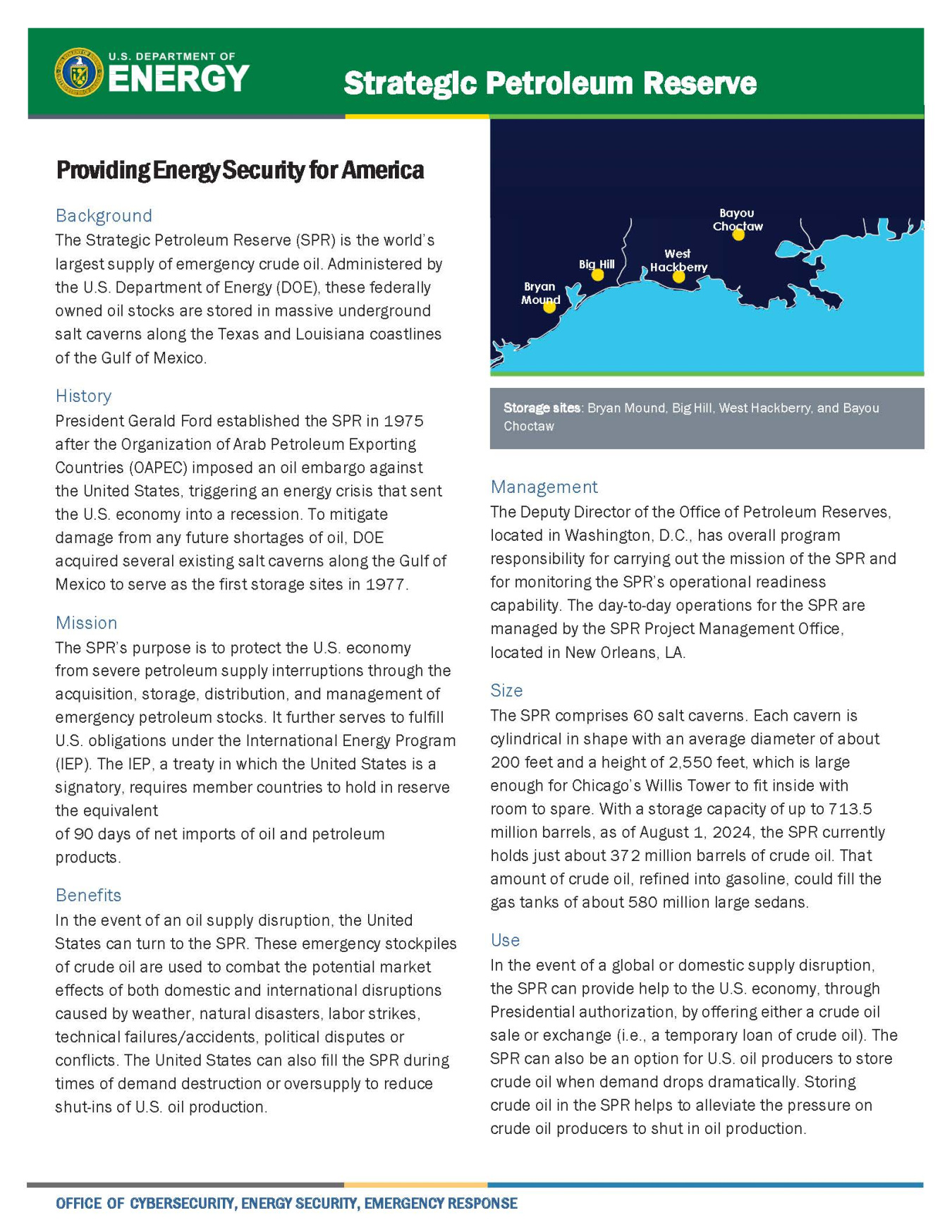
The proposed $300 billion refinery project in the United States, backed by India’s Reliance Industries and endorsed by the Trump administration, represents a fundamental shift in the global energy value chain, moving beyond simple infrastructure to a strategic realignment of crude processing capacity. This initiative is not merely a construction project; it is a calculated response to the widening gap between North American unconventional crude production and the specialized hardware required to process heavy, complex feedstocks. To understand the viability and impact of such a massive capital expenditure, one must analyze the project through the lens of refining complexity, geopolitical arbitrage, and the structural shift in transatlantic energy flows.
The Nelson Complexity Arbitrage
The primary economic driver for a refinery of this scale is the Nelson Complexity Index (NCI). Most new US production from the Permian Basin consists of Light Sweet Crude (LST). However, the highest profit margins in refining are often found in "cracking" and "coking" heavy, high-sulfur crudes into high-value distillates like ultra-low sulfur diesel (ULSD) and jet fuel.
Reliance Industries operates the world’s largest refining complex in Jamnagar, India, which boasts an NCI significantly higher than the global average. By bringing this technical expertise to US soil, the partnership aims to solve a specific structural bottleneck:
- Feedstock Flexibility: The ability to process "bottom-of-the-barrel" heavy crudes from Canada (Western Canadian Select) or Latin America while leveraging the cheap natural gas available in the US for hydrogen-intensive hydrocracking.
- Yield Optimization: Minimizing the production of low-value residual fuel oils in favor of high-demand chemicals and transport fuels.
- Proximity to Demand: Reducing the "transportation discount" associated with shipping refined products from Asia back to Western markets.
The $300 billion figure, while staggering, likely accounts for a multi-phase "Mega-Site" strategy. This involves not just atmospheric distillation units but integrated petrochemical crackers that convert refinery byproducts directly into ethylene, propylene, and other polymer building blocks.
The Three Pillars of Strategic Infrastructure
An investment of this magnitude requires a convergence of three distinct variables: regulatory clearance, feedstock security, and capital efficiency.
1. Regulatory De-risking and Policy Tailwinds
The involvement of the Trump administration signals a pivot toward "Energy Dominance" through deregulation. In the previous decade, greenfield refinery projects in the US were virtually non-existent due to the New Source Review (NSR) under the Clean Air Act and protracted litigation cycles. A project of this scale suggests a guaranteed "fast-track" permitting process, likely utilizing executive orders to bypass state-level bottlenecks. This creates a lower cost of capital by reducing the "permitting risk premium" that usually halts long-term infrastructure.
2. Feedstock Integration and The Keystone Proxy
For a $300 billion facility to maintain a positive Internal Rate of Return (IRR), it requires a consistent flow of heavy crude. This necessitates a revival or expansion of midstream infrastructure connecting the Canadian oil sands to the US Gulf Coast or the Midwest. The refinery acts as a "sink" for heavy Canadian bitumen, which currently trades at a significant discount to West Texas Intermediate (WTI) due to pipeline constraints. The partnership with Reliance allows the US to internalize the value-add process that is currently outsourced to overseas refiners.
3. Vertical Integration and the Reliance Blueprint
Reliance’s operational model is built on massive scale and extreme vertical integration. In the US context, this likely means the refinery will be "over-fenced" with its own power generation (likely gas-fired co-generation) and direct pipeline access to export terminals. This reduces reliance on third-party logistics, which can account for up to 15% of operational expenditures in traditional refining models.
The Capital Expenditure Function
The $300 billion estimate exceeds the cost of any single refining unit ever built. This suggests the project is a Refining and Petrochemical Integrated Complex (RPIC). To quantify this expenditure, one must look at the cost components:
- Process Units ($120-150bn): Including high-pressure hydrocrackers, fluidized catalytic crackers (FCC), and delayed coking units.
- Petrochemical Integration ($80-100bn): Steam crackers and derivatives plants (Polyethylene/Polypropylene) to capture the "chemicals-to-crude" margin.
- Infrastructure and Offsites ($50-70bn): Storage tanks, marine terminals, and automated loading facilities.
The economic logic dictates that as gasoline demand faces long-term headwinds from vehicle electrification, the profit centers must shift toward petrochemicals. A refinery built in 2026 is not a "fuel factory"; it is a "carbon management system" designed to pivot between fuels and plastics based on real-time market signals.
Strategic Bottlenecks and Execution Risks
Despite the political momentum, several friction points could degrade the project's viability.
The Labor Scarcity Constraint
The US construction sector currently faces a deficit of specialized welders, pipefitters, and electrical engineers capable of executing high-spec industrial projects. A $300 billion build-out would require a peak workforce of roughly 40,000 to 60,000 laborers. This labor tightness creates an inflationary spiral in "soft costs," where wage growth outpaces productivity, potentially leading to significant budget overruns similar to those seen in the US nuclear resurgence or large-scale LNG export terminals.
The Decarbonization Paradox
While the administration may provide a friendly regulatory environment, global capital markets are increasingly governed by ESG (Environmental, Social, and Governance) mandates. Securing private financing for a massive fossil fuel asset requires a "Future-Proofing" strategy. This likely includes:
- Carbon Capture and Sequestration (CCS): Integrating carbon capture at the source to utilize 45Q tax credits.
- Blue Hydrogen: Using the refinery’s methane feedstock to produce hydrogen for hydrotreating while sequestering the $CO_2$.
- Water Recirculation: Implementing "Zero Liquid Discharge" systems to mitigate local environmental opposition.
The Geopolitical Shift: The India-US Energy Corridor
The "Reliance backing" element is the most significant strategic variable. For India, investing in US refining capacity provides a hedge against Middle Eastern supply volatility. For the US, it secures a long-term partner with deep pockets and technical prowess. This partnership creates a "Trans-Pacific Energy Loop":
- US provides the stable jurisdiction, cheap natural gas, and raw feedstock.
- Reliance provides the complex refining technology and the capital.
- Global Markets receive high-grade distillates and polymers, reducing the world's dependence on Chinese petrochemical exports.
This creates a new "Energy Silk Road" that bypasses traditional geographic advantages, substituting them with technological and capital advantages.
Assessing the Long-Term Viability
The success of this $300 billion venture is contingent on the delta between global heavy crude prices and the price of refined chemicals. If the US can maintain its position as a low-cost energy producer (specifically natural gas for processing power), the refinery becomes a global price-setter.
The project should be viewed as a "Gigafactory for Hydrocarbons." Just as battery mega-factories aim to drive down the unit cost of energy storage through sheer scale, this refinery aims to drive down the unit cost of chemical synthesis. The critical path forward involves the immediate establishment of a "Special Economic Zone" for energy, providing 20-year tax certainty to match the long-dated depreciation of refinery assets.
The strategic play is to move from a nation that merely exports raw commodities (oil and gas) to a nation that exports high-complexity, high-margin finished goods. This transition requires the massive, concentrated capital application that the Reliance-Trump partnership represents. Failure to execute on the midstream connectivity (pipelines) will be the only factor capable of rendering this $300 billion investment a "stranded asset" before it even breaks ground.
The immediate priority for stakeholders is the synchronization of the National Environmental Policy Act (NEPA) reviews with the engineering design phase to truncate the project lifecycle by at least 48 months. Without this temporal compression, the opportunity cost of the capital will exceed the projected refining margins.