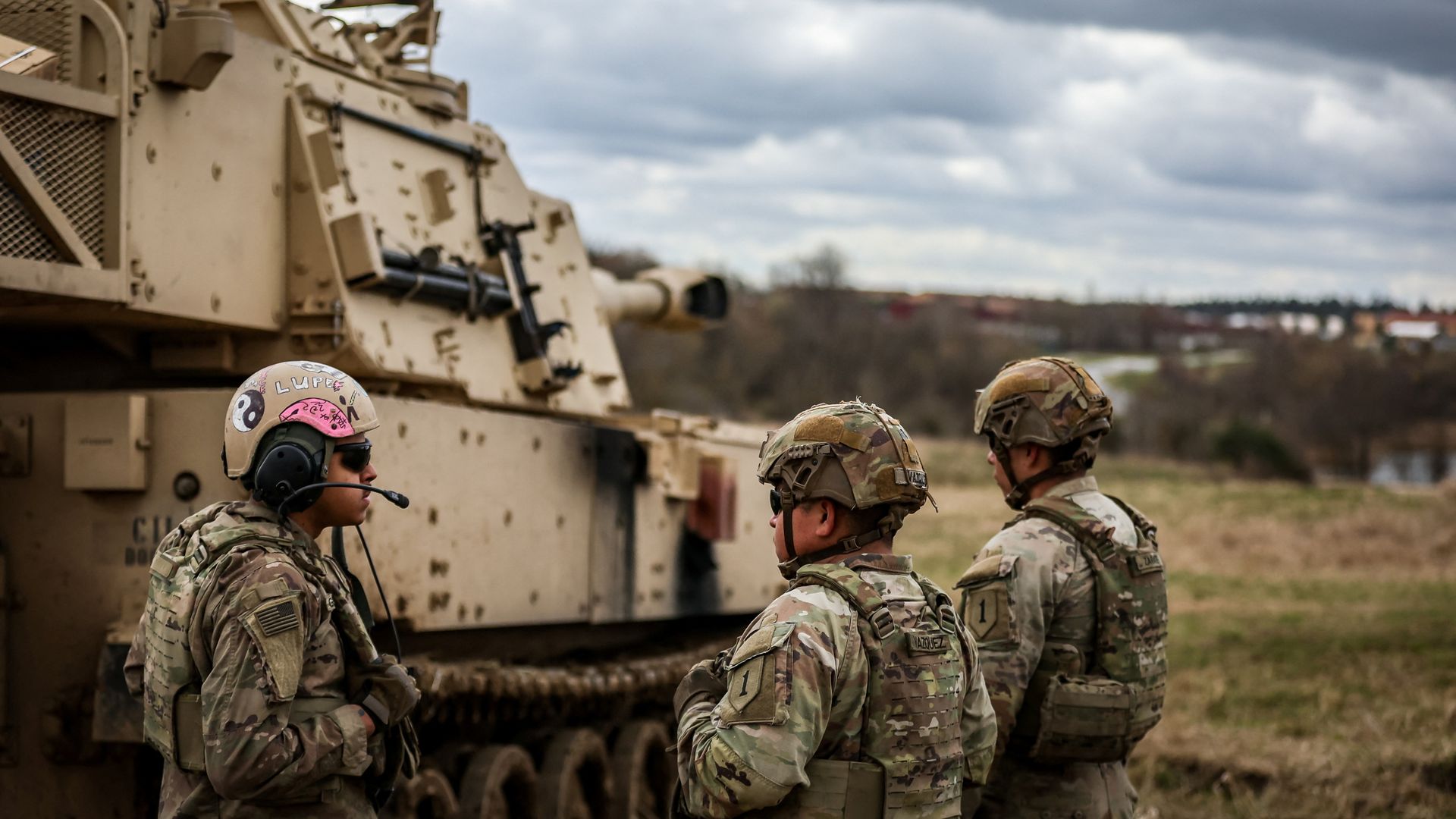
The proposed withdrawal of United States military personnel from German soil represents a fundamental shift in the transatlantic security architecture, moving away from a legacy of post-Cold War stability toward a transactional model of collective defense. While public discourse often frames this move through the lens of bilateral friction, a rigorous analysis reveals a complex interplay of fiscal pressure, strategic pivoting toward the Indo-Pacific, and the "burden-sharing" metric that has governed NATO relations for decades. The logic of troop withdrawal is not merely a diplomatic threat; it is a manifestation of the evolving U.S. "Global Defense Posture Review" which seeks to optimize force distribution against modern peer competitors rather than maintaining static historical footprints.
The 2% Threshold and the Fiscal Friction Point
The primary catalyst for this strategic tension is the North Atlantic Treaty Organization (NATO) 2014 Wales Summit Declaration, where member states committed to spending 2% of their Gross Domestic Product (GDP) on defense by 2024. Germany’s historical trajectory toward this goal has been slower than Washington’s expectations, creating a structural imbalance in the alliance's "Resource-to-Risk" ratio.
From an analytical standpoint, the 2% metric serves as a proxy for political commitment rather than a direct measure of military capability. Germany, as Europe’s largest economy, possesses a GDP that makes the 2% target a massive absolute sum. When Germany undershoots this target, it creates a "Security Free-Rider" effect, where the U.S. effectively subsidizes European regional stability, allowing Berlin to redirect those funds into domestic social infrastructure or industrial subsidies. This creates a competitive disadvantage for the American taxpayer, who bears the cost of the $Global Power Projection$ necessary to secure the very trade routes that fuel German exports.
The Operational Architecture of U.S. Forces in Germany
To understand the impact of withdrawal, one must deconstruct what the U.S. military actually does in Germany. It is a mistake to view these troops as a local defense force for Berlin. Instead, Germany serves as the "Global Logistics Hub" for the U.S. Department of Defense.
- EUCOM and AFRICOM Command Structures: Stuttgart serves as the nerve center for both U.S. European Command and U.S. Africa Command. Removing troops involves more than moving infantry; it requires the relocation of high-level command and control (C2) apparatuses that manage operations across two continents.
- Ramstein Air Base: This facility functions as the primary power projection platform for the Middle East and Africa. It is the indispensable link in the "Global Reach" chain, facilitating everything from drone operations to aeromedical evacuations.
- Landstuhl Regional Medical Center: As the largest American military hospital outside the United States, Landstuhl is the critical "Survival Node" for any U.S. engagement in the Eastern Hemisphere.
A withdrawal is not a simple subtraction of personnel; it is a dismantling of an integrated ecosystem. The cost of replicating this infrastructure elsewhere—potentially in Poland or the Baltic states—would involve a multi-billion dollar capital expenditure that the U.S. Congress may be unwilling to authorize without a clear strategic dividend.
The Strategic Relocation Hypothesis: The Move Eastward
One prevailing theory suggests that troop withdrawal from Germany is a precursor to a "Forward Presence" model in Eastern Europe. This shift follows the "Frontline State" logic. During the Cold War, West Germany was the frontline; today, that line has shifted to Poland and the Baltic states.
Relocating forces to Poland offers several tactical advantages:
- Proximity to the Suwalki Gap: Reducing the time-to-theater for a potential conflict in the Baltics.
- Political Alignment: Poland has consistently met the 2% GDP defense spending requirement and has expressed a willingness to co-finance U.S. permanent bases.
- Deterrence Signaling: A permanent presence in Poland sends a significantly more aggressive signal to Moscow than a rotational presence in Germany.
However, this move risks violating the 1997 NATO-Russia Founding Act, which limits the permanent stationing of "substantial combat forces" in former Warsaw Pact territories. A breach of this agreement could trigger a reciprocal escalation, fundamentally altering the risk profile of the European theater.
The Economic Fallout of Presence Reduction
The presence of roughly 35,000 U.S. troops, plus thousands of civilian contractors and family members, contributes an estimated €2 billion to €3 billion annually to local German economies, particularly in regions like Rhineland-Palatinate and Bavaria. The withdrawal triggers a "Localized Recession" in these host communities.
The economic relationship is defined by three primary flows:
- Direct Employment: Local nationals employed on bases in maintenance, logistics, and administrative roles.
- Service Consumption: Off-base housing, retail, and hospitality spending by military families.
- Infrastructure Contracts: Large-scale construction and utility contracts awarded to German firms for base upkeep.
The removal of this demand side of the equation leaves a vacuum that the German federal government would be forced to fill with stimulus, further complicating their fiscal balance and their ability to reach the 2% defense target.
Structural Bottlenecks in Force Realignment
The logistical friction of moving 10,000 to 12,000 troops (the figures often cited in withdrawal plans) is immense. The U.S. military operates on a "Time-Phased Force and Deployment Data" (TPFDD) system. A sudden withdrawal disrupts the rotation cycles of units currently stationed in CONUS (Continental United States) that are slated to replace those in Germany.
The primary bottleneck is the "Infrastructure Gap." Most potential alternative hosts in Europe lack the hardened hangars, specialized munitions storage, and high-bandwidth communication lines already established in Germany over seventy years. Moving troops back to the U.S. rather than elsewhere in Europe creates a "Strategic Distance Penalty," where the "Time-to-Conflict" for U.S. forces increases from hours to days or weeks.
Evaluating the "Transactional Defense" Model
The threat of withdrawal introduces "Transactionalism" into a relationship previously defined by shared values and long-term security guarantees. This shift changes the "Incentive Structure" for European allies. If U.S. protection is contingent on fiscal milestones, European nations face a fork in the road:
- Strategic Autonomy: Investing heavily in a purely European defense capability (e.g., PESCO) to reduce reliance on the U.S. umbrella.
- Bilateral Accommodation: Bypassing NATO structures to cut direct deals with Washington, as seen with Poland’s "Fort Trump" proposal.
Strategic autonomy is a decades-long project that Europe is currently unequipped to finish. The "Interoperability Gap" between different European militaries—using different tank models, aircraft, and communication protocols—means that a U.S. withdrawal creates a "Security Vacuum" that cannot be filled by current European inventories.
The Indo-Pacific Pivot and Resource Competition
The withdrawal must be analyzed within the context of the "National Defense Strategy" (NDS), which prioritizes "Great Power Competition" with China. Every dollar and every soldier stationed in a stable, peaceful Germany is a resource not deployed to the "First Island Chain" in the Pacific.
The U.S. Navy and Air Force are increasingly prioritized over heavy ground forces in the European theater. The "Opportunity Cost" of maintaining a massive footprint in Germany is the slowing of the Pacific "Rebalance." From a data-driven perspective, the threat to U.S. hegemony is higher in the South China Sea than in the Fulda Gap. Therefore, reducing the German footprint is a logical "Asset Reallocation" to a higher-risk, higher-reward theater.
Strategic Play: The Path of Maximum Leverage
The most probable outcome is not a total withdrawal, but a "Redistribution of Capability." The U.S. should leverage the threat of withdrawal to secure specific, non-monetary concessions from Germany that enhance the overall alliance.
- Infrastructure Investment: Rather than just hitting the 2% GDP mark, Germany should be pressured to invest specifically in "Military Mobility"—improving bridges, rail lines, and ports that allow U.S. forces to move quickly from the Atlantic to the Russian border.
- Energy Decoupling: Linking security guarantees to energy policy. The U.S. sees German reliance on Russian energy (e.g., Nord Stream pipelines) as a strategic vulnerability that undermines the very security the U.S. troops are there to provide.
- Digital Sovereignty: Ensuring that German 5G and communication infrastructure is free from Chinese state-linked hardware, preserving the integrity of NATO intelligence sharing.
The optimal strategy for the U.S. is to use the troop presence as a "Variable Incentive" rather than a "Static Commitment." By making the footprint more modular and rotational, the U.S. regains the flexibility to respond to emerging threats in Asia while maintaining enough of a "Tripwire" in Europe to satisfy the Article 5 obligations of the NATO treaty. The era of the permanent, multi-generational overseas garrison is ending; the era of the "Dynamic Force Employment" has begun.