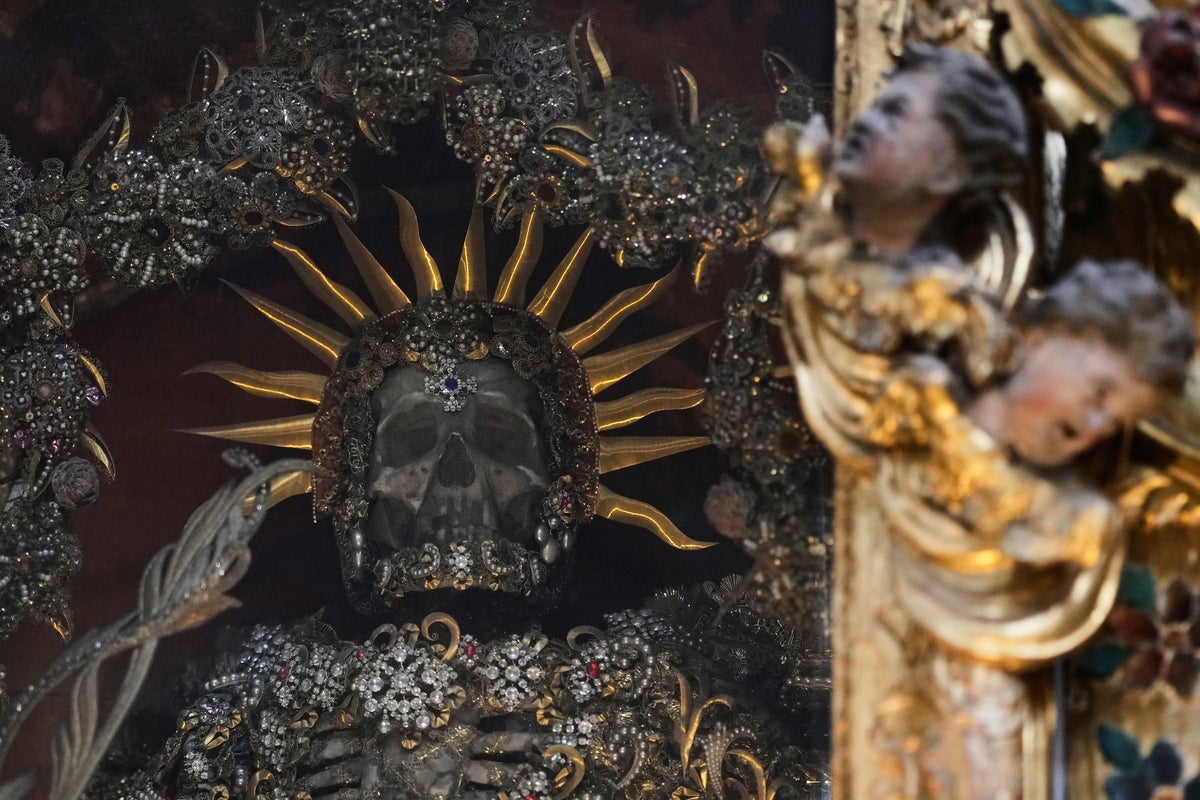
Walk into a quiet parish church in the Bavarian countryside and you might find a skeleton staring back at you. He isn’t just bone. He’s dripping in gold leaf, draped in silk, and his eye sockets are filled with enormous, shimmering rubies. These are the Catacomb Saints. For centuries, they stood as the ultimate influencers of the Counter-Reformation. They weren't just decorations. They were psychological warfare wrapped in velvet.
The story starts in 1578. Local workers in Rome stumbled upon a massive network of underground tombs. They found thousands of skeletons. At the time, the Catholic Church was losing ground to the Protestant Reformation. Martin Luther’s followers had been busy smashing statues and stripping churches bare. The Vatican needed a comeback. They decided these bones belonged to early Christian martyrs. In related news, read about: Operational Fragility and the Aviation Fuel Supply Chain A Structural Analysis of Summer Peak Disruptions.
They weren't martyrs. Most were just regular Romans buried centuries earlier. That didn't stop the Church from shipping them across the Alps in crates. German, Swiss, and Austrian churches received these "saints" like rock stars. Once the bones arrived, they underwent a transformation that would make a modern plastic surgeon blush.
The Business of Holy Bling
You can't just put a dusty ribcage on an altar and expect people to pray. It needs flair. Nuns in local convents became the primary architects of these displays. They spent years—sometimes decades—working on a single skeleton. They used fine wire to piece the bones back together. They wrapped the yellowed remains in gauze so the jewels wouldn't slip off. The Points Guy has provided coverage on this fascinating topic in extensive detail.
Take Saint Munditia in Munich’s Peterskirche. She’s reclining on a velvet cushion, clutching a glass flask of "blood" and covered in gems. Or look at the skeletons in Waldsassen Basilica. They have ten of them. It’s the largest collection in one spot. These figures weren't meant to be scary. They were meant to represent the glory of the afterlife. If you stayed loyal to the Church, you’d be rewarded with heavenly riches. It was a very literal sales pitch.
The cost was astronomical. Small villages would pool their money for years to buy real gold thread and precious stones for their resident skeleton. This wasn't just about faith. It was about status. If the next village over had a jeweled saint, you needed one too. It was a 17th-century arms race of the macabre.
How the Enlightenment Killed the Vibe
Everything changed in the late 1700s. Emperor Joseph II came along with a very different mindset. He was an Enlightenment guy. He hated "superstition" and thought the sight of bejeweled corpses was tacky and backward. He issued edicts to strip the saints of their status.
Suddenly, the same villages that spent fortunes on these remains felt embarrassed. They hid the skeletons in basements. They stuffed them into attics. Some were even tossed into communal graves. The "saints" became skeletons in the literal closet. Many of the jewels were stolen or sold off to pay debts.
We’re lucky any of them survived. The ones we see today are the survivors of a massive cultural purge. They stayed hidden for over a century until historians and photographers started taking an interest again. Paul Koudounaris is the guy who really brought them back to the public eye. He traveled across Europe, tracking down these "heavenly bodies" in dark corners of old churches. His work proved these aren't just creepy artifacts. They’re a unique intersection of art, religion, and human desperation.
Where to Find the Best Remains
If you want to see this for yourself, don't just stick to the big cities. The best examples are often in tiny, unassuming towns.
- Waldsassen Basilica: This is the gold standard. They have ten full skeletons. Each has its own personality and "outfit." It’s breathtaking and slightly overwhelming.
- Peterskirche, Munich: Saint Munditia is right there in the city center. She’s the patron saint of single women. People still leave flowers and notes for her.
- Rapperswil, Switzerland: Saint Pancratius is housed here. He’s dressed like a Roman soldier, decked out in armor that would look at home in a high-fantasy movie.
The Meaning Behind the Bone
We look at these today and think they're weird. We see death as something to hide away in sterile hospitals. In the 1600s, death was everywhere. The Black Death wasn't that far in the past. Life was short. People lived with the constant reality of their own end.
The Catacomb Saints offered a bridge. They were a reminder that the body is temporary but the soul is eternal—and apparently, the soul likes jewelry. They represent a time when the line between the physical world and the spiritual world was incredibly thin.
Don't go to these churches expecting a horror show. Go to see the craftsmanship. Look at the way the wire holds the finger bones together. Notice the intricate embroidery on the silk tunics. It’s a level of dedication you don't see anymore. These were labors of love and terror combined into one.
If you’re planning a trip to Bavaria or the Swiss border, skip the standard tourist traps for a day. Rent a car and drive to the smaller parish churches. Look for the side altars. Look for the glass cases. You’ll find history that hasn't been scrubbed clean for a textbook. You’ll find something visceral.
Check the opening hours of the local basilicas before you go. Many are only open for a few hours around mass. Wear comfortable shoes, keep your voice down, and don't take flash photos if there are people praying nearby. Seeing a jewel-encrusted martyr in the dim light of a 400-year-old church is an experience that stays with you long after you’ve left the building.