The air in the high-floor suite of a Beijing luxury hotel always smells faintly of green tea and filtered ventilation. For decades, this was the specific aroma of American ambition. You sat on the heavy leather sofa, waited for a mid-level ministry official to finish his cigarette, and knew that if you signed the dotted line, your company’s stock price would jump by Tuesday.
Donald Trump remembers that smell. The chief executives of America’s largest legacy manufacturing and tech giants remember it too. For four years during his first term, and through the long hiatus that followed, the narrative was simple: Beijing was a vault, and Washington just needed the right crowbar to pop the lock. Now, with Trump back in power and a roster of eager CEOs whispering in his ear, the old playbook has been dusted off. They want back in. They want the massive consumer base, the peerless supply chains, the raw, unadulterated scale that only China used to provide.
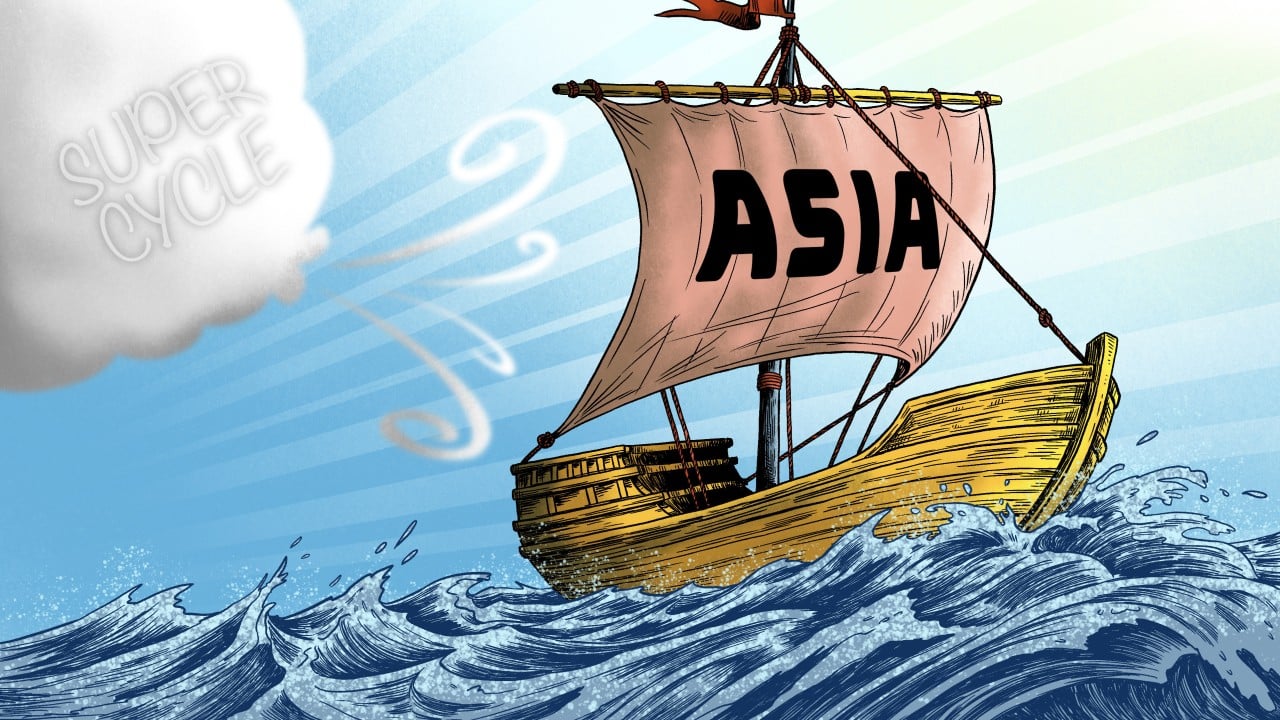
There is just one problem. While Washington was arguing over tariffs and tweets, Asia moved on.
To understand how profound this miscalculation is, you have to leave the West Wing and travel to a humid industrial park three hours outside of Ho Chi Minh City. Meet Nguyen. He doesn’t exist in the spreadsheets of Washington think tanks, but he is the reason the American corporate strategy is failing. Five years ago, Nguyen was a low-level supervisor at a Taiwanese-owned textile mill. Today, he manages a logistics facility that routes high-end components from Seoul, through Vietnam, and into the European Union.
Nguyen doesn’t look north to Beijing for inspiration anymore. He doesn’t look west to California either. His entire world is defined by an intricate, fast-moving web of regional trade that barely acknowledges Western intervention.
When American executives talk about "decoupling" or "re-shoring," they picture a neat world where factories simply pack up their machines and move from Shanghai back to Ohio. It is a comforting fiction. The reality looks more like a sprawling, interconnected root system. Over the last six years, intra-Asian trade—trade between Asian nations, without Western middle-men—surpassed $4.3 trillion.
The Western boardroom is haunted by the ghost of 2012, a time when China was the world’s cheap factory and America was the world’s wealthy mall. That world is dead.
Consider what happened when the first round of heavy tariffs hit Chinese goods. The goal was to punish Beijing and force production back to the American heartland. Instead, Chinese companies did something brilliant and survivalist: they exported their capital. They didn’t close the factories; they moved the ownership. Today, a massive portion of the goods shipping to America from Vietnam, Malaysia, and Indonesia are coming from factories owned by Chinese conglomerates. The label on the box says "Made in Malaysia," but the profits still route through Shenzhen.
This isn't a failure of American policy; it is a fundamental misunderstanding of Asian economic gravity.
The Trump administration’s current pitch to American CEOs relies on a transactional worldview. The logic goes like this: if we threaten China with massive 60% tariffs, and simultaneously offer American corporations tax incentives to bring operations home, we can freeze China out of the global tech and consumer loop. It sounds decisive. It plays well on cable news.
But talk to the people who actually run the ports.
The physical infrastructure of global trade has adapted to a post-American reality. Singapore’s mega-port at Tuas isn't waiting for American container ships to dictate its volume; it is expanding to handle the explosive growth of trade between India, ASEAN, and China. Digital payment networks like Indonesia’s QRIS or Thailand’s PromptPay allow millions of merchants to settle transactions instantly across borders without ever touching a US dollar or a SWIFT banking node.
The West is trying to play a game of economic siege against a region that has built a bypass around the castle walls.
This brings us to the core tension driving the current panic in New York and Washington. American CEOs are trapped between two realities. On one hand, they face a domestic political environment that demands anti-China rhetoric. To praise Beijing is to invite a congressional inquiry. On the other hand, their quarterly earnings reports are deeply tethered to Asian growth. They are begging the Trump administration for a grand bargain—a "deal of the century" that lowers the geopolitical temperature just enough for them to secure their market share in Asia.
They are asking for a key to a door that has already been bricked over.
The assumption that Asia is waiting for American leadership ignores the deep, quiet resentment that has built up over a decade of shifting US policy. One year Washington signs a massive regional trade pact like the Trans-Pacific Partnership; the next year it tears it up. One year it promises unlimited defense support; the next year it demands protection money from allies like Japan and South Korea.
Imagine running a multi-billion-dollar semiconductor firm in Seoul. Your business requires planning horizons of fifteen to twenty years. Can you rely on a superpower that rewrites its foreign policy every forty-eight months based on an election cycle?
You can't. So you diversify. You build relationships with Jakarta, with New Delhi, with Manila. You create an ecosystem that can survive an American political tantrum.
This is the invisible stake of the current trade war. It isn't just about the price of an iPhone or the cost of a washing machine. It is about the loss of American relevance in the fastest-growing economic zone on earth. When the history of this era is written, the defining theme won't be the rise of China; it will be the integration of Asia.
The real problem lies in our stubborn refusal to see Asia as anything other than a collection of subordinates or threats. We view India merely as a counterweight to China. We view Vietnam merely as a backup factory. We view Japan merely as an unsinkable aircraft carrier. We rarely view them as independent actors with their own agendas, their own alliances, and their own vision for the future.
While Washington debates how to contain Beijing, Beijing and its neighbors are quietly building the Regional Comprehensive Economic Partnership (RCEP). It is the world’s largest free-trade bloc, covering nearly a third of the global population and output. Noticeably absent from the guest list? The United States.
This isn't an abstract diplomatic snub. It means that an agricultural exporter in Australia or a tech startup in Vietnam faces lower barriers to trade with each other than an American company does trying to enter either market. The tariff walls we built to keep others out have effectively fenced us in.
Let’s look at the numbers that don't make it into the campaign speeches. In 2010, the United States was the dominant trading partner for the vast majority of Asian nations. Today, that title belongs overwhelmingly to China, but with a crucial twist: Southeast Asian nations now export more to China than they import from it in several key sectors. They aren't just dependencies; they are partners.
The current administration believes that American corporate might can bend this trend to its will. They believe Elon Musk’s factories or Apple’s supply chain shifts can dictate the terms of Asian development. It is an intoxicating form of nostalgia. It evokes the era of the Marshall Plan, when American capital was the only capital that mattered.
But the money flowing through Asia today is diverse, local, and fiercely sovereign. Sovereign wealth funds from the Middle East are partnering with Indonesian green energy projects. Japanese venture capital is funding the next generation of Indian e-commerce. Chinese state banks are financing deep-water ports in Cambodia.
The American investor is no longer the only game in town. They aren't even the most flexible player at the table.
Where does this leave the American worker, the person who was promised that these trade wars would bring back the golden age of domestic manufacturing?
The factories returning to America are not the labor-heavy operations of the 1970s. They are highly automated, pristine environments where a handful of technicians monitor robotic arms. The jobs aren't coming back in the numbers promised, because the global economy has evolved past the need for human assembly lines in high-cost regions. The real tragedy of the current policy is that it prepares workers for a battle that was fought and lost twenty years ago, while ignoring the skills needed for the economic conflicts of the next fifty.
The boardroom in Beijing is quiet now. The American CEOs have finished their presentations. They have offered their concessions. They have smiled for the cameras with ministry officials, hoping to signal to Wall Street that the China market is still viable, that the old magic still works.
But outside the window, across the East China Sea, down through the crowded shipping lanes of the Malacca Strait, and into the buzzing markets of Ho Chi Minh City, the lights are on. Millions of people are buying, selling, producing, and consuming. They are using apps Americans have never heard of, trading in currencies Americans don't hold, and building a future that doesn't care who wins the next election in Washington.
The dealmaker sits at his desk, pen in hand, waiting for the world to ask for his terms. He doesn't hear the silence coming from the other side of the ocean.