The coffee in your mug is currently a hostage. So is the microchip in your smartphone, the brake pads for your car, and that specific shade of blue yarn you ordered for a weekend project. We rarely think about the anatomy of a global supply chain until it stops breathing. Right now, the respiration of global trade is shallow and labored.
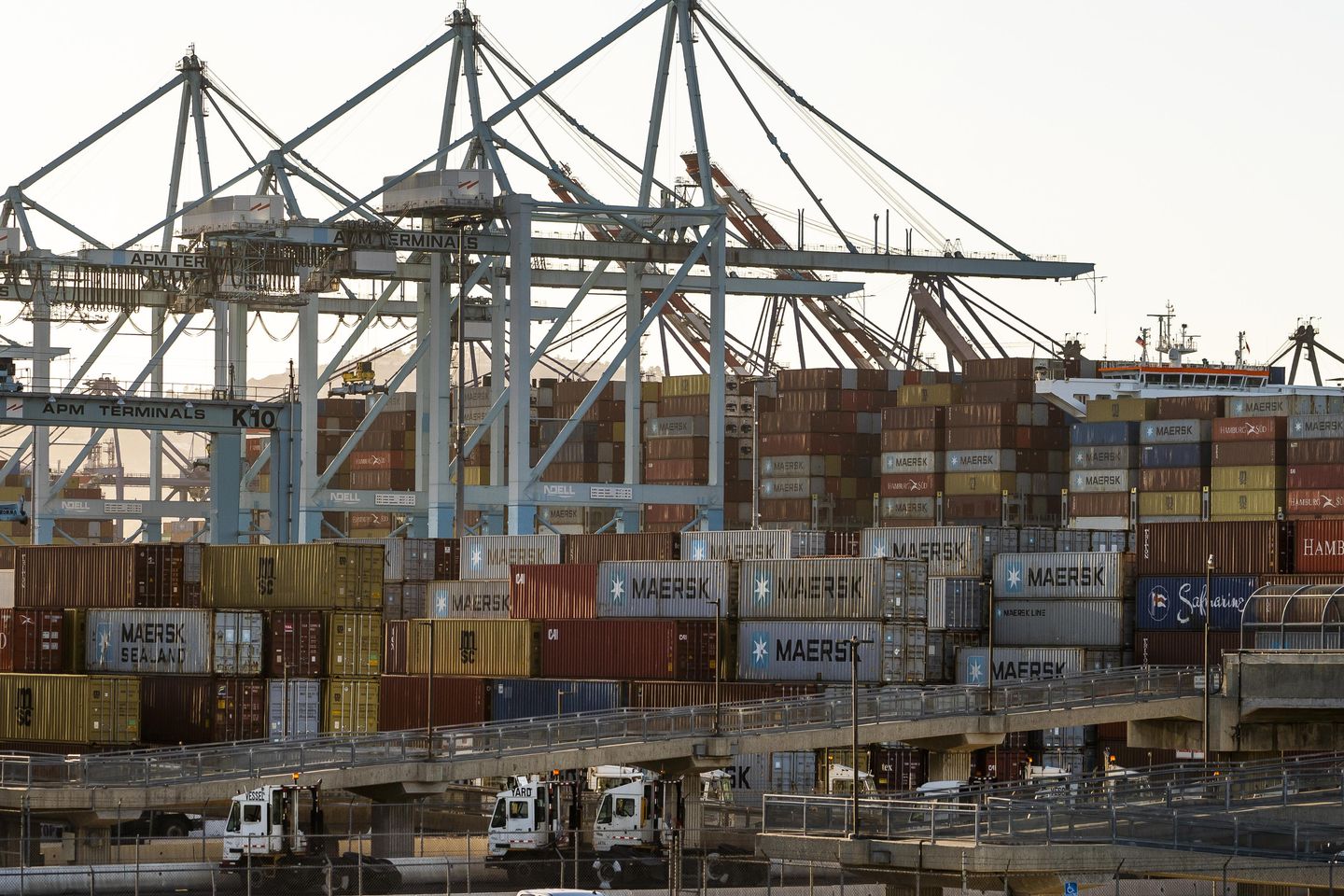
At the helm of a Maersk Triple-E class vessel, the world feels metallic and infinite. These ships are not merely boats; they are floating cathedrals of commerce, stretching nearly a quarter-mile long and carrying enough cargo to fill a line of trucks reaching from New York to Philadelphia. For the crew stationed on the bridge, the horizon usually promises a predictable rhythm of blue water and shifting tides. But lately, the horizon has begun to whisper of fire.
When Maersk, a titan that moves nearly one-fifth of the world’s container trade, decides to pull its fleet away from the Red Sea, the ripple effect is not just a line item on a balance sheet. It is a tectonic shift in how the modern world functions.
The Gate of Tears
The Bab el-Mandeb strait is a narrow throat of water connecting the Indian Ocean to the Red Sea. In Arabic, its name means the "Gate of Tears." Historically, the name referred to the navigational hazards of its reefs, but today, the tears are of a different sort. It is a choke point. If you want to get goods from the manufacturing hubs of Asia to the hungry markets of Europe via the Suez Canal, you must pass through this needle’s eye.
Imagine a captain—let’s call him Elias—standing on the bridge as his vessel approaches this passage. For years, his primary concerns were weather patterns and fuel efficiency. Now, he scans the sky for the erratic silhouette of a drone and monitors the radio for the chatter of militia groups. The threat is no longer theoretical. Missiles and boarding parties have turned this stretch of water into a gauntlet.
When Maersk announced it would "pause" all transits through the area, it wasn't a bureaucratic whim. It was an admission that the machinery of the 21st century is surprisingly fragile. By diverting ships away from the Suez Canal, Maersk is forced to send these giants around the Cape of Good Hope at the southern tip of Africa.
Consider the math of that detour.
Rounding Africa adds roughly 3,500 nautical miles to the journey. That is not just a longer scenic route. It is ten to fourteen extra days at sea. It is thousands of tons of additional low-sulfur fuel burned into the atmosphere. Most importantly, it is a sudden, violent contraction of global shipping capacity. If every ship takes two weeks longer to reach its destination, there are fewer ships available to start the next trip.
The circle of trade begins to tighten.
The Invisible Tax on Everything
We often talk about "inflation" as if it is a natural weather phenomenon, like a storm that blows in from the coast. In reality, inflation is often the sum of a thousand tiny frictions.
When a Maersk vessel is diverted, the cost of the voyage skyrockets. Insurance premiums for "war risk" in the Red Sea had already climbed to levels that made the eyes water. Now, the sheer cost of the extra fuel and the wages for the crew for those extra two weeks must be paid by someone. That someone is you.
The $15 toaster at the big-box store doesn't stay $15 when the path it takes to get to the shelf is suddenly blocked by a military conflict. We are witnessing the rebirth of distance. For thirty years, we lived in a world where geography seemed to have been conquered. Everything was "just in time." You clicked a button, and the world delivered.
That illusion is evaporating.
The "just in time" model is being replaced by "just in case." Companies are now scrambling to find warehouse space to hoard inventory, fearing the next closure or the next drone strike. This hoarding creates its own vacuum, pulling prices upward and leaving smaller businesses—those without the capital to weather a three-week delay—gasping for air.
The Human Cost of the Long Way Round
Life on a diverted ship is a strange, suspended animation. For the sailors, the "Cape route" is a journey through some of the most treacherous waters on the planet. The South Atlantic and the Indian Ocean do not offer the placid transit of the Red Sea. Here, the waves are monsters.
Elias and his crew are now spending an extra fortnight away from their families. They are operating in a state of high alert that the human nervous system wasn't designed to maintain for months on end. Even when they are miles away from the missile range of the Houthi rebels, the psychological shadow remains. They are the invisible laborers of the sea, the people who ensure that our lives remain convenient while theirs become increasingly precarious.
The diversion also places an immense strain on port infrastructure. Logistics is a game of timing. Ports are like giant Tetris boards; if the pieces don't arrive when they are supposed to, the entire screen fills up and the game ends. When a cluster of ships that were delayed by the African detour all arrive at a European port at the same time, they create a "vessel bunching" effect.
Trucks can't be found. Berths are full. Containers sit on the dock, baking in the sun or shivering in the rain, while the goods inside—pharmaceuticals, seasonal clothing, perishable food—slowly lose their value or their shelf life.
Why We Can't Just Look Away
It is tempting to view the conflict in the Middle East as a distant tragedy, a geopolitical knot that has nothing to do with a suburban kitchen in the Midwest or a high-rise office in London. But the global economy is a single, interconnected nervous system. A pinch in the Red Sea is felt in the wallet of a parent buying school supplies.
Maersk’s decision is a signal fire. It tells us that the era of "safe" seas is under threat. Since the end of the Second World War, the relative freedom of the oceans has been a given. It was the bedrock of global prosperity. If that bedrock cracks, the entire structure of our modern lifestyle begins to lean.
We are not just talking about shipping lanes; we are talking about the end of the frictionless world.
The military conflict in the Middle East has weaponized the geography of trade. By using relatively inexpensive drones to threaten multi-billion dollar shipping operations, non-state actors have found a way to leverage the very interconnectedness that made us rich. They have realized that they don't need to win a war on land if they can simply make the sea too expensive to cross.
The Choice Ahead
There is no easy fix. Expanding the naval presence in the region is a move fraught with its own escalatory risks. Continuing the diversions around Africa is a slow-motion economic car crash.
We find ourselves at a crossroads where the "human element" is no longer just a phrase used by HR departments. It is the captain deciding whether to risk his crew’s lives. It is the logistics manager in a windowless office trying to explain to a CEO why the components for the new product line are currently floating off the coast of Namibia. It is the consumer wondering why a simple order now takes a month to arrive.
The Red Sea is a mirror. It reflects our total dependence on a system that is as magnificent as it is vulnerable. As the Maersk fleet turns its prows toward the south, leaving the "Gate of Tears" behind, it leaves us with a haunting realization.
We have built a world where everything is connected, which means we have built a world where everyone is vulnerable. The ghost ships of the Bab el Mandeb are a warning that the map of the world is being redrawn, not by cartographers, but by the cold, hard realities of a planet that has suddenly become much, much larger.
The next time you hold a simple object in your hand—a pen, a toy, a tool—take a moment to consider the silence of the ocean. Somewhere out there, a ship is laboring through heavy swells, taking the long way home because the short way is a war zone. We are all passengers on those ships, whether we realize it or not.
The horizon is no longer empty.
The silence of the supply chain is the loudest sound in the world.
Would you like me to look into how other major shipping lines like MSC or Hapag-Lloyd are responding to this shift compared to Maersk?