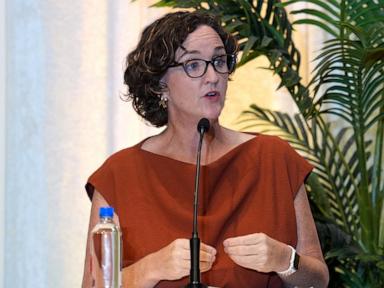
The air inside the television studio is unnaturally still. It carries that peculiar, metallic scent of high-voltage electronics and industrial cooling systems. Under the scorching glare of the overhead rigs, four people stand behind podiums that feel more like barricades than furniture. Outside these soundproof walls, nearly 40 million people are trying to figure out if their version of California is about to disappear.
This isn't just a debate. It is a collision of survival strategies.
California is often described as a monolith—a blue fortress on the edge of the Pacific. But the reality is a jagged collection of anxieties. There is the single mother in Fresno watching her electricity bill eclipse her grocery budget. There is the tech worker in San Francisco wondering why the sidewalk outside their $4,000 apartment feels like a failed state. There is the farmer in the Central Valley looking at a cracked irrigation ditch, waiting for a promise that never arrives.
When the red light on the camera flickers to life, these candidates aren't just speaking to a moderator. They are auditioning for the role of lead architect in a house that many residents feel is currently on fire.
The High Cost of Staying Put
The numbers tell a story that the stump speeches usually try to soften. California’s median home price has hovered around $800,000, a figure that feels less like a statistic and more like a "No Trespassing" sign for an entire generation. We aren't just talking about a housing shortage; we are talking about a fundamental shift in the California Dream.
Consider a hypothetical teacher named Elena. She works in San Jose, molding the minds of the next generation. By every traditional metric, she is a success. Yet, she spends three hours a day in a steel stream of traffic on I-880 because she can only afford a roof over her head sixty miles away from her classroom. When the candidates debate "zoning reform" or "CEQA exemptions," they are actually debating whether Elena gets to see her children before they go to sleep.
The stage tonight features a spectrum of fixes for Elena’s commute. On one side, you have the institutionalists who argue that the current machine just needs a more capable operator—better funding for subsidized units and a steady hand on the tiller of state grants. On the other, the disruptors claim the machine itself is the problem, advocating for a scorched-earth policy on regulations to let developers build until the cranes block out the sun.
The tension in the room isn't about whether more houses should exist. It’s about who gets to decide where they go and who they are for.
The Shadow of the Sidewalk
If housing is the slow-motion crisis, homelessness is the acute trauma. It is the issue that haunts every California mayor and now dominates the gubernatorial stage.
For years, the debate was settled on "Housing First"—the idea that you cannot treat addiction or mental illness while someone is sleeping on a piece of cardboard. But as the tents multiplied and the encampments became permanent fixtures of the urban geography, the public’s patience fractured.
The candidates are now forced to navigate a minefield. They must balance the humanitarian necessity of care with a growing, visceral demand for order. You can see it in the way they pivot. One candidate leans heavily into the "Care Court" model, emphasizing state-mandated treatment for those unable to care for themselves. Another counters with a focus on clearing the streets immediately, prioritizing the rights of the tax-paying public to use their parks and sidewalks.
It is a debate between the long-term cure and the short-term bandage. Neither side wants to admit that the scale of the problem might actually outpace the resources of the office they are seeking. They speak in certainties because the alternative—admitting that 180,000 people living outdoors is a problem without a quick fix—is political suicide.
The Wallet and the Well
California is currently the fifth-largest economy in the world. It is a place of staggering wealth, home to the silicon titans and the entertainment moguls. Yet, it also maintains the highest poverty rate in the nation when adjusted for the cost of living.
This duality is the ghost at the feast.
When the candidates discuss the state budget—which has swung wildly from a $100 billion surplus to a multibillion-dollar deficit in what feels like a heartbeat—they are talking about the fragility of the Golden State. California’s tax structure is a high-wire act. It relies heavily on the capital gains of its wealthiest citizens. When the stock market sneezes, the state’s social safety net catches a cold.
- The Volatility Factor: A small fraction of taxpayers provides nearly half of the state's personal income tax revenue.
- The Business Exodus: High taxes and regulatory hurdles have prompted several high-profile departures to Texas and Florida, creating a narrative of decline that the candidates must either debunk or embrace as a call to arms.
- The Infrastructure Gap: From a power grid that struggles under heatwaves to a water system designed for a climate that no longer exists, the physical foundations of the state are showing their age.
One candidate frames this as the inevitable price of progress and a commitment to climate leadership. Their opponent frames it as a "competence crisis," arguing that the state is failing at its most basic functions while obsessing over national political posturing.
The Identity of the West
Beyond the policy white papers, there is a struggle for the soul of the state. California has long viewed itself as the laboratory of the future. What happens here—in emissions standards, in civil rights, in technology—eventually happens everywhere else.
But there is a palpable fear that the laboratory is broken.
The debate stage reflects this identity crisis. Is California still the land of opportunity, or has it become a gated community for the elite? Is the state’s aggressive pursuit of green energy a model for the world, or a cautionary tale of soaring utility rates and rolling blackouts?
The candidates use these questions as weapons. They talk about "restoring the California Dream" or "protecting our progress." These are empty vessels until they are filled with the lived experience of the voters.
The real debate isn't happening on the screen. It’s happening in the living rooms where the sound is turned down. It’s happening in the line at the gas station where the price per gallon is a five-dollar insult. It’s happening in the quiet moments of a small business owner looking at their books and wondering if they should finally call that Realtor in Austin.
As the final rebuttals are delivered and the candidates offer their practiced smiles to the lens, the lights in the studio begin to dim. The metallic scent remains. The candidates shake hands, or they don't, and they disappear into the wings to be briefed by their consultants on which soundbites landed and which fell flat.
Outside, the sun is setting over the Pacific, casting long, golden shadows across a state that remains as beautiful as it is troubled. The cameras are off. The podiums are empty. But the questions remain, hanging in the salt air, waiting for an answer that no 60-second response can provide.
The glass screen goes black. The 40 million remain, still looking for a way to stay.