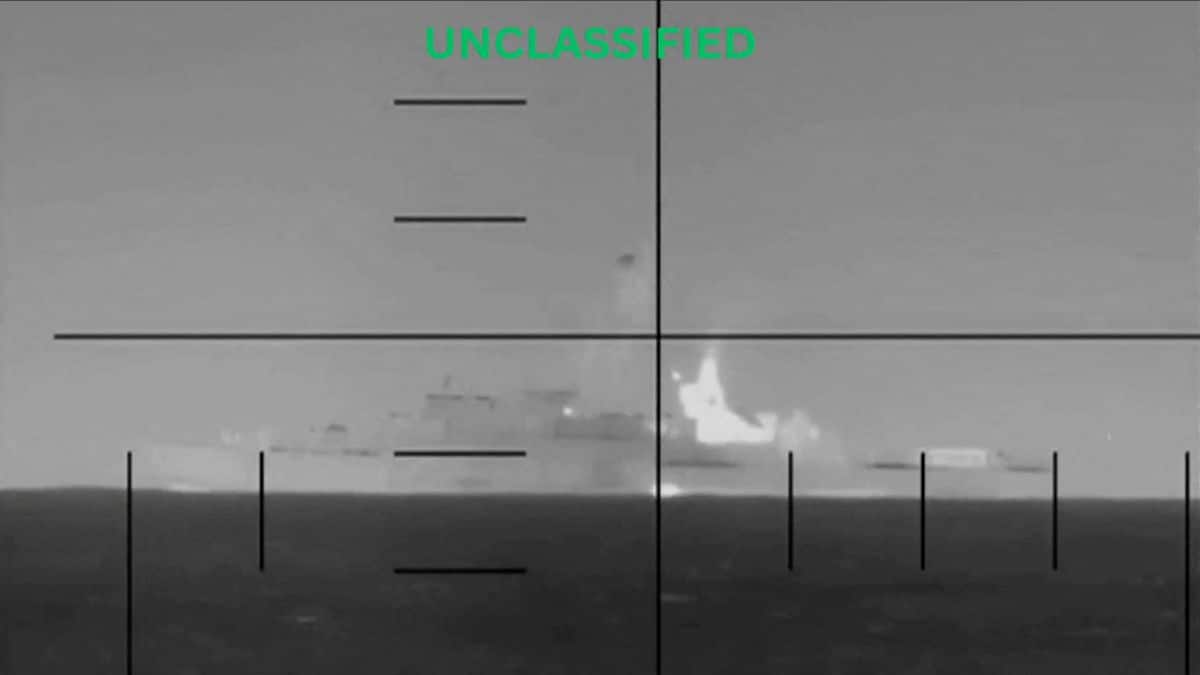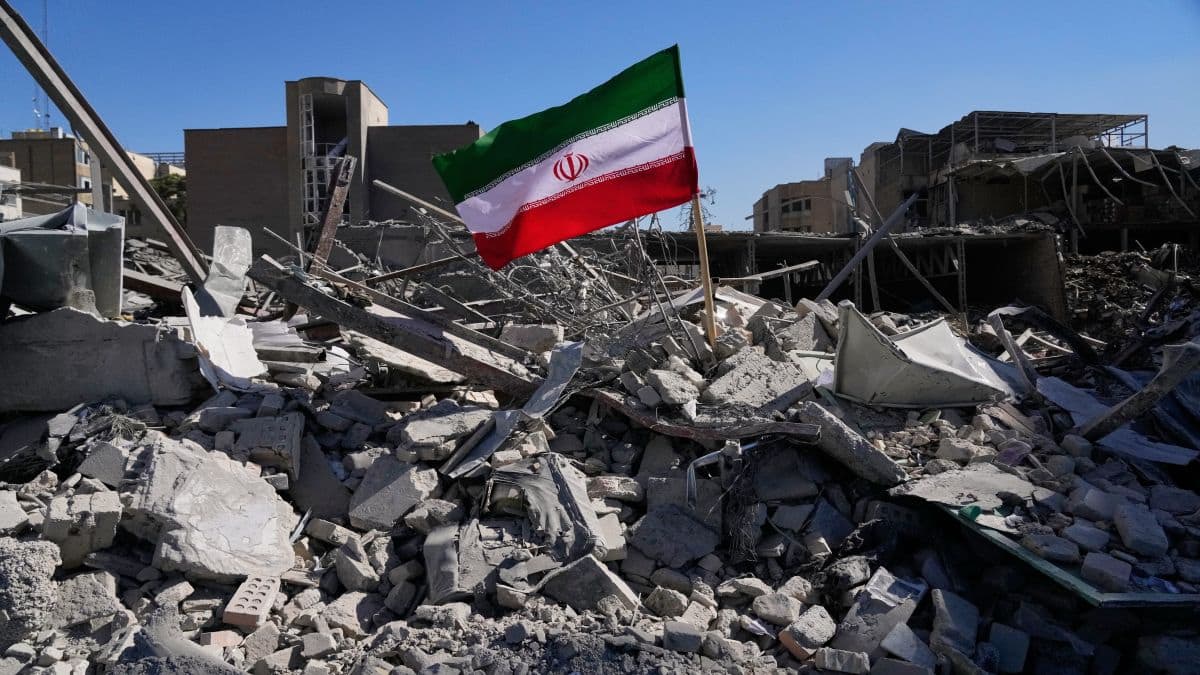
The headlines are predictable. They scream about "escalation," "widening wars," and "accelerated attacks" on Iranian proxies. If you listen to the beltway analysts, the United States is finally "restoring deterrence" through a series of kinetic strikes across Iraq, Syria, and Yemen. They want you to believe that dropping $2 million missiles on $500 drones is a display of strength.
It isn't. It’s a slow-motion strategic bankruptcy.
The "lazy consensus" suggests that military activity equals geopolitical influence. In reality, the U.S. is currently trapped in a tactical loop that Iran designed specifically to drain American treasury and political will. We are watching the most expensive game of Whack-A-Mole in human history, and the moles are winning by simply existing.
The Myth of Kinetic Deterrence
The central fallacy of current U.S. policy in West Asia is the belief that you can bomb an ideology into submission or bankrupt a regime that has mastered the art of "poverty-core" warfare.
When the U.S. launches a strike against a Kata'ib Hezbollah warehouse or a Houthi launch site, the Pentagon counts the "assets destroyed." They report a percentage of capability degraded. This is a 20th-century metric applied to a 21st-century asymmetric problem.
Iran does not fight to win battles; they fight to occupy the headspace of American policymakers. Every time a U.S. carrier group is forced to remain in the Red Sea to protect commercial shipping from $30,000 suicide boats, Tehran achieves a return on investment that would make a Silicon Valley VC weep with envy.
The cost-exchange ratio is catastrophic. We are using $2.1 million RIM-162 Evolved SeaSparrow Missiles to intercept hardware that costs less than a used Honda Civic. You don't need a PhD in economics to see that this "acceleration of attacks" is actually a managed liquidation of U.S. defensive stocks.
Why "Widening War" is a Misnomer
The competitor's narrative suggests the war is "widening." That implies a lack of control. On the contrary, the current state of friction is exactly where Iran wants the thermostat set.
Tehran’s "Forward Defense" strategy is built on the principle of never fighting on Iranian soil. By utilizing the Axis of Resistance, they have created a series of shock absorbers. When the U.S. retaliates, it hits Lebanese, Iraqi, or Yemeni soil. Iran remains pristine, its infrastructure untouched, while it harvests the political benefits of "Western aggression" in the Arab street.
The status quo isn't a widening war; it's a fixed-cost occupation where the U.S. pays the bill and Iran collects the interest.
The Logistics of a Failed Policy
Consider the "People Also Ask" favorite: Does the U.S. have the capability to stop Iran? The answer is technically yes, but strategically no. To actually "stop" the Iranian influence machine, the U.S. would need to occupy three more countries and commit to a fifty-year nation-building project that the American public has zero appetite for.
I have watched various administrations attempt to "pivot to Asia" for over a decade. Every single time, they get pulled back into the Levant because they refuse to acknowledge a simple truth: dominance is not the same as stability. By trying to dominate every square inch of the Middle East, the U.S. ensures it can never provide stability anywhere else.
The Strategic Sanctions Trap
We are told that "maximum pressure" and retaliatory strikes will force Iran to the table. This ignores thirty years of evidence.
Sanctions have not stopped Iran's missile program; they have forced Iran to build a decentralized, domestic supply chain that is immune to global market fluctuations. By isolating them, we made them anti-fragile.
The current military strikes are the kinetic version of sanctions. They are a "do something" policy for a "think something" problem. When the U.S. hits a target in Baghdad, it doesn't weaken Iran's grip; it weakens the sovereignty of the Iraqi government, which the U.S. spent trillions trying to stand up. We are literally destroying our own project to spite a neighbor.
The Reality of the Red Sea
The Houthi situation is the perfect microcosm of this failed logic. The media calls it a threat to global trade. It is. But the "solution"—Operation Prosperity Guardian—is a tactical band-aid on a femoral artery bleed.
The Houthis are not a traditional military. They are a motivated insurgent force that has survived a decade of Saudi bombing using much more brutal methods than the U.S. is currently employing. If the Saudis couldn't bomb them into the stone age with American intelligence and British planes, what makes the current "accelerated attacks" any different?
The only thing these attacks achieve is the validation of the Houthi brand. They went from a regional rebel group to the only force "directly challenging the Zionist-American hegemony" in the eyes of their target demographic. We are giving them the best recruitment campaign they’ve had in twenty years.
The Institutional Sunk Cost
Why does the U.S. keep doing this? Because the Department of Defense is an institution designed to spend money and fire munitions. To admit that these strikes are ineffective is to admit that the entire post-9/11 security architecture in the Middle East is obsolete.
I’ve sat in rooms where "proportionality" is discussed as if it were a mathematical formula for peace. It isn't. Proportionality is just a way to stay in the game without ever winning it. It’s the "participation trophy" of warfare.
Stop Trying to "Win" the Middle East
The counter-intuitive truth: The U.S. would gain more power by doing less.
By engaging in every skirmish, the U.S. makes itself a party to every grievance. If Washington stopped treating every drone launch as a challenge to its manhood, the regional powers—who actually have skin in the game—would be forced to manage their own backyard.
Currently, Saudi Arabia, the UAE, and Jordan can afford to be passive because they know the Americans will always provide the umbrella. We are the ultimate "enabler" in a dysfunctional regional relationship.
Imagine a scenario where the U.S. withdrew its fixed positions in Eastern Syria and Iraq. Would Iran "win"? They would certainly gain territory. But they would also gain the responsibility of governing a ruined, hostile population that currently blames the U.S. for its problems. Within six months, the local resistance would be directed at Tehran, not Washington.
We are currently paying for the privilege of being the Middle East's favorite villain.
The Energy Independence Lie
The final pillar of the "lazy consensus" is that we must protect these trade routes for energy security.
The U.S. is now a net exporter of oil and gas. The "acceleration of attacks" is largely protecting Chinese and European supply lines. We are subsidizing the security of our primary economic competitor (China) by keeping the Persian Gulf open with American taxpayer dollars and American lives.
This is not "geostrategy." This is "geosuicide."
The U.S. is not widening the war; it is deepening its own grave. The "success" of hitting a few dozen targets in the desert is a distraction from the fact that the American era in the Middle East is over, and we are the only ones who haven't realized it yet.
Every missile launched is a confession that we have no better ideas.
Stop looking at the maps of where the bombs are falling and start looking at the balance sheet of who is actually gaining ground. It isn't us.