Rain lashed against the floor-to-ceiling glass of a high-rise in Seattle, but the atmosphere inside the room was bone-dry, sterile, and vibrating with the kind of tension that precedes a tectonic shift. For years, the story of the artificial intelligence boom was a simple one. It was a marriage of convenience. Microsoft had the money and the servers; OpenAI had the "brain." It was the golden couple of the valley.
But marriages built on necessity often crumble when the partners realize they no longer need the same things to survive.
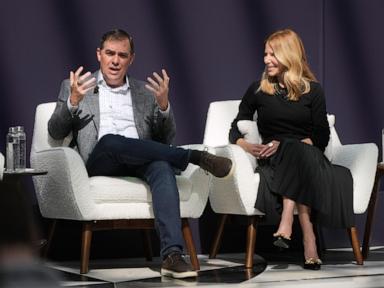
Sam Altman, the face of OpenAI, recently sat across from executives at Amazon. This wasn't a casual coffee. It was a "major expansion." It was a declaration of independence. For Microsoft, the silence following this news must have felt like a physical weight. The tech giant that once held the exclusive keys to the most powerful AI on the planet is watching the locks being changed in real-time.
The Architect’s Dilemma
To understand why this matters, you have to look past the stock tickers. Imagine a woman named Elena. She is a lead engineer at a mid-sized logistics firm. For the last year, she has been tethered to Microsoft Azure because that was the only place she could legally and reliably tap into OpenAI’s GPT-4. She didn't choose Azure because she loved the interface. She chose it because she had no other choice.
Elena is a hypothetical stand-in for thousands of CTOs currently breathing a sigh of relief.
The expansion of OpenAI onto Amazon Web Services (AWS) isn't just a business deal. It is a liberation. By bringing OpenAI’s models into the Amazon "Bedrock" environment, the walls of the walled garden have been breached. Elena can now take her data—the lifeblood of her company—and keep it within the Amazon infrastructure she has used for a decade, while still utilizing the smartest "thinking" machines ever built.
Choice. It is a simple word. In the world of enterprise technology, it is everything.
A Fracture in the Monolith
The relationship between Microsoft and OpenAI was always a strange beast. Microsoft poured $13 billion into Altman’s lap. In exchange, they got a head start. They integrated AI into Word, Excel, and Bing. They became the "AI Company" seemingly overnight.
But OpenAI was never meant to be a subsidiary.
The friction started small. Microsoft began developing its own in-house models, realizing that relying entirely on a partner who might one day walk away was a strategic nightmare. Meanwhile, OpenAI realized that being tied to a single cloud provider limited their reach. If you want to be the intelligence layer for the entire world, you cannot belong to just one landlord.
The ties didn't just loosen; they frayed under the heat of mutual ambition.
Amazon, once seen as a laggard in the generative AI race, played a long game. They didn't panic-buy a single partner. Instead, they built a marketplace. By adding OpenAI to a roster that already includes Anthropic and Meta’s Llama models, Amazon has positioned itself as the neutral ground. They are the Switzerland of the AI wars.
The Invisible Stakes of Cloud Sovereignty
Think about the sheer volume of electricity and silicon required to process a single complex prompt. When you ask an AI to write a legal brief or diagnose a rare disease, you aren't just interacting with code. You are triggering a massive physical chain reaction in a data center somewhere in Virginia or Oregon.
Whoever owns the cloud owns the physical reality of AI.
For years, Microsoft used OpenAI as a cudgel to force companies onto Azure. "You want the best AI? You have to move your data to our house." It worked. Azure's growth skyrocketed. But Amazon’s massive expansion with OpenAI signals that the cudgel has been broken.
The leverage has shifted.
Now, the competition is no longer about who has the exclusive contract with the smartest startup. It is about who provides the best environment for that startup to live in. It is about latency. It is about cost per token. It is about the Boring Stuff.
The Boring Stuff is what actually wins wars.
The Human Cost of Complexity
We often talk about AI as if it is a god descending from the clouds, but for the people building with it, it feels more like trying to assemble a jet engine while the plane is mid-flight.
Consider the developer who has spent six months optimizing their code for the Microsoft ecosystem. Suddenly, the most important tool in their kit is available next door, perhaps with better integration or lower prices. Do they jump ship? Do they stay? The cognitive load on the people actually doing the work is immense.
This isn't just about software updates. It’s about the direction of human careers.
We are seeing a shift from the Era of Discovery to the Era of Deployment. In the Era of Discovery, we marveled that the dog could talk at all. In the Era of Deployment, we are arguing about what the dog is saying and how much it costs per word. Amazon’s move to bring OpenAI into its fold is the clearest sign yet that the novelty has worn off. AI is now a utility, like water or power.
And nobody wants to buy their power from a company that has a monopoly on the lightbulbs.
The Ghost in the Machine
There is a lingering question that no press release will ever answer: How does Satya Nadella feel today?
The Microsoft CEO pulled off what many considered the greatest heist in corporate history by effectively "acquiring" OpenAI without the regulatory headache of a formal merger. He sat on the board. He moved his pawns. He was the kingmaker.
But kingmakers often forget that kings have a habit of wanting to rule alone.
OpenAI’s expansion to AWS is a move toward a multi-cloud future. It is a future where AI models are fluid, moving between servers based on where they are treated best. This is bad for Microsoft’s stock in the long run, but it is excellent for the world. It prevents a monoculture. It ensures that if one cloud provider goes dark, the world’s intelligence doesn't go dark with it.
Beyond the Silicon Horizon
If you walk through the streets of any major city, you won't see the effects of this deal. There are no signs in store windows. But the invisible architecture of our lives—the algorithms that determine your credit score, the systems that manage the traffic lights, the bots that handle your medical insurance—is being rewired.
The "major expansion" is a recognition that the world is too big for one partnership to contain.
OpenAI is becoming the air we breathe. Amazon is providing the lungs. Microsoft is left holding a very expensive, very exclusive, and increasingly less relevant contract.
The story of the tech industry is often told as a series of "disruptions," a word so overused it has lost all meaning. This isn't disruption. This is evolution. It is the messy, painful process of a technology outgrowing its creators and its patrons.
As the rain continues to fall in Seattle, the lights in the Amazon spheres and the Microsoft campus stay on, but the glow is different now. The shadow of the monolith has been replaced by the flickering light of a dozen different fires, each one competing for the heat of the next great breakthrough.
The marriage is over. The era of the mercenary has begun.