The humidity in the transit lounge at Shanghai Pudong feels like a physical weight, a damp blanket pressed against the glass that separates you from the neon-soaked skyline of Lujiazui. You watch the Maglev train blur past in the distance, a silver needle threading through the grey mist. For years, this view was a tease, a glimpse of a world locked behind a thicket of embassy appointments, fingerprinting sessions, and stacks of paper that seemed designed to discourage the casual soul.
But the air has changed. For another perspective, consider: this related article.
The silence of the pandemic years left a void that the world’s second-largest economy is now desperate to fill. They didn’t just open the gates; they took them off the hinges for those who know where to look. You don’t need a gold-embossed sticker in your passport to walk the Bund or eat spicy cumin lamb on a street corner in Xi’an. You just need to understand the rhythm of the new border.
The 144-Hour Clock
Consider Sarah. She is a fictional composite of a thousand modern travelers, sitting in a terminal in Tokyo with a layover that feels like a prison sentence. She has six days before her flight to London. In the old world, she would stay in the airport hotel, eating club sandwiches and watching filtered news. Related analysis on this matter has been provided by National Geographic Travel.
In the new world, Sarah walks up to a specific desk marked "24/144-hour Transit."
This is the crown jewel of China’s new openness. If you are a citizen of one of 54 countries—including the United States, Canada, the UK, and most of Europe—you can enter China for up to six days without a visa. The catch is a mathematical one. You must be "transiting." This means your journey must look like a line, not a loop. You go from Country A to China, and then to Country C.
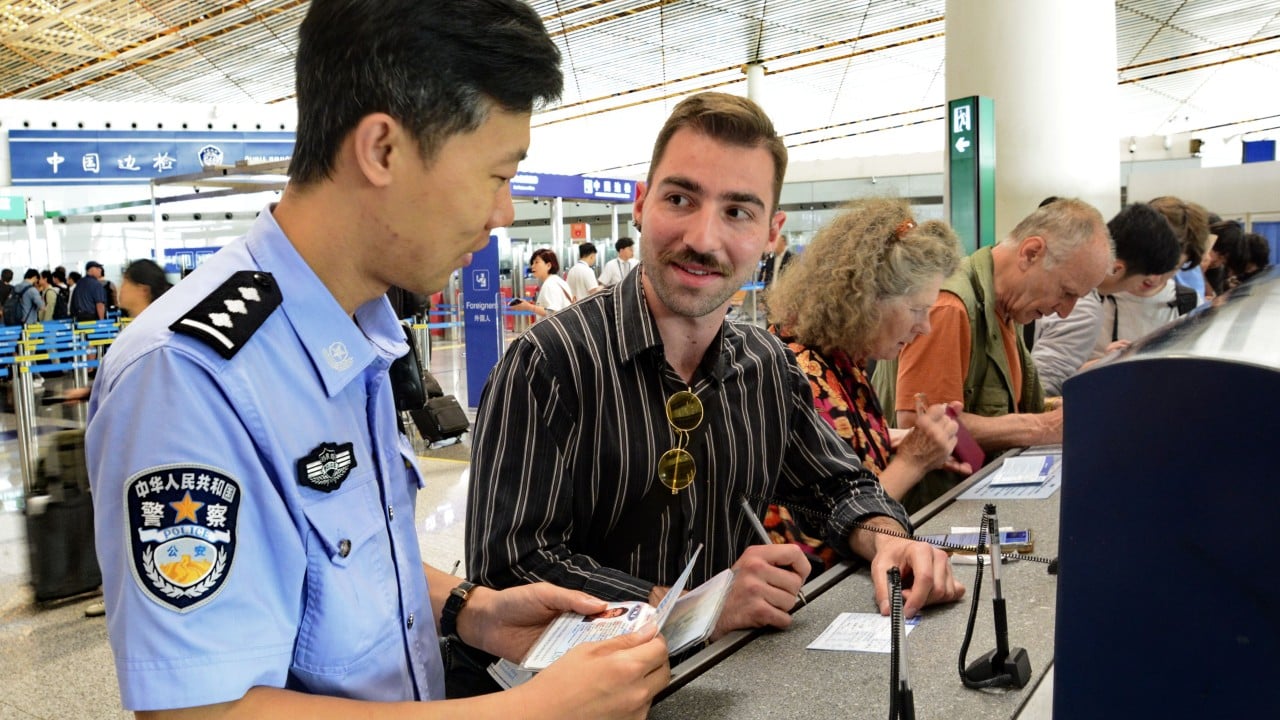
Sarah shows the officer her confirmed ticket to London. She shows her passport. There is a brief, rhythmic thud of a stamp. Suddenly, the skyscrapers of Shanghai aren't just a backdrop; they are her playground. She can wander through the water towns of Jiangsu or the gardens of Zhejiang, provided she stays within the designated area and leaves from a qualifying port.
It is a heartbeat of freedom. Six days is enough time to fall in love with a city, to realize that the headlines you read at home don't capture the smell of scorched wok hay or the way the elderly dance in the parks at dawn.
The Friendship of Nations
Then there is the unilateral handshake. This is the part of the story that feels most like a shift in the tectonic plates of diplomacy. For a growing list of nations—Germany, France, Italy, Spain, the Netherlands, and more recently, Malaysia and Australia—the requirement for a visa has simply evaporated for short stays.
If you carry one of these passports, you walk toward the "Foreigners" lane with nothing but a landing card and a sense of wonder. You are granted 15 days.
Think about the weight of that. Fifteen days is long enough to cross the country on a high-speed train that moves so smoothly a coin balanced on the windowsill won't tip. It’s long enough to hike the Tiger Leaping Gorge or lose yourself in the chaotic, beautiful spice markets of Chengdu.
This isn't just about tourism. It is about the friction of the world being sanded down. When a businessman from Munich can decide on a Tuesday to visit a factory in Shenzhen on a Wednesday, the world shrinks. The "invisible stakes" here are the relationships that form when we stop being afraid of the process.
The Tropical Loophole
If the neon of the north feels too frantic, there is a different kind of silence waiting in the south. Hainan Island is often called the Hawaii of China, but that comparison does it a disservice. It is a place of dense rainforests, white sand, and a policy so liberal it feels like a glitch in the system.
Citizens of 59 countries can enter Hainan for 30 days without a visa.
The only real "guardrail" here is that you must register with a travel agency, but in the digital age, this is a formality handled with a few taps on a screen. You arrive in Sanya, the salt air hitting your face, and you realize you have a full month to explore an island that most of your friends couldn't find on a map.
You aren't just a tourist here; you are a resident of the tropics. You watch the sun sink into the South China Sea, and the bureaucratic nightmare of the past feels like a fever dream that has finally broken.
The Floating Entry
For those who prefer the slow drift of the ocean, the rules have bent even further. If you arrive at a Chinese port on a cruise ship, you can often step off the gangway and into the heart of the country without a visa for up to 15 days.
This is the "Coastal Province" policy. It is designed for the traveler who wants to see the Great Wall in the morning and be back on the ship for dinner. It’s a shortcut for the curious. The ship acts as your guarantor, your floating embassy. You follow the group, or in some cases, you strike out on your own within the province, exploring the colonial architecture of Qingdao or the shipping giants of Ningbo.
It is a reminder that borders are not just walls; they are membranes. They can tighten or relax based on the hunger for connection.
The Regional Handshake
Finally, there is the proximity play. If you find yourself in Hong Kong or Macau—territories that feel like the porch of the Chinese mainland—you have access to "Regional Visa-Free" schemes.
If you are part of a tour group organized by a registered agency in Hong Kong, you can slip into the Pearl River Delta for six days. It’s a glimpse into the "Greater Bay Area," a megalopolis of 80 million people that is reshaping how the world manufactures and dreams.
Or, if you are in the lush, karst-mountain landscape of Guilin, certain tour groups from ASEAN countries can wander the Li River without the usual paperwork. These are the small doors, the side entrances that reward the traveler who does their homework.
The Reality of the Ground
Despite these openings, the experience of entering China is still one of intense observation. The cameras are there. The thermal scanners are there. The officers are polite but precise.
You will be asked where you are staying. You will have your photo taken. This is the "E" in Experience—understanding that freedom of movement in the 21st century comes with a digital footprint. To walk these streets without a visa is a privilege that the Chinese government has extended to jumpstart an engine that stalled during the long years of isolation.
It is a trade-off. You give them your presence, your spending power, and your willingness to see their reality. They give you the keys to a kingdom that was, for a long time, the most difficult destination on earth to reach.
The real story isn't the list of countries or the number of hours. The real story is the man in the 144-hour transit line who realized he could finally attend his grandson’s birthday in Shanghai without waiting three weeks for a consulate appointment. It’s the backpacker who realized they could add a week in Beijing to their Southeast Asia trip just because the wind changed.
The door is heavy, made of iron and history. But right now, it is propped open with a small, wooden wedge. You just have to be brave enough to walk through.
You stand at the immigration desk. The officer looks at your passport, then at your transit ticket to Singapore. He looks at you. There is a moment of stillness where the entire weight of international relations rests on a single person’s decision.
Then, the stamp descends.
The sound is sharp, echoing off the marble floors. He hands the passport back with both hands.
"Welcome to China," he says.
The city is waiting. The soup dumplings are steaming. The ancient and the hyper-modern are clashing in a beautiful, neon riot just outside those sliding glass doors. All you had to do was show up.


