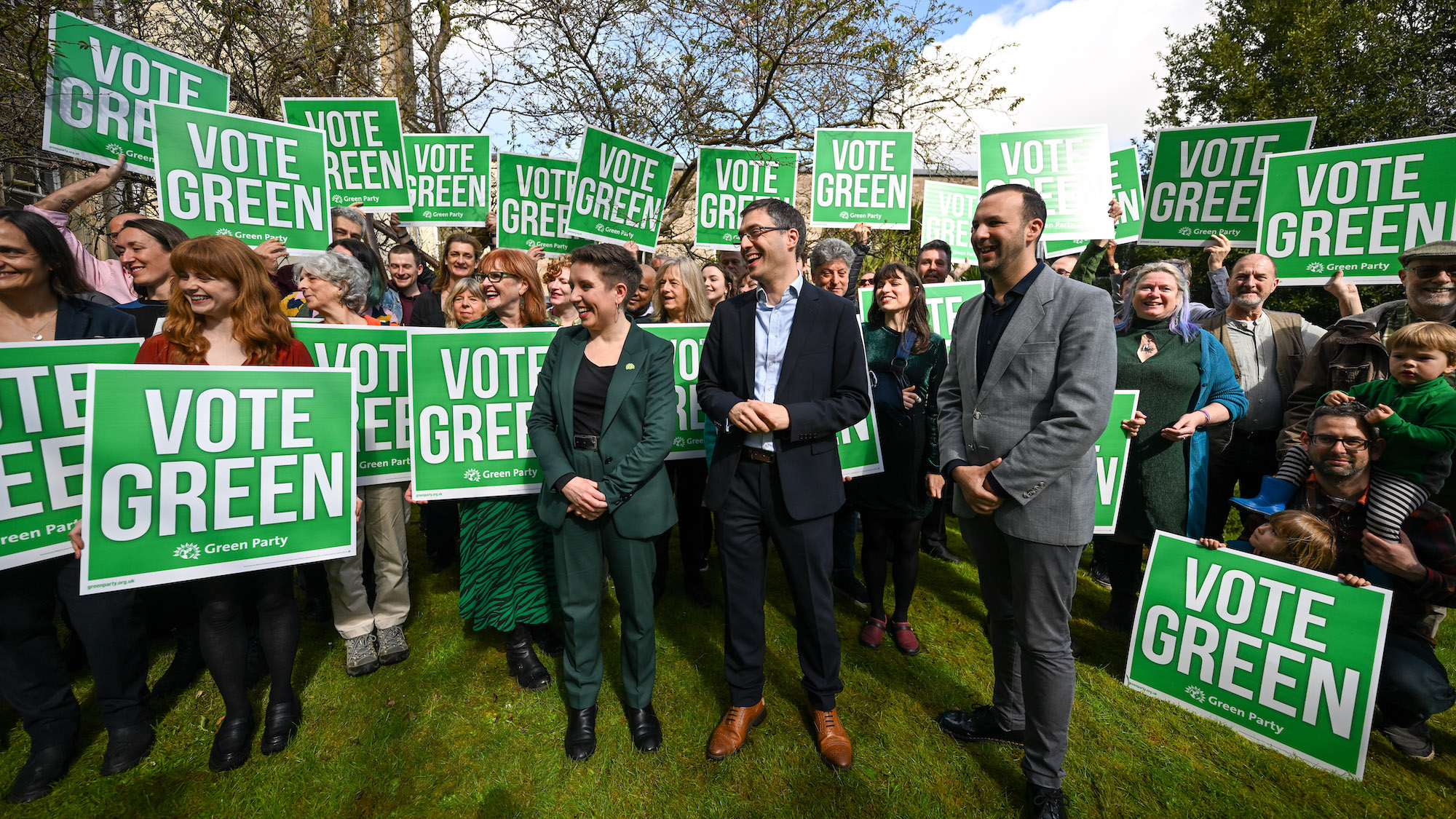
The headlines are screaming about a "seismic shift" in British politics. Pundits are tripping over themselves to herald the Green Party’s special election win over Labour as a breakthrough for the planet. They are wrong. They are looking at a map and calling it the terrain.
What happened in this election wasn't a mandate for net-zero. It wasn't a sudden, collective epiphany about carbon sequestration or biodiversity. It was a masterclass in NIMBYism (Not In My Backyard) masquerading as morality. If you think this victory accelerates the transition to a sustainable economy, you haven't been paying attention to how power actually moves in Westminster.
The Localist Trap
Mainstream media frames this as a "surge in environmental consciousness." That is the lazy consensus. In reality, the Green Party has become the ultimate vessel for protest votes that have nothing to do with the climate.
I’ve spent a decade analyzing how policy translates into steel in the ground. When you look at the Green Party’s local campaigning, you don't see a radical blueprint for industrial overhaul. You see opposition to housing developments. You see resistance to new transmission lines. You see a frantic effort to protect the "character" of wealthy suburbs from the very infrastructure required to decarbonize the grid.
Labour lost because they tried to act like a party of government. They have to make trade-offs. They have to tell people that if they want green energy, they have to accept a pylon in their field or a battery storage facility down the road. The Greens won because they have the luxury of ideological purity. They can promise the sun and the stars while opposing the actual solar farms needed to capture them.
The Math of the Protest Vote
Let’s dismantle the "Green Wave" myth with some brutal arithmetic. Special elections are notorious for low turnout and high volatility. They are the playground of the disaffected.
- The Tactical Squeeze: Voters knew a Green win wouldn't topple the government. This allowed traditional Labour supporters to "send a message" about specific grievances—be it Gaza, healthcare wait times, or local planning disputes—without the risk of putting a Tory in Number 10.
- The Vacuum of Opposition: With the Conservative Party currently wandering in an ideological desert, the Greens are the only functioning "none of the above" option for the educated middle class.
- The Incumbency Tax: Labour is discovering that being in power is a liability. Every compromise they make is a recruitment poster for the Greens.
This isn't a shift in the national psyche. It is a temporary alignment of frustrated demographics. When the general election rolls around and the stakes are real, this "wave" will likely hit a seawall of pragmatism.
Stop Asking if the Greens Can Win
The question "Can the Green Party replace Labour?" is the wrong question. It assumes the Greens want to be a party of governance. They don't. Their current business model relies on being the perpetual critic.
If the Greens ever actually had to implement their manifesto, their coalition would vanish overnight. You cannot simultaneously support "radical wealth redistribution" and maintain the support of the leafy, affluent constituencies where they are currently winning. These are people who like the idea of a Green party but would revolt the moment their property values were threatened by social housing or their capital gains were taxed at 50%.
The Hidden Cost of Green Purity
Here is the truth nobody admits: Strong Green Party performances often set back environmental goals.
By bleeding votes from Labour’s left flank, the Greens force the government to become more defensive and cautious. Instead of emboldening Labour to take big risks on green investment, it makes them retreat toward the "safe" center to avoid losing more ground. It creates a legislative paralysis where the fear of losing a few thousand votes in a marginal seat prevents the massive, sweeping planning reforms the UK desperately needs.
The Green Party is currently the most effective tool for preserving the status quo. By capturing the energy of the youth and the idealistic, they channel it into a political structure that has zero path to executive power. It’s a pressure valve for the establishment, not a threat to it.
The Infrastructure Paradox
To hit any semblance of a net-zero target, the UK needs to build. It needs to build more in the next decade than it has in the last fifty. This means:
- High-voltage transmission lines cutting through "unspoiled" landscapes.
- Nuclear power plants on the coast.
- Millions of heat pumps installed in drafty, protected heritage buildings.
- Massive densification of urban centers.
The Green Party's base is the primary obstacle to every single one of those items. I have seen countless renewable projects die in the planning phase because local Green councillors—the very people supposedly championing the Earth—argued that a wind farm would harm the local bat population or spoil a view.
They are choosing the micro over the macro. They are saving a copse of trees while the forest burns.
The Strategy for Disruption
If you actually care about the planet, you should be terrified of Green Party victories in their current form. They represent the "vetocracy"—a system where it is infinitely easier to stop something than to start it.
Real progress won't come from a party that wins by saying "no" to everything. It comes from an industrial strategy that prioritizes delivery over optics. We need "Carbon Realism," not "Environmental Romanticism."
We need to stop treating elections like a vibe check and start treating them like a procurement process. Who can actually build the grid? Who can actually reform the planning laws? Hint: It’s not the party that views "economic growth" as a dirty word.
The Green Party didn't win a seat; they won a platform to continue their role as the world's most glorified lobby group for the "Not In My Backyard" movement. If Labour responds by chasing those votes, they will abandon the industrial backbone required to actually save the environment.
Celebrate the victory if you like the color green. Mourn it if you actually want to see a turbine turn.
Stop pretending this is progress. It’s just high-fructose political theater.