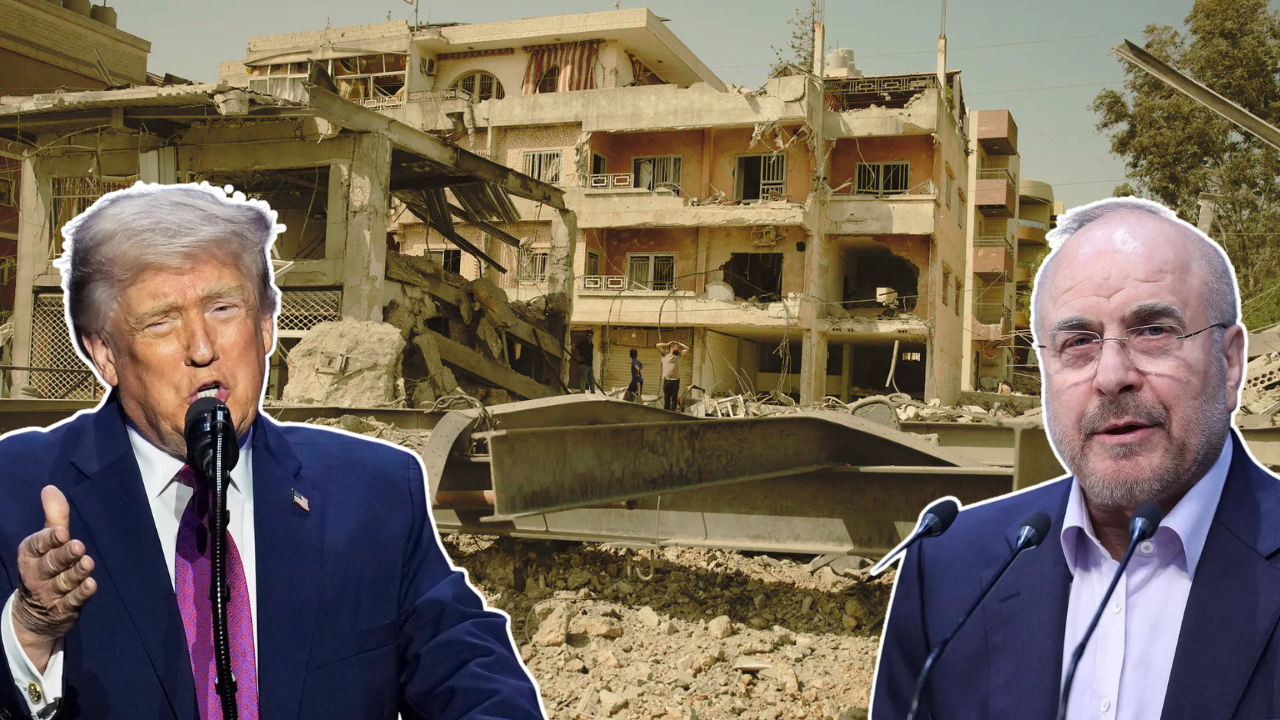
The shadow war in the Gulf of Oman has graduated from a series of deniable irritants to a high-stakes standoff that threatens the spine of global energy logistics. Following the recent strikes on commercial tankers, Tehran has moved beyond vague rhetoric, positioning missile batteries and loitering munitions with clear locks on regional strategic assets. This is not merely a localized spat over shipping lanes. It is a calculated stress test of Western deterrence in an era where cheap, asymmetrical technology can neutralize billion-dollar naval investments.
The immediate threat involves a sophisticated layer of anti-access/area-denial (A2/AD) capabilities. Iran's arsenal now includes the Khalij Fars anti-ship ballistic missile and an array of suicide drones that provide a low-cost method for saturating the defenses of even the most advanced destroyers. When a drone costing $20,000 can force a warship to expend a $2 million interceptor, the arithmetic of modern warfare shifts. Tehran knows this. They are betting that the political cost of an escalated conflict outweighs the economic pain of a disrupted Strait of Hormuz.
The Architecture of Asymmetric Escalation
For decades, the playbook for Gulf tensions was predictable. It involved mine-laying, speedboat swarms, and the occasional seizure of a stray vessel. That era is over. The current posture reflects a significant technological leap in guidance systems and satellite synchronization. By utilizing a "heavy assault" doctrine, the Iranian military is signaling its ability to coordinate synchronized strikes from multiple vectors—land, sea, and air—simultaneously.
This approach targets the OODA loop (Observe, Orient, Decide, Act) of naval commanders. When dozens of incoming signatures appear on a radar screen at once, the risk of a "leaker"—a missile or drone that slips through the defensive screen—approaches 100%. The damage to a single VLCC (Very Large Crude Carrier) doesn't just spill oil; it spikes insurance premiums to a level that effectively shuts down the corridor for commercial traffic.
The Intelligence Gap and the Proxy Problem
One of the most overlooked factors in this escalation is the role of decentralized intelligence. We often focus on the hardware—the missiles and the launchers—but the real shift is in how targets are identified and tracked. Iran has successfully integrated "civilian" fishing fleets and commercial transponder data to maintain a real-time map of every high-value target in the Gulf.
- AIS Spoofing: Commercial vessels often turn off their Automatic Identification Systems to hide their location.
- Visual Confirmation: Small, innocuous dhows act as forward observers, passing coordinates via encrypted satellite links.
- Cyber Integration: Infiltrating the logistics chains of shipping companies allows for the targeting of specific cargoes, making the "heavy assault" surgical rather than blunt.
The West faces a paradox. To strike back at the source of these threats requires hitting mainland Iranian soil, an act that carries the risk of total regional war. To stay defensive is to accept a slow-motion blockade. It is a stalemate designed by Tehran to exploit the hesitation of a weary international community.
Redefining Naval Deterrence in Shallow Waters
The Gulf of Oman is a cramped, unforgiving environment for large carrier strike groups. It is essentially a "shooting gallery" where the geography favors the coastal defender. While a U.S. carrier remains a formidable platform, its utility diminishes in narrow waters where reaction times are measured in seconds.
The Iranian strategy utilizes the Qader and Noor cruise missiles, which can be launched from mobile trucks hidden in the rugged coastline of the Makran region. These launchers are notoriously difficult to track and destroy before they fire. This mobility creates a "fleet in being" effect, where the mere possibility of an attack dictates the movement of every Western asset in the region.
The Economic Kill Chain
We have to look at the math of the global energy market to understand why this specific geography matters. Roughly 20% of the world's petroleum passes through these waters. If the "heavy assault" moves from a threat to a reality, the ripple effect through the global economy would be instantaneous.
It isn't just about the price at the pump. It’s about the just-in-time delivery models that sustain modern manufacturing. A week-long closure of the Strait of Hormuz would trigger a cascade of force majeure declarations across the shipping industry. No amount of strategic petroleum reserves can offset the psychological impact of a kinetic conflict in the world's most sensitive chokepoint.
The Failure of Traditional Diplomacy
The current crisis proves that the old diplomatic frameworks are effectively dead. Traditional sanctions have reached a point of diminishing returns; the Iranian economy has already adapted to a "resistance" model. Consequently, the threat of more sanctions carries little weight in the halls of power in Tehran. They are looking for a shift in the regional security architecture, one where Western influence is permanently diminished.
The "heavy assault" warning is a demand for a new status quo. By demonstrating that they can hold the world's energy supply hostage with a few hundred drones and a handful of well-placed missile batteries, they are forcing a choice between a humiliating retreat or an expensive, bloody intervention.
Technical Realities of the Missile Menace
The physics of the threat are daunting. Modern anti-ship missiles like the Fateh-110 variants utilize terminal guidance that makes them incredibly accurate. Unlike the unguided rockets of the past, these weapons can target specific sections of a ship, such as the engine room or the bridge.
- Saturation Tactics: Launching more projectiles than the target has interceptors.
- Terminal Maneuvering: Missiles that zig-zag in their final seconds to evade Point Defense Systems (CIWS).
- Electronic Warfare: Jamming the communication links between escort ships and the vessels they are protecting.
This is the "Brutal Truth" of the current situation. The technological gap that once protected Western navies has narrowed. While the U.S. and its allies still hold the advantage in a total war scenario, they are currently losing the battle of "gray zone" competition—the space between peace and open conflict where Iran excels.
Hardening the Corridor
If the goal is to prevent a total shutdown of the Gulf, the current strategy of "patrol and wait" is insufficient. Protecting tankers requires a move toward autonomous escort vessels and ship-board directed energy weapons (lasers) that can engage drones at a fraction of the cost of current missiles.
The industry must also move toward a "hardened" shipping model. This involves integrating military-grade jamming equipment and decoy launchers onto commercial tankers. Expecting the Navy to be everywhere at once is a fantasy. The commercial sector will eventually have to foot the bill for its own tactical defense if it wants to continue operating in high-risk zones.
The escalation in the Gulf of Oman is not a fluke or a temporary flare-up. It is the manifestation of a long-term Iranian strategy to gain "veto power" over global trade. The missiles are locked, the drones are fueled, and the window for a peaceful de-escalation that doesn't involve significant concessions is rapidly closing.
The reality on the water is clear. The era of safe, unchallenged passage through the Middle East's primary corridors has ended. What replaces it will be a constant, grinding state of high-readiness, where the distinction between a commercial tanker and a military target exists only in the minds of those willing to pull the trigger.

