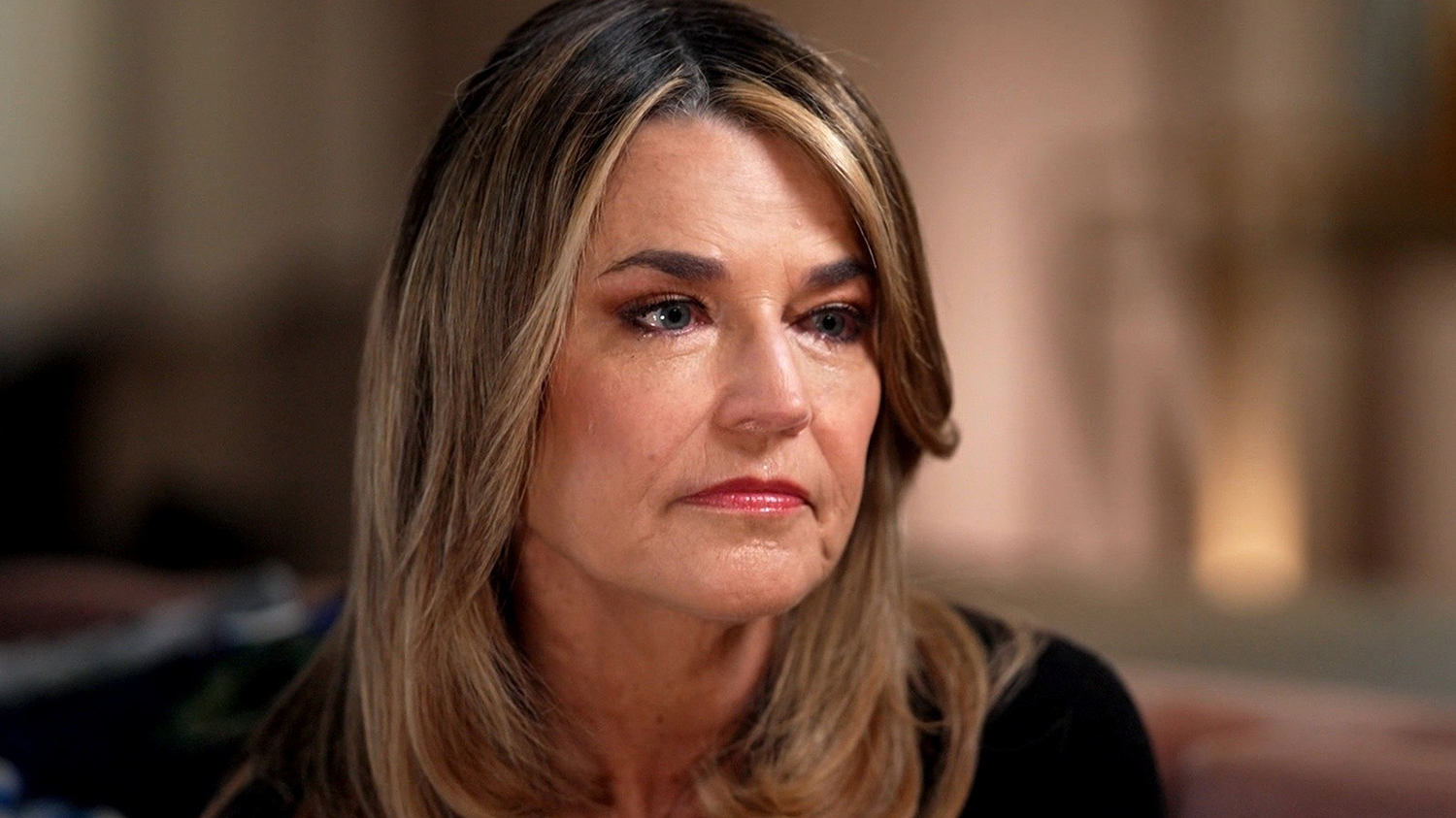
Savannah Guthrie’s return to the 'TODAY' show desk in April is not a human interest story; it is a critical stabilization event for a legacy media asset valued in the hundreds of millions of dollars. In the fragmented attention economy, the morning news landscape operates on a foundation of habit-formed loyalty. When a primary anchor exits the frame—whether for a medical procedure, a sabbatical, or a scheduled hiatus—the network faces a measurable "Continuity Gap." This gap represents a period of increased churn risk where viewers may recalibrate their morning routines, potentially migrating to competitors or digital-first alternatives. Guthrie’s reintegration marks the closure of this risk window and the restoration of the NBC morning brand's primary value proposition: the Parasocial Contract.
The Three Pillars of Morning News Dominance
To understand the weight of Guthrie’s return, one must quantify the variables that dictate morning show success. Unlike prime-time programming, which relies on narrative hooks, morning news functions on three distinct operational pillars.
- Temporal Reliability: Viewers use morning show segments as internal clocks. The "7:00 AM Hard Start" with a specific face provides a psychological anchor for the audience’s daily preparation. Guthrie’s absence disrupts this subconscious timing mechanism.
- Chemistry Equilibrium: The "TODAY" show relies on a multi-anchor ensemble. The logic follows a chemical rather than additive model; the presence of Hoda Kotb and Savannah Guthrie together creates a specific viewer sentiment that cannot be replicated by simply inserting a high-quality substitute. The substitute, no matter how competent, introduces "Cognitive Friction"—the viewer must exert effort to adjust to new speech patterns, timing, and interpersonal dynamics.
- Ad-Inventory Premium: Advertisers pay for the "Halogen Effect"—the transfer of trust from the anchor to the product. Guthrie’s high Q-Score (a measurement of a celebrity’s familiarity and appeal) directly correlates to the CPM (cost per thousand impressions) NBC can command during her segments.
The Cost Function of Anchor Absence
Every day an A-list anchor is off-air, the network incurs a "Soft Churn" cost. While Nielsen ratings might show a negligible immediate dip, the long-term erosion of the "viewer habit" is the true danger. The cost function of this absence can be modeled through three primary stressors.
Talent Substitution Variance
When a substitute takes the desk, the production team must recalibrate the "pacing" of the show. Guthrie is known for a specific interrogation style in political segments—a blend of legalistic precision and accessible framing. A substitute often swings too far toward "Hard News" or "Soft Personality," breaking the delicate balance that keeps the broad-tent audience engaged. This variance creates a secondary workstream for producers who must edit scripts to fit a different voice, increasing the internal operational load.
Brand Dilution in the Digital Feed
In 2026, the 'TODAY' show is as much a social media engine as a broadcast entity. Guthrie’s presence drives a specific volume of "Clippable Moments." Her absence reduces the organic reach of the show’s digital footprint because the algorithm prioritizes established, high-engagement faces. The "April Return" is strategically timed to capture the lead-up to the summer season, a period of high consumer spending where brand visibility must be at its peak.
The Recruitment Risk
The longer a substitute performs well, the more "Leverage Drift" occurs within the talent pool. However, if a substitute performs poorly, the "Anchor Weight" falls entirely on the remaining host (Kotb), leading to burnout and a degradation of the on-air energy. Guthrie’s return eliminates this systemic instability.
Operational Mechanics of the April Reintegration
The timing of Guthrie's return in April follows a specific broadcast logic. The first quarter of the year often sees a seasonal dip in ad spend following the holiday surge. April represents the "Spring Pivot," where lifestyle, travel, and health segments—Guthrie’s auxiliary strengths—begin to dominate the editorial calendar.
The reintegration process involves a "Ramp-Up" phase. This is not merely about sitting in a chair; it involves:
- Editorial Re-Alignment: Guthrie must be briefed on long-lead investigative pieces that were paused during her absence to ensure her "Voice of Authority" is consistent with the developed narrative.
- The "Welcome Back" Narrative Loop: The network will utilize the first 48 hours of her return to create a "Surge Event." By framing the return as a homecoming, they convert a routine personnel movement into a marketing catalyst, driving a temporary spike in "Tune-In" data that can be used to pitch advertisers for the Q3/Q4 cycles.
Constraints and Systemic Limitations
Despite the strategic benefits, the "Return to Normalcy" is not a panacea. The broadcast industry faces structural headwinds that a single anchor cannot solve.
The first limitation is the "Platform Leakage." Regardless of who is at the desk, the median age of linear television viewers continues to rise. Guthrie’s return stabilizes the existing base but does not inherently solve the acquisition problem for younger demographics who consume news via asynchronous vertical video.
The second bottleneck is the "Ensemble Dependency." The NBC morning strategy is heavily weighted on the Guthrie-Kotb pairing. This creates a "Key Person Risk." If the network does not use the stability provided by Guthrie’s return to diversify its talent pipeline or innovate its delivery format, they remain vulnerable to the next inevitable absence.
Strategic Forecast: The Post-April Trajectory
The data suggests that Guthrie’s return will result in a 3% to 5% "Sentiment Lift" in social media mentions within the first week, followed by a stabilization of linear ratings at the established baseline. The network's next tactical move should be the aggressive deployment of Guthrie into "Cross-Platform Specials."
To maximize the ROI of her return, NBC must transition her from a "Desk Anchor" to a "Multimodal Personality." This involves leveraging her legal background for long-form streaming content on Peacock, thereby bridging the gap between the legacy broadcast audience and the digital-native subscriber. The "April Reset" provides the necessary operational breathing room to execute this transition. Expect to see a heavy emphasis on "Exclusive Interviews" and "Town Hall" formats in the 90 days following her return to re-establish her as the primary editorial force of the network. The goal is not just to have her back—it is to use her presence as a shield while the network retools its digital distribution architecture.
Deploy the "Guthrie Effect" as a stabilization tool for the Q2 upfronts, but simultaneously accelerate the integration of AI-driven personalization in the 'TODAY' app to ensure the brand outlives the linear era. Stability is the precursor to transformation; April is the month NBC buys itself the time to transform.