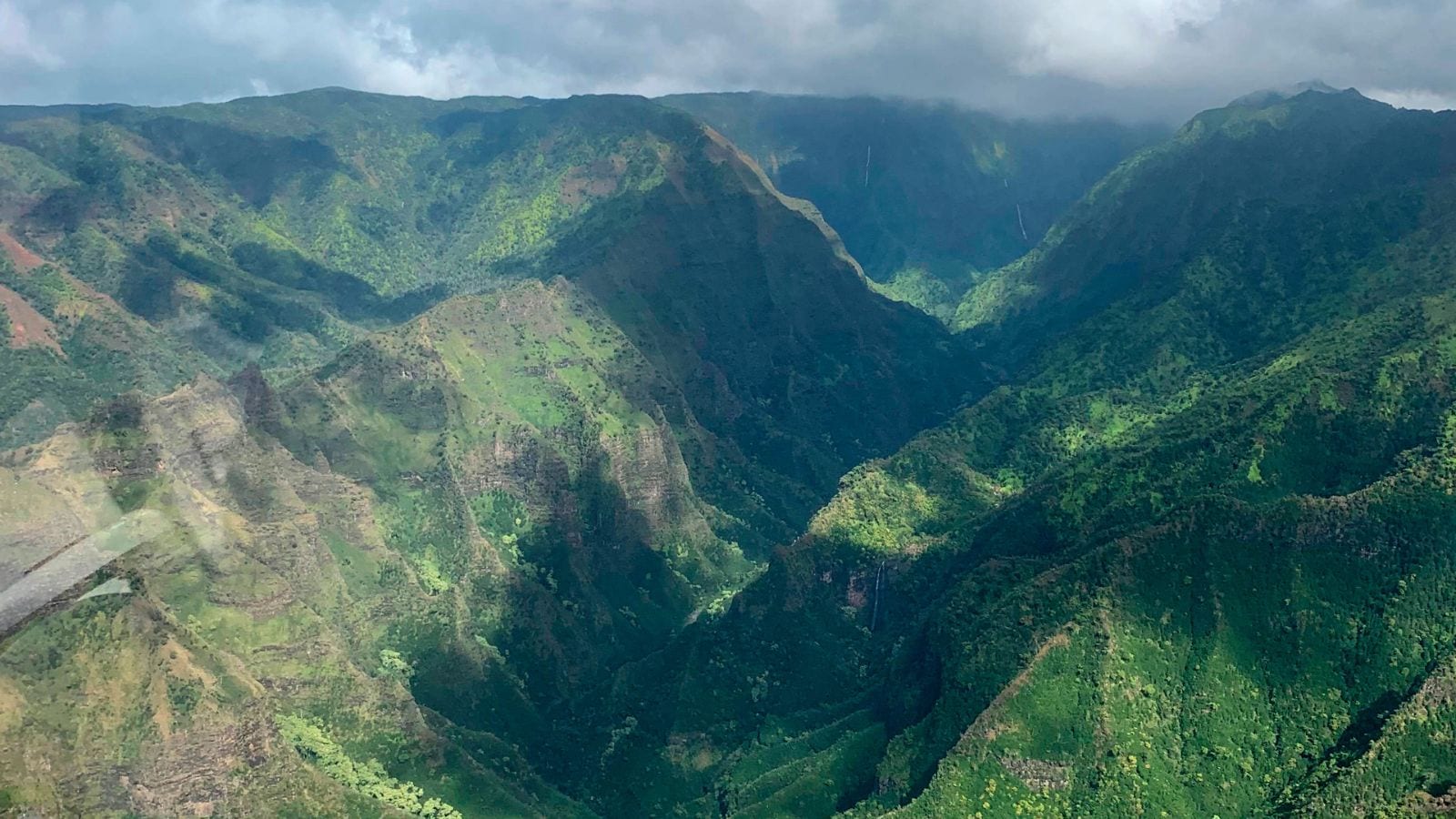
Touring Hawaii from the seat of a helicopter feels like a dream until the unthinkable happens. On a clear afternoon in Kauai, that dream shattered. A tour helicopter carrying three people went down near the remote Na Pali Coast, leaving no survivors. It’s a gut-wrenching reminder that the most beautiful views on earth sometimes come with a hidden, high-stakes price tag.
If you’re planning a trip to the Garden Isle, you’re probably looking at these tours right now. You see the glossy brochures and the "must-do" bucket lists. But the crash involving Ali’i Kauai Air Tours isn’t just a freak accident. It’s a wake-up call about the thin margin for error when flying over some of the most rugged terrain in the Pacific.
Local authorities confirmed the Robinson R44 helicopter crashed into the waters off the Na Pali Coast. This isn't just another news cycle. It’s a structural issue in how we perceive tourist safety in high-risk environments.
Why the Na Pali Coast is a Pilot’s Nightmare
The Na Pali Coast is stunning. It’s also incredibly dangerous for aviators. You have massive 3,000-foot cliffs dropping straight into the ocean. The wind patterns there are erratic. One minute you’ve got a gentle breeze, and the next, a microburst slams against the cathedral cliffs and creates a rotor effect that can swat a light aircraft out of the sky.
Most people don't realize how small an R44 actually is. It’s a piston-engine helicopter. It’s light. It’s nimble. But it doesn’t have the same power or stability as the twin-engine birds used by larger outfits. When you’re flying in the "valleys of the lost," there’s almost nowhere to land if the engine quits or the weather turns.
The search and rescue teams, including the U.S. Coast Guard and Kauai Fire Department, faced immediate hurdles. The terrain is inaccessible by foot. Everything happens by sea or air. In this specific crash, the debris field was found about a quarter-mile offshore. That tells us the pilot likely had seconds, not minutes, to react to whatever went wrong.
The Robinson R44 Under the Microscope
I’ve followed aviation safety for years, and the Robinson R44 always sparks a heated debate. It’s one of the most popular helicopters in the world because it’s cheap to operate. That’s why smaller tour operators love them. They can offer lower seat prices than the big guys flying Eurocopters.
But there’s a trade-off.
The R44 has a low-inertia rotor system. If the engine fails and the pilot doesn't react instantly—we’re talking within a heartbeat—the rotor RPM drops so low that the blades can actually fold up or strike the tail. It’s called "mast bumping." Once that happens, the flight is over.
- Weight Sensitivity: These planes are touchy about how they’re balanced.
- Weather Limits: They can’t handle high winds as well as heavier turbine models.
- Emergency Floats: Some have them, some don't. In a water ditching, they are the difference between a controlled exit and a sinking tomb.
When you book a tour, you’re usually looking at the price. You should be looking at the tail number. You should be asking about the engine type. Is it a piston or a turbine? It matters.
What the NTSB Investigation Will Actually Look For
The National Transportation Safety Board (NTSB) doesn't just look at the wreckage. They dig into the "Swiss Cheese Model" of accidents. They look for the holes that lined up to cause the disaster.
They’ll start with the maintenance logs. Ali’i Kauai Air Tours is a smaller operation. Did they skip a 100-hour inspection? Was there a known issue with the fuel system? Then they’ll look at the pilot’s "PIC" (Pilot in Command) hours. High-time pilots know the micro-climates of Kauai like the back of their hand. Lower-time pilots can get caught off guard by a sudden "whiteout" or a downdraft.
Witnesses reported seeing the helicopter hovering or struggling before it hit the water. That suggests it wasn't a mid-air breakup. It suggests a struggle for control. The NTSB will try to recover the wreckage from the ocean floor, which is no easy task. The waters there are deep and the currents are brutal.
How to Stay Safe When Booking a Hawaii Heli-Tour
You don't have to cancel your trip, but you do need to be a skeptic. Don't just trust the Yelp reviews. Everyone loves the view; nobody knows the mechanics.
First, check if the operator is "TOPS" certified. That’s the Tour Operators Program of Safety. These companies hold themselves to a higher standard than the basic FAA requirements. They require more pilot training and better equipment.
Second, ask about the aircraft. If they’re flying a Robinson R44 and you’re a party of three, you’re pushing the limits of that machine’s weight and balance. I’d personally choose a company flying an Airbus H125 (formerly the AStar). It’s a turbine-powered beast designed for high-altitude, high-heat environments. It’s much more forgiving in a crisis.
Third, look at the weather yourself. If the clouds are hanging low on the ridges, don't go. Pilots are under huge pressure to fly because "no fly equals no pay." If you feel uneasy about the wind, speak up. Your life is worth more than a $300 cancellation fee.
The Reality of Search and Recovery in Hawaii
The ocean off Kauai is beautiful and hungry. When a crash happens there, the recovery effort is a massive coordination between federal and local agencies. In this case, the Coast Guard deployed a HC-130 Hercules airplane and a MH-65 Dolphin helicopter.
They aren't just looking for survivors; they’re looking for answers. But the "blue hole" of the Pacific often hides the evidence. If the helicopter sank in deep water, we might never know exactly what failed.
This tragedy isn't just a statistic. It’s three families whose lives changed forever because of a 20-minute sightseeing loop. It highlights the desperate need for stricter regulations on tour flight paths and equipment minimums in Hawaii.
Before you step onto that skid, do your homework. Check the safety records on the NTSB database. Ask the pilot how many hours they have in that specific make and model. If they seem annoyed by your questions, walk away. A professional pilot loves a passenger who cares about safety.
Stop thinking of these tours as amusement park rides. They’re high-stakes aviation maneuvers. Treat them with the respect they deserve. Check the tail number of your scheduled flight on a site like FlightAware to see its recent history. Verify the company’s insurance and certification status directly on the FAA’s website. It takes ten minutes and could save your life.