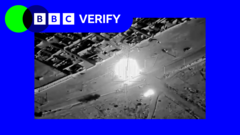
Video evidence showing Russian paramilitary units launching air strikes in Mali proves the conflict has entered a brutal new phase. While the official narrative from Bamako focuses on sovereignty, the leaked footage tells a story of desperate defense as rebels tighten their grip on the northern regions. You aren't just seeing a military operation. You're seeing the collapse of traditional diplomacy in West Africa.
Mali’s transitional government increasingly relies on these private contractors to fill the void left by French and UN forces. It's a high-stakes gamble. The footage, captured during recent rebel advances, highlights a shift from ground-based counter-insurgency to aggressive, often indiscriminate aerial bombardment. This isn't a secret anymore. The presence of Russian fighters is the backbone of the Malian state's current survival strategy.
Why the North is Slipping Away
The rebels, primarily composed of the CSP-DPA (Permanent Strategic Framework for the Defense of the People of Azawad) and various jihadist elements, have proven remarkably resilient. They know the terrain. They move fast. When they seized territory near the border, the Malian Armed Forces (FAMa) and their Russian partners felt the pressure.
Air power is the only way the government can project force into these remote desert reaches. But planes and drones don't hold ground. They just clear it. The strikes seen in the footage targeted rebel positions during a significant push, yet the rebels continue to claim they are holding their lines. The tactical success of an air strike doesn't always translate to a strategic victory in a guerrilla war.
The Russian Footprint and the Wagner Evolution
We should stop calling them just "Wagner." The structure has changed since the death of Yevgeny Prigozhin. The Russian Ministry of Defense now oversees much of this through the "Africa Corps." This isn't a ragtag group of mercenaries anymore. It’s a formalized tool of Russian foreign policy.
- Heavy Equipment: They've brought in Mi-24 Hind attack helicopters and Su-25 Frogfoot jets.
- Intelligence: They use Orlan-10 drones for constant surveillance, though the footage suggests they sometimes struggle with high-altitude accuracy.
- Training: They aren't just flying missions; they're supposedly training Malian pilots, though most combat sorties are still handled by the Russians.
The problem with this model is the cost. Not just the financial cost, which is rumored to be paid in mining concessions, but the human cost. These air strikes often hit areas where the line between combatant and civilian is incredibly thin. When things go wrong, there's zero accountability.
Why Air Power Isn't Saving Mali
You can't bomb an insurgency out of existence. History shows us this time and again. The strikes might scatter a rebel convoy, but the underlying grievances—marginalization of the Tuareg people, lack of services, and a vacuum of justice—remain.
The rebels have adapted. They've learned to hide in the scrub and move in smaller, decentralized units. This makes the Russian air strikes less effective over time. If you use a million-dollar missile to blow up a $5,000 pickup truck, you're losing the economic war. The rebels are betting that the Malian government will run out of money or patience before they run out of fighters.
The Geopolitical Fallout
The West looks on with a mix of "I told you so" and genuine alarm. When Mali kicked out the French Barkhane force, they claimed they wanted more "equal" partnerships. What they got was a Russian security package that comes with massive strings attached.
The regional bloc, ECOWAS, is basically paralyzed. They don't want to intervene, and they can't stop the flow of Russian arms into the Sahel. Meanwhile, neighboring countries like Niger and Burkina Faso are watching closely. They've formed their own alliance, distancing themselves from traditional Western allies. It's a tectonic shift in African politics.
The Problem with the Footage
The videos being circulated aren't just for military record-keeping. They're propaganda. Both sides use them to recruit and to demoralize the enemy. When you see a Russian-made jet banking over a Malian village, it's a message to the local population: "We are the power here."
But the footage also exposes weaknesses. Some clips show erratic fire and a lack of coordination with ground troops. If the Russian paramilitary units were as effective as their brochures claim, the rebels wouldn't be advancing. They’d be retreating. Instead, the front lines are more volatile than ever.
What This Means for the Immediate Future
Expect more strikes. As the rebels move closer to key towns like Timbuktu or Gao, the desperation in Bamako will grow. The Russian units will likely double down on aerial assets because they don't want to take heavy casualties on the ground.
- Increased Drone Use: Look for an influx of Turkish or Iranian-style drones to supplement the aging Russian jets.
- Civilian Displacement: More people will flee into Mauritania and Algeria as the bombing intensifies.
- Mining Focus: The security forces will likely prioritize protecting gold mines over protecting villages.
The situation in Mali isn't getting better. It’s getting louder and more violent. If you're following this, don't look at the flashy air strike videos as a sign of strength. Look at them as a sign of a government that has lost control of its borders and is leaning on a foreign power to keep the lights on in the capital.
Keep an eye on the border regions. If the rebels manage to down one of these Russian aircraft, the narrative will flip overnight. The air of invincibility surrounding the Russian paramilitary presence is thin. It only takes one well-placed shoulder-fired missile to change the entire dynamic of the war. Watch the supply lines and the gold prices. That's where the real war is being fought.