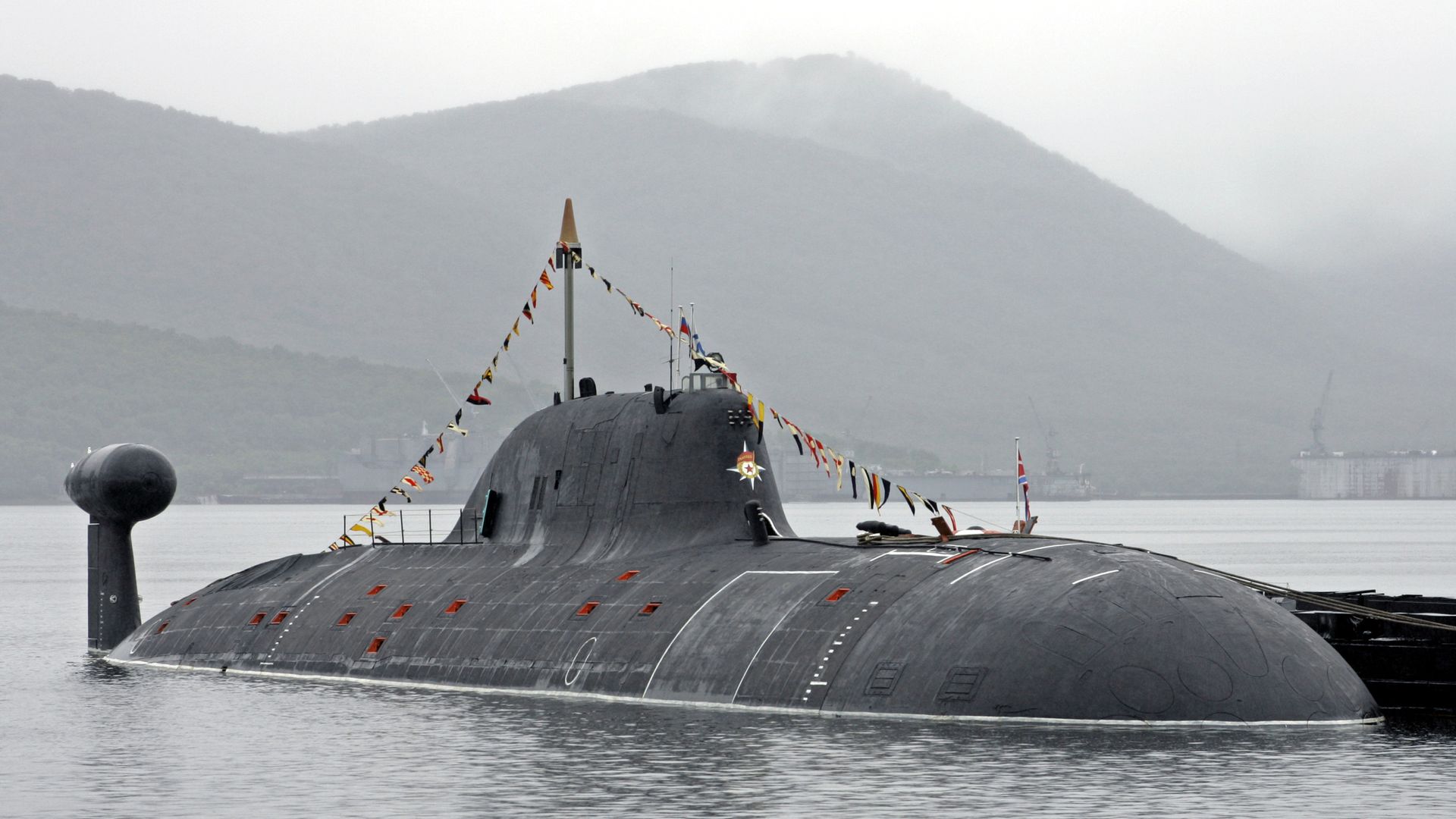
The threat is no longer theoretical. Recent reports confirmed by the UK Defence Secretary indicate that three Russian submarines have been actively targeting the underwater fiber-optic cables that serve as the central nervous system of the British economy and global communications. These vessels, belonging to the secretive GUGI (Main Directorate of Deep-Sea Research), are not merely patrolling; they are mapping vulnerabilities in a network that carries over 95% of international data. If these lines are severed, the result is not just a slow internet connection. It is a total blackout of financial markets, emergency services, and military command structures.
Britain is uniquely exposed. As an island nation, the UK sits at the junction of the transatlantic data highway. While the public focuses on satellite technology and wireless signals, the reality of modern civilization remains tethered to the seabed. These cables are often no thicker than a soda can, resting in international waters with almost zero physical protection. Russian naval doctrine has shifted toward "gray zone" warfare, where the goal is to cripple an adversary without firing a single shot. By loitering near these critical junctions, the Kremlin is sending a clear message about its ability to disconnect the West from the world at will. Don't forget to check out our recent coverage on this related article.
The Anatomy of Subsea Sabotage
To understand the gravity of the situation, one must look at the specific capabilities of the Russian fleet involved. We are not talking about standard attack submarines designed for torpedo duels. The vessels identified are specialized mother-ships capable of carrying smaller, deep-diving submersibles. These "parasite" subs can descend to depths far beyond the reach of standard NATO hulls.
Once they reach the cable beds, the methods of interference are varied and sophisticated. A clean cut is the most obvious move, but it is also the easiest to detect and locate. Far more dangerous is the potential for tapping. By placing induction sensors near the cable, an adversary can theoretically intercept data streams without damaging the fiber itself. Even more concerning is the prospect of "pre-planted" explosives or sleepers—devices attached to the cable that can be triggered remotely months or years after they are installed. To read more about the background of this, TIME provides an excellent breakdown.
The geography of the North Atlantic creates natural chokes. Deep-sea trenches and shelf breaks force cables into narrow corridors. If a coordinated strike hit three or four of these specific geographic points simultaneously, the redundancy built into the global grid would collapse. Repairing a deep-sea cable is a grueling process that requires specialized civilian ships. In a conflict scenario, those repair vessels would be sitting ducks.
The Financial Fallout of a Disconnected State
London remains one of the world’s premier financial hubs. The high-frequency trading that drives the City relies on millisecond latency. When data travels across the Atlantic, it doesn't bounce off a satellite; it moves at nearly the speed of light through glass fibers on the ocean floor. A disruption in these links would freeze trillions of dollars in transactions instantly.
We have seen glimpses of this chaos before. In 2022, a cable connecting the Svalbard satellite station to mainland Norway was severed. While the cause was never definitively proven in a court of law, the "accidental" damage occurred in an area thick with Russian fishing trawlers equipped with deep-sea gear. The incident served as a proof of concept. It showed that critical infrastructure could be disabled with plausible deniability.
For the UK, the stakes are existential. The banking sector, the power grid, and the healthcare system are all integrated into a cloud-based architecture. If the cables go dark, the "cloud" effectively ceases to exist. ATM networks would fail. Supply chains would stall at the ports because the digital manifests would be inaccessible. This is not about losing access to social media; it is about the sudden regression of a modern G7 economy to a pre-industrial state.
Naval Overstretch and the Protection Gap
For decades, NATO’s maritime strategy focused on carrier strike groups and tracking ballistic missile submarines. The protection of commercial subsea infrastructure was largely ignored, dismissed as a private sector responsibility. That negligence has created a massive security vacuum. The Royal Navy, despite recent investments in Type 26 frigates, is smaller than it has been in centuries. It lacks the hull count to provide constant surveillance over thousands of miles of seabed.
The UK has recently commissioned the RFA Proteus, a dedicated Multi-Role Ocean Surveillance (MROS) ship. This is a step in the right direction, but one ship cannot be everywhere at once. The Russian strategy exploits this math. By deploying three submarines across different sectors, they force the Royal Navy into a shell game. While we track one, the other two are free to operate in the shadows.
There is also a legal gray area that complicates the defense of these assets. Most cables lie in international waters. Under the United Nations Convention on the Law of the Sea (UNCLOS), interfering with a cable is a crime, but it is not necessarily considered an "act of war" that would trigger NATO’s Article 5. Russia operates in this ambiguity. They push the boundaries of international law, knowing that Western leaders are hesitant to escalate to full-scale military conflict over a "fishing accident" or a "technical malfunction" on the seafloor.
Intelligence Failures and the Need for Acoustic Monitoring
The current method of defending cables is reactive. We wait for a drop in signal strength and then send a ship to investigate. By then, the damage is done. A superior approach requires a permanent, underwater sensory network.
- Acoustic Arrays: Static sensors placed on the seabed can detect the specific acoustic signature of Russian nuclear submarines and their smaller submersibles.
- A-U-V Patrols: Autonomous Underwater Vehicles can act as "security guards," constantly patrolling the length of the cables and reporting any foreign objects or diversions.
- Data Diversification: Building more landing points and diversifying the routes cables take can reduce the impact of a single strike, though it increases the total area that needs to be defended.
The challenge is that these technologies are expensive and require unprecedented cooperation between the government and private telecommunications giants. Historically, these companies have been reluctant to share data about their cable routes or vulnerabilities, fearing it might give competitors an edge. That era of corporate secrecy must end. In the current climate, a vulnerability for one provider is a national security risk for the entire country.
The Russian Perspective on Underwater Dominance
To the Kremlin, the seabed is the "last frontier" of asymmetric warfare. Since they cannot compete with the total surface tonnage of the U.S. Navy and its allies, they focus on where the West is softest. Their investment in the GUGI fleet is massive relative to their overall naval budget. They have converted old Delta-class submarines into massive carriers for deep-sea research craft like the Losharik.
These vessels are not manned by standard conscripts. They are staffed by elite officers who view their mission as a high-stakes chess match. They study the bathymetry of the North Sea and the Atlantic with obsessive detail. They know exactly where the sediment is soft enough to bury a cable and where the rocky outcroppings make it vulnerable to a mechanical "snag."
This is a cold, calculated strategy of intimidation. By letting themselves be spotted—by ensuring the Defence Secretary has something to report—they are conducting a psychological operation. They want the British public to know how fragile their digital lives truly are. It is a form of leverage intended to deter Western support for Ukraine and other regional interests.
Beyond the Cables: Pipelines and Interconnectors
While the three submarines in question were linked to cable mapping, the threat extends to other seabed assets. The destruction of the Nord Stream pipelines in the Baltic Sea proved that deep-sea energy infrastructure is just as vulnerable. The UK relies heavily on subsea pipelines for gas from Norway and electricity interconnectors that link the British grid to Europe.
A coordinated attack would not just cut the internet; it would cut the heat and the light. The convergence of energy and data security means that the Royal Navy's mission has fundamentally changed. It is no longer just about protecting sea lanes for shipping. It is about protecting the literal foundations of our territorial integrity.
The move toward offshore wind farms adds another layer of complexity. Thousands of miles of cabling now link these turbines to the shore. These sites are remote, difficult to monitor, and essential for the UK’s transition away from fossil fuels. Russia’s "research" vessels have been frequently spotted loitering near these wind farms, likely mapping the power lines that connect them to the national grid.
Hardening the Grid Against the Deep-Sea Threat
Solving this crisis requires more than just a few new ships. It requires a shift in how we perceive national borders. The UK’s border no longer ends at the low-tide mark; it extends to every inch of fiber and steel on the continental shelf.
First, the government must mandate higher security standards for private cable operators. This includes requiring real-time sensor data to be shared with the Ministry of Defence. Second, NATO must establish a "Maritime Critical Infrastructure" command specifically dedicated to seabed warfare. This would allow for better intelligence sharing between the UK, the U.S., France, and Norway—the four nations most affected by North Atlantic subsea activity.
Finally, there must be a clear diplomatic and military deterrent. If a Russian vessel is found hovering over a critical cable without a valid navigational reason, there must be consequences. Whether that is targeted sanctions against GUGI leadership or a more aggressive naval posture, the current policy of "watch and report" is insufficient. It invites further provocation.
The three submarines identified by the Defence Secretary are just the tip of the iceberg. They represent a permanent change in the nature of global conflict. In the past, wars were fought for territory and resources. Today, they can be won or lost based on who controls the flow of information. The silent corridors of the North Atlantic have become the front line of a conflict that the West is only just beginning to acknowledge.
Britain must now decide if it is willing to invest in the deep-sea capabilities required to defend its digital sovereignty. The alternative is to remain at the mercy of an adversary that has already proven its willingness to pull the plug.