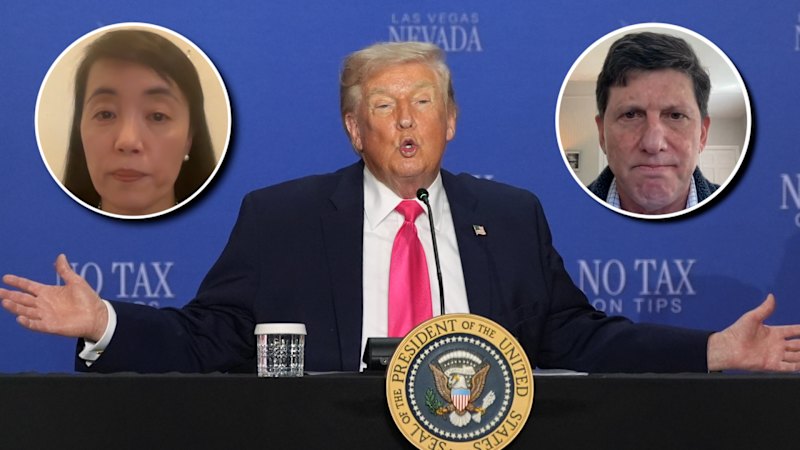
The internal conflict within the American psychological and legal communities has reached a breaking point. For years, a significant faction of mental health professionals, legal scholars, and former government officials argued that the standard protocols for evaluating public figures were insufficient for the unique challenges posed by Donald Trump. This was not merely a matter of political disagreement. It was a fundamental dispute over the ethics of silence versus the "duty to warn" the public about perceived threats to democratic stability and national security. These experts were not just looking for a platform; they were attempting to redefine the boundaries of their respective professions in real-time.
The core of this movement rested on the belief that traditional norms, such as the Goldwater Rule, acted as a gag order that prevented the public from receiving vital information. Established in 1973, the Goldwater Rule prohibits psychiatrists from offering professional opinions on public figures they have not personally examined. However, the dissenters argued that behavioral patterns visible in the public record provided more than enough data to form a credible assessment. They contended that when a leader's public actions suggest a potential for instability or a disregard for institutional norms, the risk of remaining silent outweighs the risk of a misdiagnosis from afar. Meanwhile, you can read other developments here: Why NATO stays strong even when the headlines say otherwise.
The Cracks in Professional Neutrality
Institutions thrive on predictability. When the political environment becomes volatile, those institutions often retreat into rigid adherence to existing rules to avoid the appearance of bias. This creates a vacuum. In this case, the vacuum was filled by professionals who felt that their specialized knowledge imposed a moral obligation that superseded organizational bylaws.
The tension began in earnest during the 2016 campaign. While many clinicians maintained a disciplined silence, others began to organize. They viewed the rhetoric and behavioral consistency of the candidate as a matter of public safety. This was a radical shift. Traditionally, the medical and legal fields prioritize the privacy of the individual and the neutrality of the expert. By stepping into the political arena, these experts risked their reputations, their licenses, and their standing within their professional circles. To see the complete picture, we recommend the recent analysis by TIME.
They weren't just shouting into the void. They were producing white papers, organizing conferences, and attempting to brief members of Congress. The "duty to warn" became their rallying cry. They argued that if a pilot appeared unfit to fly or a surgeon appeared unfit to operate, colleagues would be expected to intervene. They saw the presidency through the same lens, but with much higher stakes.
The Mechanism of the Duty to Warn
To understand why this movement gained such traction among veterans of the mental health and legal worlds, one must look at the specific behaviors they flagged. It wasn't about liking or disliking policy. It was about a perceived pattern of impulsivity, a lack of empathy, and a perceived inability to distinguish between personal interest and the national interest.
Psychological Red Flags
The experts focused heavily on what they termed "dangerousness." This is a legal and clinical standard used to justify intervention when an individual poses a threat to themselves or others. In a political context, they applied this to the potential for international conflict, the erosion of domestic law enforcement, and the incitement of civil unrest.
- Behavioral Consistency: They argued that years of public statements and actions provided a "digital biopsy" of the individual's mental state.
- Impulse Control: They pointed to middle-of-the-night social media posts and sudden policy shifts as evidence of a temperament unsuitable for a role that requires measured deliberation.
- Reality Testing: A major concern was the apparent disregard for verifiable facts, which the experts argued could lead to catastrophic decision-making during a crisis.
Legal and Constitutional Guardrails
Simultaneously, legal experts were examining the 25th Amendment. This wasn't just a theoretical exercise for law school seminars. It became a focal point for those concerned that the executive branch lacked the internal mechanisms to restrain a leader they deemed unfit. The 25th Amendment provides a process for the Vice President and a majority of the Cabinet to declare a president "unable to discharge the powers and duties of his office."
However, the legal threshold for "inability" is notoriously vague. Does it mean physical incapacitation, like a stroke, or does it include psychological instability? The experts argued for the latter. They suggested that the framers of the amendment intended it to cover any situation where a president was no longer capable of rational governance. The pushback was immediate. Critics argued that using the 25th Amendment for anything other than clear physical illness would set a dangerous precedent, essentially allowing a "medical coup" against a democratically elected leader.
The Professional Backlash
Stepping out of line has consequences. Many of the experts who spoke out found themselves marginalized by their own professional associations. The American Psychiatric Association (APA) doubled down on the Goldwater Rule, issuing stern reminders that offering diagnoses without an examination was a violation of ethics.
This created a rift that still hasn't healed. On one side stood the institutionalists, who believed that the credibility of the profession depended on staying out of politics. On the other side were the activists, who believed that the credibility of the profession was worthless if it couldn't be used to protect the country from a clear and present danger.
The cost for these individuals was often personal. They faced harassment, loss of consulting contracts, and professional censure. Some were accused of "pathologizing" political disagreement. This is a heavy charge in a field that spent decades trying to distance itself from the historical use of psychiatry as a tool for political repression in authoritarian regimes. They had to prove that their assessments were grounded in clinical observation, not partisan animosity.
The Limits of Expert Influence
Despite the volume of their warnings and the prestige of their credentials, the impact of these experts was arguably limited. Why? Because in a hyper-polarized environment, expertise is often viewed as just another form of partisanship. When a doctor or a lawyer speaks out against a political figure, half the country sees a brave truth-teller, while the other half sees a member of the "deep state" or a "liberal elite" trying to subvert the will of the voters.
This reality highlights a fundamental flaw in the "duty to warn" strategy. Expert testimony only works when there is a shared baseline of trust in institutions. When that trust evaporates, the expert becomes just another voice in the noise. The warnings were ignored not necessarily because they were wrong, but because the audience had already decided that the source was compromised.
The Shift in Public Discourse
The movement did succeed in one area: it changed how we talk about the intersection of mental health and leadership. Before 2016, the psychological state of a president was largely a taboo subject, discussed only in whispers or decades after the fact in biographies. Now, it is a standard part of the political conversation.
We now see regular debates about cognitive testing for aging politicians and the necessity of psychological screenings for candidates. The "experts" may not have removed the figure they were concerned about, but they forced a conversation about whether the current requirements for the most powerful office in the world—essentially just being 35 years old and a natural-born citizen—are sufficient for the complexities of the modern era.
The Problem of Precedent
The danger of this shift is the weaponization of psychology. If it becomes acceptable to label one leader as "unstable" based on public behavior, what stops the opposing party from doing the same to every future president? We risk entering an era where political campaigns are fought with diagnostic manuals instead of policy platforms.
Legal scholars warn that this could lead to a permanent state of constitutional instability. If the 25th Amendment or medical disqualification becomes a standard tool of the opposition, the stability of the executive branch is permanently compromised. Every sneeze, every stutter, and every controversial statement becomes a potential medical emergency.
The Role of the Media
The media played a complicated role in amplifying these voices. Outlets hungry for content found that "expert warns of presidential instability" was a high-traffic headline. However, this often led to a lack of critical scrutiny. Were these experts truly representative of their fields, or were they a vocal minority? By giving them a massive platform, the media helped create an impression of scientific consensus that didn't necessarily exist.
This symbiotic relationship between the dissenting experts and the media further fueled the perception that the warnings were politically motivated. It turned clinical observations into "content," stripping them of their professional weight and turning them into partisan talking points.
The Burden of Knowledge
For the professionals involved, the experience was a lesson in the limits of specialized knowledge. They discovered that in a democracy, the ultimate "diagnosis" is made by the voters, not the doctors. You can present all the evidence of dangerousness you want, but if the electorate chooses to accept that risk, the expert's role ends at the ballot box.
This leaves the medical and legal communities in a difficult position. Do they retreat back to their silos and strictly enforce the Goldwater Rule and other neutrality norms? Or do they accept that the wall between the professional and the political has been permanently breached?
The experts who spoke out remain convinced they did the right thing. They argue that history will vindicate them, viewing their actions as a necessary break from tradition in the face of an unprecedented challenge. But the professional organizations they belong to are still grappling with the wreckage. They are trying to figure out how to maintain public trust when their members are seen as active participants in the culture war.
The real crisis isn't just about one individual; it's about the collapse of the "neutral expert" as a credible figure in American life. When the people trained to be the most objective among us are seen as just another interest group, the shared reality required for a functioning society begins to dissolve.
The experts were prepared to speak. They did speak. But they found that in a world where everyone has a megaphone, the most important thing isn't what you say, but whether anyone still believes you have the authority to say it.
The next time a crisis of leadership emerges, the professional community will face the same choice. The precedents set over the last decade suggest that the era of institutional silence is over. Whether that makes the country safer or merely more divided is a question that remains unanswered. Professionals must now decide if their primary loyalty lies with the ethics of their craft or the perceived needs of the state, knowing full well that they cannot serve both without sacrificing the integrity of one.
The "duty to warn" has been established. The "duty to listen" is another matter entirely. If the public and the political class no longer value expert assessment, then the act of speaking out becomes a form of professional martyrdom—noble to some, but ultimately ineffective in changing the course of history.
Experts should focus on rebuilding the foundations of their own authority before the next storm hits. This means establishing clearer, non-partisan frameworks for assessing leadership fitness that can withstand the heat of a political campaign. Without such frameworks, their warnings will continue to be treated as white noise in a world that has learned to tune out anything that doesn't fit a pre-existing narrative.