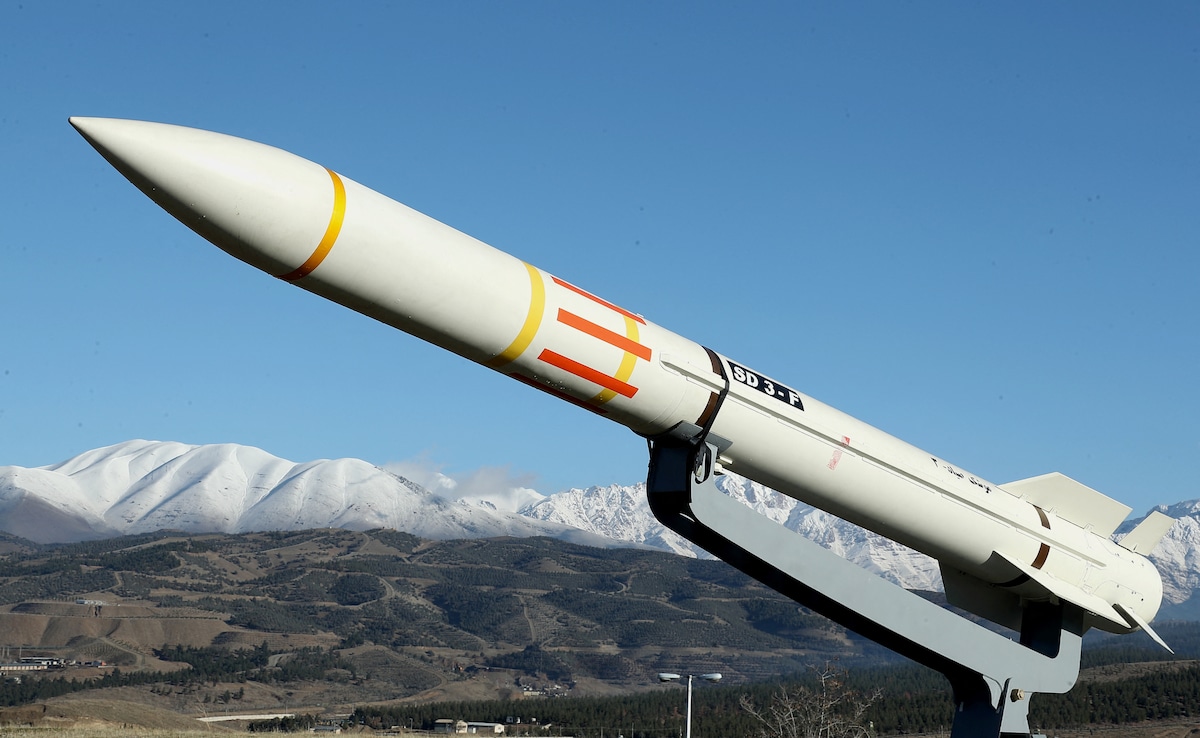
The dust in the region doesn’t just settle; it remembers. For those living along the fractured lines of the Middle East, a ceasefire isn't the presence of peace. It is the absence of noise. In that sudden, ringing silence, the most dangerous work begins. While the world looks at satellite maps and diplomatic cables, the real story is being written in the dirt by men with shovels and hydraulic lifts.
Reports suggest that Iran is currently utilizing the temporary lull in active hostilities to retrieve an arsenal it buried long ago. This isn't just a logistical shuffle. It is a resurrection. Under the sun-baked crust of the earth, thousands of miles of "missile cities" and reinforced bunkers have been waiting. They were designed for this exact moment.
The Architect in the Shadows
Consider a man we will call Reza. He is hypothetical, but his role is as real as the concrete pouring into the desert floor. Reza doesn't carry a rifle. He carries a schematic. For years, his job has been to ensure that the earth above his head stays exactly where it is. He works in a world of artificial light and recirculated air, deep enough that the vibrations of an airstrike feel like nothing more than a distant, muffled heartbeat.
When the missiles were first moved into these subterranean vaults, they were treated like sacred relics. They were coated in protective films, checked for humidity damage, and shielded from the prying eyes of orbiting cameras. The strategy was simple: if they can’t see it, they can’t kill it. But a weapon hidden is a weapon useless. To be effective, it must eventually breathe.
The ceasefire provides the oxygen.
As the diplomatic wheels turn in distant capitals, the heavy steel doors of these hidden silos are grinding open. This is a high-stakes race against the clock. The goal isn't just to move the hardware, but to calibrate it. Guidance systems that have sat dormant in the dark need to be synced. Fuel lines need to be flushed. Engines need to be tested.
The Physics of Deception
The technical reality of an underground arsenal is a nightmare of engineering. To understand why this matters, one must understand the vulnerability of the modern missile. A ballistic missile on a mobile launcher is a massive, heat-radiating target. It is a "loud" object in a world of sensors. By burying these systems, Iran essentially turned their territory into a giant, lethal shell game.
But the earth is heavy. The logistics of "digging out" an arsenal involve more than just clearing some sand. It involves the activation of pre-staged elevator systems and the clearing of camouflaged exit points. Intelligence reports indicate that these sites are often located in mountainous terrain, where the granite provides a natural shield that even the most advanced "bunker buster" munitions struggle to penetrate.
The genius of the strategy lies in the psychological weight of the unknown. If an adversary knows you have fifty missiles at a specific base, they can plan. If they know you have five hundred hidden somewhere in a mountain range the size of a small country, the math changes. The ceasefire hasn't stopped the war; it has merely moved the front line to the geological level.
The Invisible Stakes
Silence is a tool. In the West, we often mistake a lack of explosions for a lack of progress. We see the headlines about negotiations and think the clock has stopped. In reality, the clock is ticking faster than ever. Every hour that the skies remain clear of drones is an hour that a crane can operate without fear of a Hellfire missile.
This isn't just about Iran's military capacity. It’s about the erosion of trust in the very concept of a truce. When a ceasefire is used as a tactical shield for rearmament, the truce itself becomes a weapon. It creates a paradox where the act of stopping the fighting actually ensures that the next round of fighting will be significantly more "robust"—to use a word the analysts love—and far more lethal.
The human cost is measured in the tension that never leaves the shoulders of the people living nearby. They know that the hills surrounding their villages are hollow. They know that the quiet isn't a gift. It’s a preparation.
The Evolution of the Tunnel War
We have seen this pattern before, but never on this scale. From the tunnels of Vietnam to the corridors under Gaza, the underdog has always used the earth to level the playing field. But Iran isn't an underdog in the traditional sense. They are a regional power with a sophisticated aerospace industry. They aren't digging tunnels for men; they are digging them for intermediate-range ballistic missiles.
The technology involved here is a strange blend of the ancient and the futuristic. On one hand, you have the raw, physical labor of excavation. On the other, you have the fiber-optic networks that allow these underground batteries to be fired remotely, coordinated by a central command that might be hundreds of miles away.
The "report" in question isn't just a tally of hardware. It’s a roadmap of intent. By pulling these weapons out of the shadows now, the message is clear: the period of hiding is over. The hardware is being positioned. The chess pieces are being slid across the board under the cover of a diplomatic shroud.
The Weight of the Earth
Imagine being the person tasked with monitoring these sites from a thousand miles away. You stare at high-resolution imagery, looking for the slightest change in the texture of the soil. A new tire track. A pile of displaced rocks that wasn't there yesterday. A vent that started emitting heat.
It is a game of ghosts. You are looking for things that are designed to be invisible, moved by people who have mastered the art of the subterranean.
The ceasefire allows for a certain level of "normalcy" to return to the surface. Trucks move. Supplies are delivered. To a casual observer, it looks like a country catching its breath. But beneath the surface, the activity is feverish. It is a massive, coordinated effort to ensure that when the next conflict begins, the first strike doesn't come from a known airfield, but from the side of a mountain that looked perfectly solid just seconds before.
This reality changes the nature of modern deterrence. Traditional deterrence relies on the idea that you can destroy your enemy's ability to fight back. But how do you destroy an army that is integrated into the very crust of the planet? How do you negotiate in good faith when the ground beneath your feet is being weaponized?
The tragedy of the Middle East is often told through the lens of ideology or religion. But there is a more primal story at play here. It is the story of the earth being used as both a shield and a sword. It is the story of a peace that isn't a peace, but a tactical pause to reload.
As the sun sets over the rugged terrain, the shadows lengthen. To the untrained eye, the mountains are static, timeless, and silent. But if you listen closely, you can almost hear the hum of the generators. You can feel the vibration of the heavy machinery. The earth is being hollowed out, and what fills that void isn't hope. It’s steel. It’s propellant. It’s the next decade of conflict, waiting for the signal to rise.