The sea breeze in Mumbai doesn’t just carry the scent of salt. It carries the weight of a thousand disparate lives, all pressing against each other in a city that never stops moving. On a Tuesday like any other, near the sprawling, imposing gates of the state government’s administrative headquarters—the Mantralaya—the air was thick with the usual humidity and the mundane chatter of bureaucrats and security details.
Then the steel flashed.
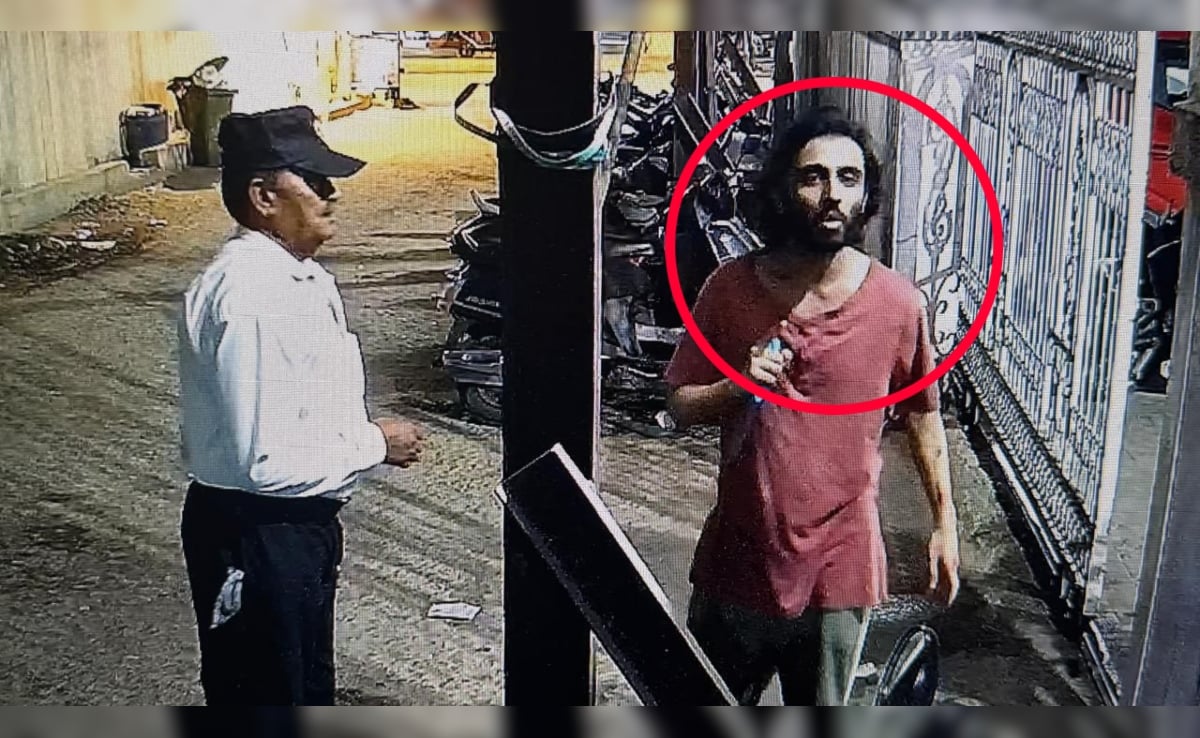
It wasn’t a grand cinematic moment. There were no sweeping orchestral swells. Instead, there was the sharp, jagged reality of a kitchen knife and the sudden, visceral grunt of a Maharashtra State Security Force guard as the blade found its mark. The attacker didn’t look like a soldier. He didn't look like a mastermind. He looked like a man who had lost his way in the labyrinth of his own mind long before he reached the city streets.
The Anatomy of a Fracture
His name was Noor Mohammed Mansoori. In the dry, clinical reports that followed, he would be described as a "lone wolf." It is a term we use to feel safer, as if labeling the predator makes the forest less dark. But the term is a misnomer. No one is born a wolf. They are carved into that shape by isolation, by the toxic hum of a digital echo chamber, and by a world that fails to notice when a man begins to fray at the edges.
Mansoori wasn't a product of a grand conspiracy or a sleeper cell hiding in the shadows of the Mumbai underworld. He was something far more terrifying: a man who had radicalized himself in the silence of his own room.
The police would later find the digital breadcrumbs. They always do. There were the searches for ISIS propaganda. There were the frantic, obsessive loops of extremist videos that promise a sense of belonging to those who feel they belong nowhere. To Mansoori, a common laborer, the world likely felt small, grinding, and indifferent. The propaganda offered the opposite. It offered a cosmic significance. It offered a role in a grand, bloody drama that transcended the dirt under his fingernails.
The guards at the Mantralaya, focused on the mundane tasks of checking IDs and managing the flow of human traffic, were the physical manifestations of the state he had come to loathe. They were the "near enemy," the tangible targets for a man who lacked the means to reach the far ones.
The Invisible Stakes of Silence
When we read about such an attack, our first instinct is to look at the security failure. We ask how a man with a knife could get so close to a seat of power. We demand more metal detectors, more barricades, more eyes in the sky.
But the real problem lies elsewhere.
The failure wasn't at the gate of the Mantralaya. It was in the months and years leading up to that moment. It was in the neighborhood where Mansoori lived, where his withdrawal from society went unremarked. It was in the digital platforms that served him poison under the guise of "recommended content."
Consider what happens when a human being begins to decouple from reality. It starts with a grievance—sometimes real, sometimes imagined. That grievance is nurtured by a specific kind of digital alchemy that turns frustration into fury. In Mansoori’s case, the police revealed he was "wanted to join ISIS," a phrase that carries the weight of a death sentence for the soul. He wasn't just a criminal; he was a convert to a cult of annihilation.
His family, later questioned by the Anti-Terrorism Squad, spoke of a man who had become increasingly erratic. They saw the symptoms but didn't know the name of the disease. This is the tragedy of the modern radicalization process. It happens in the open, yet it remains completely hidden. It is a slow-motion car crash that no one has the heart to stop until the glass is already shattering.
The Myth of the Mastermind
We often want these stories to have a villain with a face—a shadowy recruiter in a dark room pulling the strings. It makes the world feel structured. If there is a leader, we can catch the leader and end the threat.
The reality is colder.
Mansoori was a freelancer of hate. He had no direct handler. He had no complex plan. He simply took a kitchen knife and walked toward the center of the city. This "lone wolf" phenomenon is the ultimate democratization of terror. It requires no logistics, no funding, and no communication that can be intercepted by traditional intelligence. It only requires a broken man and a connection to the internet.
When he struck the guards, he wasn't just attacking individuals. He was attempting to puncture the sense of order that keeps a city like Mumbai functioning. He wanted to prove that the wall between peace and chaos is as thin as a uniform's fabric.
The guards survived. The system held. Mansoori was tackled, restrained, and dragged away into the bowels of the legal system. But the wounds he left aren't just the physical ones on the men who stood in his way. The wounds are in the collective psyche of a city that has seen too much blood and now has to reckon with the fact that the danger might be sitting in the room next door, staring at a glowing screen.
The Mirror of Radicalization
If we look closely at the path Mansoori took, we see a mirror of our own digital age. We all live in bubbles. We all seek out information that confirms what we already believe. For most of us, that means arguing about politics or sports. For a man like Mansoori, it meant descending into a rabbit hole where the only light at the end was the flash of a blade.
The police interrogation painted a picture of a man who was profoundly confused yet utterly certain. He believed he was a soldier. He believed he was doing something righteous. This certainty is the most dangerous drug on the planet. It bypasses empathy. It silences the internal voice that says this is wrong.
What does it feel like to stand in front of a government building, heart hammering against your ribs, believing that your life only gains meaning through the destruction of another’s? We cannot know. But we can see the wreckage left behind. We see the families of the guards who now have to live with the trauma of a random, senseless act of violence. We see a community that now has to defend its reputation against the actions of one man who went off the rails.
The Cost of Looking Away
Security is not a wall. It is a web. It is the connection between neighbors, the alertness of families, and the responsibility of the platforms that profit from our attention. When those connections fail, men like Mansoori fall through the cracks.
The "Lone Wolf" is never truly alone. He is the end product of a long chain of failures. He is the result of a society that has become incredibly good at connecting people to information, but increasingly bad at connecting people to each other.
Mumbai will move on. The traffic will continue to swirl around the Mantralaya. The sea breeze will continue to blow. But the ghost of that Tuesday morning remains. It is a reminder that the most dangerous battlefields aren't the ones we see on the news with tanks and jets. They are the quiet ones. They are the ones fought in the minds of the isolated, the angry, and the forgotten.
The blade is just the final punctuation mark on a story that was written in the dark.
The knife is now in an evidence locker. Mansoori is in a cell. The guards are recovering. But the screen in the darkened room is still glowing, and somewhere else, the next man is starting to read.