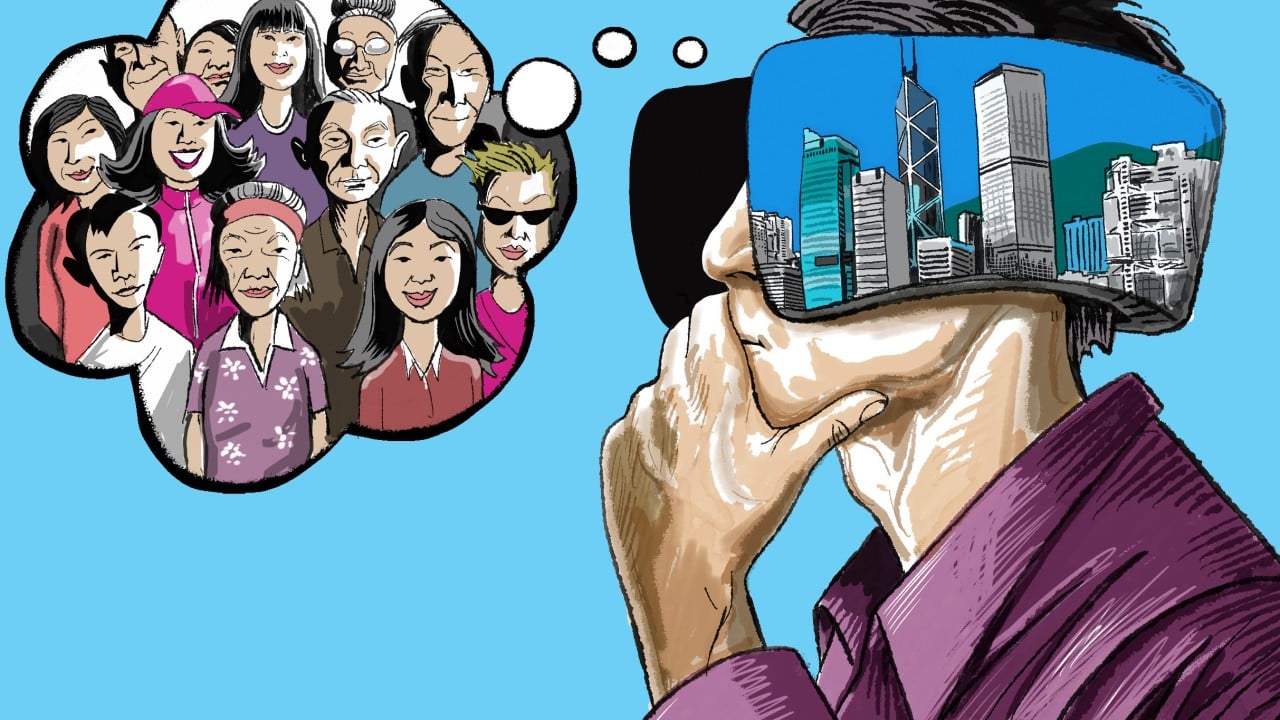
Hong Kong’s population policy is stuck in the past. While officials scramble to hand out cash for babies and launch talent schemes, they’re missing the bigger picture. They’re still treating this global financial hub like a tiny, isolated city-state that can control its destiny through sheer force of will. It doesn’t work that way anymore. You can’t just tweak a few visa rules and expect a demographic crisis to vanish.
The numbers are grim. We’re looking at a fertility rate that has plummeted to roughly 0.8 per woman, which is one of the lowest globally. At the same time, the workforce is graying faster than a tech startup in a market crash. The government’s response? A HK$20,000 "baby bonus" and the Top Talent Pass Scheme (TTPS). These are band-aids on a gaping wound. If we don’t stop thinking like a fortress and start thinking like a part of a massive regional network, the city’s economic engine is going to stall.
The city state mindset is a trap
For decades, Hong Kong operated on a simple logic. Keep the borders tight, control the flow of migrants from the mainland, and manage the local population like a curated garden. That worked when the city was the only gateway to China. It doesn’t work when Shenzhen is a global tech titan and the Greater Bay Area (GBA) is integrating at lightning speed.
Policy makers act as if people only move one way—into Hong Kong. They ignore the reality that local residents are moving out, not just to the UK or Canada, but across the border for cheaper housing and a different pace of life. By focusing only on who we can "attract," we’re ignoring the structural reasons why people leave or choose not to have kids here. High property prices aren’t just a "lifestyle issue." They’re a demographic poison. When a 400-square-foot flat costs a decade’s worth of salary, nobody is thinking about a nursery. They’re thinking about survival.
Why talent schemes aren't the magic fix
The TTPS has brought in thousands of applicants. On paper, it looks like a win. But look closer. A huge chunk of these new arrivals are from the mainland. While their skills are vital, this isn't "international" talent in the traditional sense. We’re seeing a replacement of the workforce rather than an expansion of it.
If these professionals arrive and find the same issues—insupportable rent, high-pressure schools, and a lack of social mobility—they won’t stay. They’ll use Hong Kong as a stepping stone. True population policy isn't about counting heads at the airport. It's about retention. If the city remains a "high-cost, high-stress" bubble, the "talent" will eventually flow to places with a better ROI on their lives. We're competing with Singapore, Dubai, and even London. Thinking we have a monopoly on talent just because we're a financial hub is arrogant.
The fertility myth and the HK$20,000 distraction
Let's be real about the baby bonus. Nobody decides to raise a human being in one of the world's most expensive cities because the government gave them enough money for a high-end stroller. It's almost insulting.
The fertility crisis is a symptom of deep-seated anxiety. Young couples see a future where they’re squeezed between caring for four aging parents and paying off a mortgage that won't clear until they're sixty. Public healthcare wait times for non-urgent surgeries are measured in years. The education system is an arms race of tutors and extracurriculars.
To fix the birth rate, you don't give out cash. You fix the environment. That means radical shifts in work culture. It means making it okay for fathers to actually take leave without being sidelined. It means housing policies that prioritize families over investors. Right now, our policy is "pro-business" but "anti-family" in practice. You can't have a thriving economy without a sustainable population, yet we keep prioritizing the former at the expense of the latter.
Integrating with the Greater Bay Area is the only way out
The "city-state" mindset views the border as a wall. A modern policy should view it as a valve. We need to stop seeing the GBA as a threat to our identity and start seeing it as our retirement and housing backyard.
If Hong Kong can’t build enough elderly care facilities—and let’s face it, we can’t—we should be facilitating seamless healthcare portability to the mainland. We need a system where a Hong Konger can live in Zhongshan or Zhuhai and still access their social benefits and medical records without a hitch. This clears space in the city for the younger workforce while giving seniors a better quality of life.
It also means rethinking the "daily quota" for mainland migrants. The current system is a relic. We need a points-based system that specifically targets the gaps in our social fabric—not just bankers and lawyers, but healthcare workers, caregivers, and tradespeople. The snobbery around "high-end talent" is killing our basic services.
Stop treating demographics like a math problem
The biggest mistake is thinking this is just about "net inflow." It's about the soul of the city. If Hong Kong becomes a place where only the ultra-wealthy and the transient "talent" live, it loses what made it great. We need the middle class. We need the artists, the teachers, and the small business owners.
Current policy is too clinical. It’s all about GDP per capita and labor force participation rates. It ignores the "happiness" factor. People have kids when they feel optimistic. They stay in a city when they feel they belong.
What actually needs to happen now
If you’re a policymaker reading this, stop looking at the spreadsheets for a second. Start looking at the streets.
- End the obsession with "High-End" talent only. We need a functional society, which requires a diverse workforce. Open up pathways for middle-skill sectors that are currently starving for labor.
- Aggressive workplace reform. Legislate maximum working hours. Make flexible work a right, not a perk. If parents can't see their kids because they're stuck in Central until 9 PM, they won't have a second one.
- Medical portability. Finalize the agreements to allow Hong Kong medical vouchers and insurance to be used across all major GBA hospitals. Make the "retirement across the border" option actually viable for the average person, not just the adventurous few.
- Schooling reform. Tone down the competitive nature of the local curriculum. The stress of the "Tiger Parent" lifestyle is a major deterrent for potential parents.
- Real housing intervention. Move beyond "subsidized flats" and look at rent controls or massive increases in land supply specifically for family-sized units.
The era of Hong Kong as a standalone island is over. We’re part of a massive urban cluster now. The sooner we drop the city-state ego and start building a policy that reflects our regional reality, the sooner we can stop the demographic bleed. It's time to stop managing a decline and start building a bridge to a different kind of future.