Hong Kong just closed the books on its warmest winter since record-keeping began in 1884. With a mean temperature sitting 2.0 degrees Celsius above the historical norm, the city is no longer just flirting with a changing climate—it has moved into a new thermal reality. The data from the Hong Kong Observatory confirms that the traditional "cool season" is evaporating, replaced by a persistent humidity and heat that threatens the city's infrastructure, public health, and energy stability. This is not a one-off statistical anomaly; it is the culmination of urban heat island effects colliding with global atmospheric shifts.
The numbers are startling. For decades, the winter months provided a necessary reprieve for the city's seven million residents. Now, that window of relief is slamming shut. During the three months spanning December through February, the city saw a record-shattering number of "hot" days where the mercury refused to dip into traditional winter territory. This shift has massive implications for how the city functions, from the skyrocketing demand on the electrical grid to the biological rhythms of the local flora and fauna.
The Concrete Pressure Cooker Effect
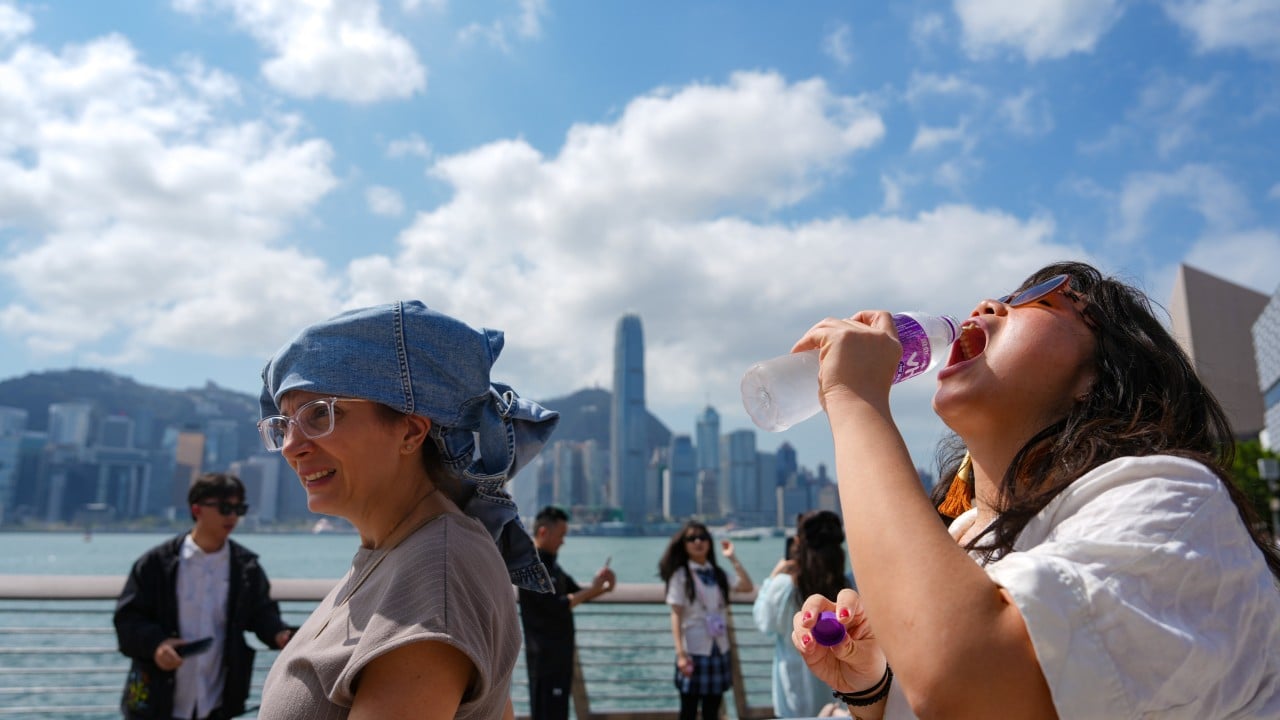
While global warming provides the baseline, Hong Kong's specific geography creates a localized crisis. The city is a masterpiece of vertical density, but that same density is now its greatest liability. Large swathes of Victoria Harbour are flanked by glass and concrete canyons that trap solar radiation throughout the day. At night, when the city should be cooling down, the heat is instead re-radiated back into the streets.
This is the Urban Heat Island (UHI) effect in its most aggressive form. In a traditional winter, the arrival of the dry north-easterly monsoon would flush out this trapped heat. However, as those polar outbreaks weaken, the "flushing" mechanism fails. We are seeing a feedback loop where the built environment stays warm, preventing the local atmosphere from ever reaching the chilling points required to trigger a true seasonal transition.
When the temperature averages 2.0 degrees above the norm, it doesn't mean every day is slightly pleasant. It means the floor has been raised. The minimum temperatures—the lowest point the thermometer hits in the dead of night—are rising faster than the daytime highs. This lack of nocturnal cooling is what stresses the human body and keeps air conditioning units humming in months when they should be dormant.
The Energy Crisis Hidden in the Heat
The financial cost of a "warm" winter is often ignored in favor of the environmental narrative, but the data tells a story of economic strain. Hong Kong’s power companies, CLP and HK Electric, are seeing a shift in seasonal demand. Historically, winter was a period of low load, allowing for essential plant maintenance and lower emissions.
Now, the "cooling season" effectively never ends.
- Commercial Load: Shopping malls and office towers in Central and Tsim Sha Tsui are forced to run massive HVAC systems year-round to combat internal heat gain from lighting and electronics, as the external air is no longer cool enough to provide natural ventilation.
- Residential Strain: Older housing estates, often poorly insulated, become ovens. Residents who once relied on a simple fan now find themselves forced to run air conditioners in January, hitting the pockets of the city's most vulnerable elderly populations.
This permanent demand for cooling creates a higher baseline for carbon emissions. Even as the government pushes for a "Green Hong Kong," the sheer physics of cooling a subtropical metropolis in a warming world works against those targets. We are running to stand still.
The Failure of the Monsoon
To understand why this winter was so relentlessly warm, we have to look at the Siberian High. This massive pressure system is the engine of the East Asian Winter Monsoon. In a standard year, it pumps cold, dry air down the coast of China, bringing those crisp, blue-sky days to Hong Kong.
This year, the engine sputtered.
Atmospheric blocking patterns in the upper atmosphere diverted the cold air masses further east toward the Pacific or trapped them in the northern latitudes. Without these surges of cold air, Hong Kong is left at the mercy of moist, warm maritime air from the south. This results in the "gray winter" phenomenon—high humidity, thick fog, and temperatures that feel more like May than February.
Meteorologists have noted that the jet stream is becoming more "wavy." Instead of a tight circle of cold air around the pole, the jet stream now meanders. When Hong Kong sits under a "ridge" of this stream, the cold is locked away, and the city swelters. The 2-degree deviation is a symptom of a broken atmospheric conveyor belt.
Ecological Desynchronization
The natural world is reacting to these temperatures with confusion. In the New Territories, botanists are observing "false springs." Trees and flowers that require a specific period of winter chill to go dormant are instead remaining active or blooming months ahead of schedule.
This isn't just a matter of pretty flowers appearing early. It creates a trophic mismatch. If flowers bloom in January because of record heat, but the pollinators (bees and other insects) don't emerge until their light-regulated schedule in March, the reproductive cycle of the plant is broken. We are witnessing a quiet collapse of the local ecosystem's timing.
Furthermore, the lack of a "killing frost" or even a sustained cold snap allows pest populations to survive the winter unabated. Mosquito-borne diseases, once seasonally restricted, are becoming a year-round concern for the Department of Health. The "winter break" for viruses and bacteria is becoming a thing of the past.
The Myth of the Mild Winter
There is a dangerous tendency to view a warm winter as a "lifestyle perk." People enjoy the lack of heavy coats and the ability to dine outdoors. But this is a superficial reading of a deep structural threat. A warm winter in a subtropical zone is a harbiner of a catastrophic summer.
When the ground and the surrounding sea (the South China Sea) do not cool down sufficiently during the winter months, they provide a higher starting point for summer heating. The ocean acts as a giant battery, storing thermal energy. A record-warm winter usually leads to a record-breaking summer, with higher risks of extreme typhoons fueled by elevated sea-surface temperatures.
Infrastructure was not Built for This
Hong Kong’s infrastructure is designed for a specific thermal envelope. Our drainage systems, our road surfaces, and our building codes were all codified in an era where "winter" meant something.
- Thermal Expansion: Sustained higher temperatures lead to increased stress on bridge joints and rail lines, which are calibrated for a certain range of expansion and contraction.
- Water Security: Warmer winters increase evaporation rates in local reservoirs. While Hong Kong relies heavily on Dongjiang water from the mainland, local catchments are still a vital buffer. That buffer is thinning.
- Public Health: The "heat stress" index is now a factor in months previously considered safe for outdoor labor. The government has had to rewrite guidelines for construction workers, but these guidelines are often ignored in the rush to meet development deadlines.
The reality is that Hong Kong is an aging city. Its most iconic districts were built long before "climate resilience" was a buzzword. Retrofitting a skyscraper to be more thermally efficient is an astronomical expense that most landlords are unwilling to bear until forced by legislation.
The Policy Void
Current government initiatives focus heavily on "long-term carbon neutrality." This is noble, but it fails to address the immediate, lived reality of a city that has already changed. We are playing a defensive game with a playbook from the 1990s.
The Hong Kong Observatory provides excellent data, but data without aggressive policy intervention is just a record of our decline. We need an immediate overhaul of the Building Energy Code to mandate reflective surfaces and better insulation in all new builds. We need a massive expansion of the "Blue-Green Infrastructure" project to incorporate more water features and vegetation into the urban core to break the heat island effect.
More importantly, we need to stop treating these record-breaking winters as "news events" and start treating them as permanent shifts in our geographical identity. Hong Kong is no longer a city with four seasons. We have transitioned into a cycle of "Hot" and "Slightly Less Hot."
The record-breaking mean temperature of 2.0 degrees above normal is a loud, clear signal. The subtropical climate that built the Hong Kong of the 20th century is gone. If the city does not radically accelerate its adaptation strategies—moving beyond simple monitoring to aggressive urban cooling and energy reform—the very density that made it a global hub will become its undoing.
Audit your cooling systems and plan for a summer that starts in March.