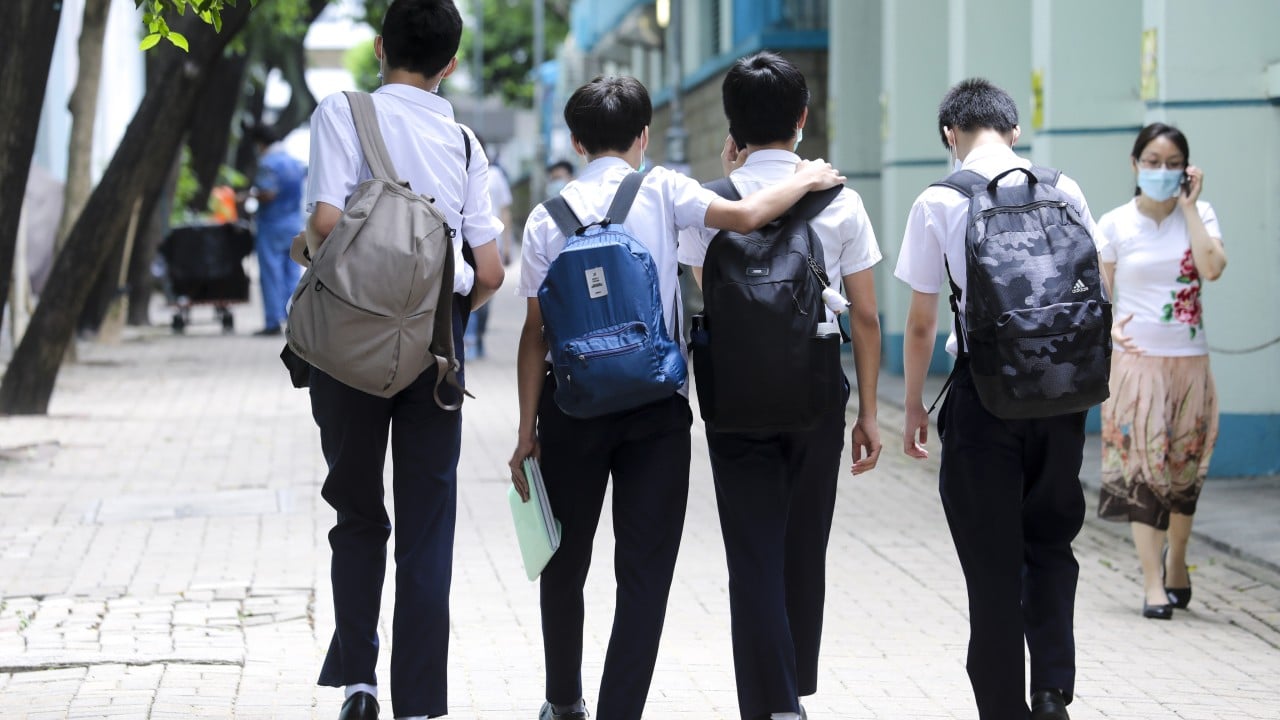
The number of Hong Kong secondary students diagnosed with mental health disorders has more than doubled in five years, rising from roughly 600 cases per 100,000 students to well over 1,200. This is not a statistical fluke or the result of better reporting. It is a systemic collapse. For decades, the city has treated its education system as a high-stakes filtering machine designed to produce elite workers for the financial and professional sectors. Now, that machine is grinding the students themselves into dust. While government officials point to post-pandemic recovery as a primary driver, the rot goes much deeper, touching on a rigid curriculum, a cultural obsession with prestige, and a severe shortage of frontline psychiatric support.
The Myth of Post-Pandemic Recovery
Public discourse often blames the "lost years" of social distancing for the current spike in anxiety and depression. It is a convenient narrative because it suggests that the problem is temporary. If the virus was the cause, then time and "normalcy" should be the cure. This logic is flawed. The pandemic did not create the mental health crisis; it acted as an accelerant for a fire that was already burning through classrooms across the New Territories, Kowloon, and Hong Kong Island.
Long before the first mask mandates, the city’s students were already reporting some of the highest stress levels in the world. The shift to online learning merely stripped away the few remaining social outlets students had, leaving them alone with a workload that never diminished. When schools reopened, the system did not offer a period of adjustment. It demanded a sprint to "catch up" on lost curriculum time. We are seeing the results of that physical and emotional exhaustion today.
A Curriculum Designed for a Different Century
The Hong Kong Diploma of Secondary Education (HKDSE) remains the sun around which every student’s life revolves. It is a brutal, high-stakes examination that determines university placement and, by extension, social mobility. Despite various "reforms" aimed at reducing pressure, the core incentive remains unchanged: score high or fall behind.
This win-lose environment creates a chronic state of fight-or-flight. When a teenager believes their entire future depends on a single set of exams at age 17, the brain stays flooded with cortisol. Over years, this physiological stress hardens into clinical anxiety and depression. The curriculum remains heavy on rote memorization and light on the emotional intelligence or resilience-building that modern life actually requires. We are teaching children how to solve complex quadratic equations while they lack the tools to process a single panic attack.
The Hidden Cost of the Prestige Obsession
In Hong Kong, academic failure is often treated as a moral failing. The cultural weight of "face" means that a child’s mental health struggle is frequently hidden or dismissed by parents who fear the social stigma of a psychiatric diagnosis. This creates a dangerous lag between the onset of symptoms and the beginning of treatment.
Families often pour resources into "shadow education"—the multi-billion dollar private tutoring industry—rather than seeking counseling. A student might spend eight hours in a classroom followed by four hours in a tutorial center, returning home at 10:00 PM to start homework. This schedule is not an exaggeration; for many, it is the baseline. Sleep deprivation is so common it is treated as a badge of honor. Yet, science tells us that the adolescent brain cannot function, let alone remain emotionally stable, on five hours of sleep. We are essentially running a city-wide sleep deprivation experiment on our youth and acting surprised when they break.
The Bottleneck in the Clinic
Even when a student or parent recognizes the need for help, they hit a wall. The public healthcare system is buckling under the weight of new referrals. For non-urgent mental health cases in the public sector, the waiting time can stretch beyond a year. In the life of a teenager, a year is an eternity. A manageable anxiety disorder can spiral into suicidal ideation in a fraction of that time.
The ratio of educational psychologists to students remains woefully inadequate. Most schools share a psychologist who visits only a few days a month. This means the primary burden of "detection" falls on teachers. These teachers are already overworked, drowning in administrative paperwork, and focused on hitting academic KPIs. They are not trained clinicians. Expecting a math teacher to spot the subtle early signs of clinical depression in a class of thirty-five students is a fantasy.
Private Care as a Luxury
For those who can afford it, private therapy is an option, but at $2,000 to $3,000 HKD per session, it is out of reach for the vast majority of Hong Kong families. This creates a two-tier crisis. The wealthy can buy their way into early intervention and support, while the working class is forced to wait until a crisis becomes an emergency, often ending up in the Accident and Emergency department during a breakdown.
The Rise of Social Withdrawal and School Refusal
A growing phenomenon linked to this crisis is "school refusal." This isn't simple truancy or "playing hooky." It is a paralyzing inability to enter the school gates, often driven by intense social anxiety or the fear of academic inadequacy.
When the pressure becomes unbearable, the brain’s primary defense mechanism is avoidance. We are seeing more students retreat into their bedrooms, finding solace in digital worlds where they aren't being constantly ranked against their peers. This isolation then feeds back into the depression, creating a cycle that is incredibly difficult to break once it takes hold. The system's response is often punitive—marking absences and threatening disciplinary action—which only increases the student's fear and further entrenches their withdrawal.
The Failure of the "Happiness" Campaigns
The government has launched various initiatives titled "Positive Education" or "Joyful@School." While well-intentioned, these programs often feel like putting a band-aid on a compound fracture. You cannot "positive think" your way out of a system that demands sixteen hours of labor a day from a minor.
Students are savvy. They see the contradiction between a poster telling them to "relax and breathe" and a teacher telling them that their HKDSE results will define their worth as a human being. These campaigns often fail because they focus on individual "resilience" rather than addressing the toxic environment that is eroding that resilience in the first place. Resilience is not an infinite resource. Even the strongest metal snaps if you put enough weight on it.
The Economic Shadow
The business community should be as concerned as the healthcare sector. We are currently "producing" a workforce that is burned out before it even enters the labor market. HR departments are already reporting that new hires lack the interpersonal skills and emotional stability required for high-pressure corporate roles. If the goal of the education system was to create a sustainable economic engine, it is failing. We are consuming our human capital instead of cultivating it.
Structural Changes Required
Meaningful change requires more than just hiring a few more counselors. It requires a fundamental shift in how we measure success.
- De-escalating the HKDSE: We must move toward a system where university admissions are based on a broader range of criteria, reducing the "all-or-nothing" nature of the exams.
- Mandatory Minimum Sleep Guarantees: Schools must be restricted in the amount of homework they can assign, and start times should be moved later to align with adolescent circadian rhythms.
- Integration of Mental Health into the Core Curriculum: This should not be an optional seminar. It needs to be as fundamental as English or Mathematics.
- Direct Funding for Private Intervention: If the public sector cannot meet the demand, the government should provide vouchers for immediate private care for students flagged as "at risk."
The doubling of mental illness cases is a flashing red light on the dashboard of Hong Kong’s future. We can continue to ignore it and call it a "post-covid adjustment," or we can admit that the way we raise and educate our children is fundamentally broken. The current trajectory is not just unsustainable; it is cruel. A society that prioritizes exam scores over the literal survival of its youth has lost its way, and the cost of finding it again will only grow the longer we wait.
Stop calling these children "fragile." They are the survivors of an environment that would break most adults. The question isn't why they are struggling, but how any of them are still standing at all.