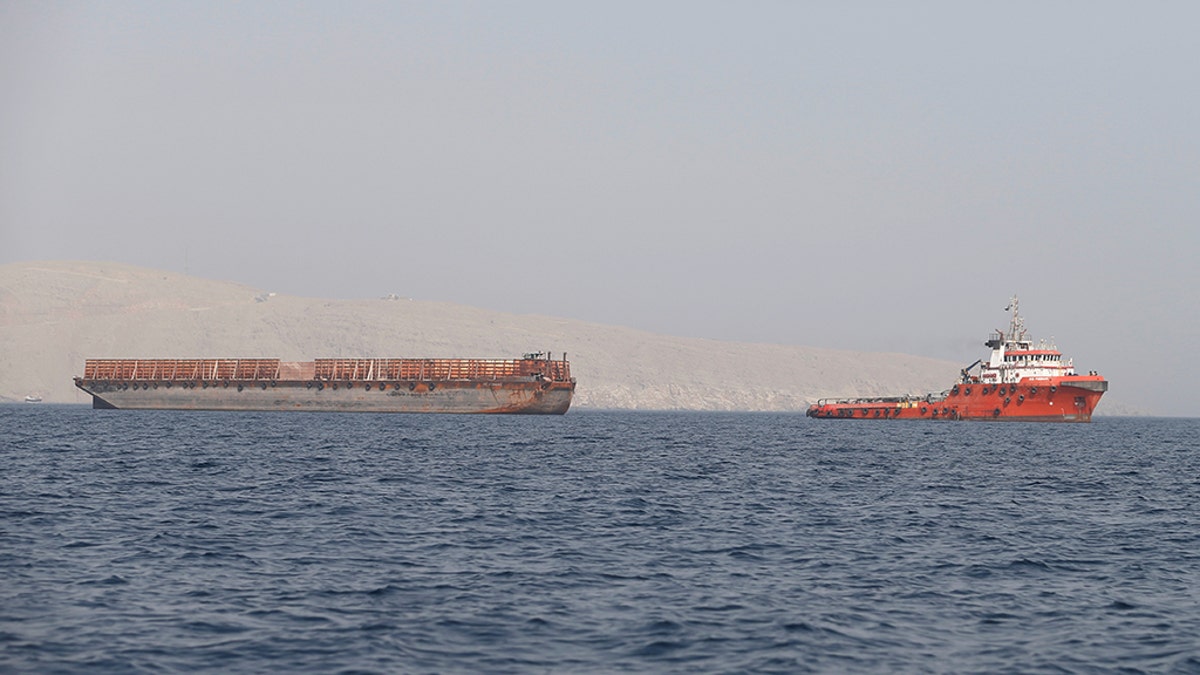
Official denials are the lowest form of political theater. When the Ministry of External Affairs (MEA) suggests there was "no discussion" regarding a vessel swap for safe passage in the Strait of Hormuz, they aren't just protecting a secret; they are insulting the intelligence of anyone who understands how energy security actually works. In the world of high-stakes maritime geopolitics, "no discussion" is code for "we haven't signed the contract yet."
The lazy consensus in the media is to take these press releases at face value. Journalists treat diplomatic statements like holy scripture, ignoring the reality that the Strait of Hormuz is a choke point where 20% of the world's liquid petroleum passes daily. To suggest that India—a nation that imports over 80% of its crude—isn't engaged in gritty, transactional horse-trading with Tehran is a fantasy.
The Myth of the Clean Hands Policy
India prides itself on "strategic autonomy." It’s a beautiful phrase that looks great in policy papers but smells like burnt fuel in the real world. The MEA’s rejection of the "vessel exchange" claims isn't a sign of transparency. It’s a tactical maneuver to avoid the ire of Washington while keeping the lights on in Mumbai.
Let’s look at the mechanics of the Persian Gulf. Iran doesn't need "discussions" in a boardroom to make its point. It uses the physical reality of the sea. When an Iranian official mentions the possibility of a swap, they are setting the opening bid. When New Delhi denies it, they are simply countering.
The industry insider knows the truth: maritime security is never about "rules-based order" in this region. It is about leverage. India has invested billions in the Chabahar Port to bypass Pakistan and reach Central Asia. Iran knows this. To think that the safety of Indian-flagged tankers isn't inextricably linked to bilateral concessions—whether they involve released vessels, currency arrangements, or infrastructure milestones—is to ignore the very foundation of Indo-Iranian relations.
Why the Vessel Swap is a Logical Necessity
Critics call a vessel exchange "piracy-adjacent" or "extortion." I call it efficient.
Imagine a scenario where a tanker is detained under a legal pretext—safety violations, environmental concerns, or "technical issues." In a world governed by the slow grind of international maritime courts, that ship sits and rots for years. Or, you engage in a pragmatic swap. You release mine; I release yours. The oil flows. The insurance premiums stop spiking. The global economy avoids a heart attack.
The "scandal" isn't that such a deal might be on the table. The scandal is that we pretend it isn't.
- Insurance Reality Check: Lloyd’s of London doesn't care about MEA press releases. They care about War Risk Surcharges. If there is no "deal" for safe passage, every barrel of oil coming through the Strait costs India more.
- The Shadow Fleet Factor: India has become a massive hub for the "grey market" of oil since the Russian sanctions began. This requires a level of back-channel cooperation with every major regional player, including Iran, that officially doesn't exist.
- Chabahar as Collateral: You don't build a port in a sanctioned nation without a permanent, ongoing negotiation regarding "safe passage" for the trade that port is supposed to facilitate.
The Geopolitical Gaslighting of the Indian Public
The MEA’s denial serves one primary purpose: The United States.
Under the CAATSA (Countering America's Adversaries Through Sanctions Act) era, India is constantly walking a tightrope. Admitting to a transactional "vessels for passage" deal would be a neon sign inviting US sanctions. So, the government does what it must. It lies.
But we shouldn't believe the lie.
The reality is that India is currently the world’s most successful "swing state." It buys Russian oil, American weapons, and maintains Iranian ports. This isn't achieved by following the rules; it’s achieved by breaking them and then denying the debris exists. The "claims" rejected by the MEA likely originated from leaks intended to pressure India into choosing a side. By denying them, India refuses to play the game on anyone else's terms.
Tactical Silence is Not the Same as Inaction
I have seen energy majors lose hundreds of millions because they waited for "official" clarity that never came. In the shipping industry, you don't wait for a tweet from a spokesperson to know if a route is safe. You look at the movement of the Islamic Revolutionary Guard Corps (IRGC) Navy and the frequency of "technical inspections" on your specific flag.
If the MEA says there is no discussion, it means the price hasn't been settled.
Think about the math of a tanker. A VLCC (Very Large Crude Carrier) carries roughly 2 million barrels. At $80 a barrel, that’s $160 million in cargo, plus a $100 million vessel. You don't leave a $260 million asset to the "goodwill" of a regional power under heavy sanctions. You negotiate.
The Brutal Truth About "Safe Passage"
The concept of "free navigation" is a ghost. In the Strait of Hormuz, navigation is "managed."
Iran controls the heights. They have the capability to shut the door whenever they feel the geopolitical pressure becoming unbearable. India, as a rising global power, cannot afford to be a victim of those closed doors. Therefore, India must be an active participant in the "vessel economy."
When the MEA rejects the claim of a swap, they are essentially saying, "We aren't doing it the way you think we are." It might not be a direct one-for-one ship swap. It might be a "fuel for friendship" deal, or a "port credit for protection" arrangement. But a transaction is happening.
Stop Asking if the Deal Exists
The question "Did Iran seek a vessel exchange?" is the wrong question. It assumes a level of formal bureaucracy that doesn't exist in the Persian Gulf.
The right question is: "What did India give up to ensure its tankers weren't the ones being boarded last month?"
The absence of Indian ships in the recent headlines of seized vessels is the only evidence you need. While other nations see their tankers diverted to Bandar Abbas, Indian vessels continue to move. That isn't luck. That isn't "respect for international law." That is the result of the very discussions the MEA claims aren't happening.
The Cost of the Mirage
The downside of this contrarian reality is that it makes India look inconsistent to its Western partners. But for a country trying to lift hundreds of millions out of poverty, "consistency" is a luxury. Energy security is the only metric that matters.
If New Delhi has to trade a seized Iranian dhow for a multi-million dollar tanker in the dark of night, they should do it every single time. And they should keep denying it.
The sophisticated observer knows that the loudest denials often point toward the most significant deals. The Strait of Hormuz is not a place for diplomats in suits; it is a place for the bazaar. And in the bazaar, everything is for sale—including "safe passage."
Accept the denial as the tactical smoke it is. Watch the ship tracking data instead. The silence of the MEA is the sound of the deal being done.
Stop looking for the truth in a government briefing.
Would you like me to analyze the specific ship tracking data from the last quarter to show the correlation between diplomatic visits and "technical releases" of vessels in the region?