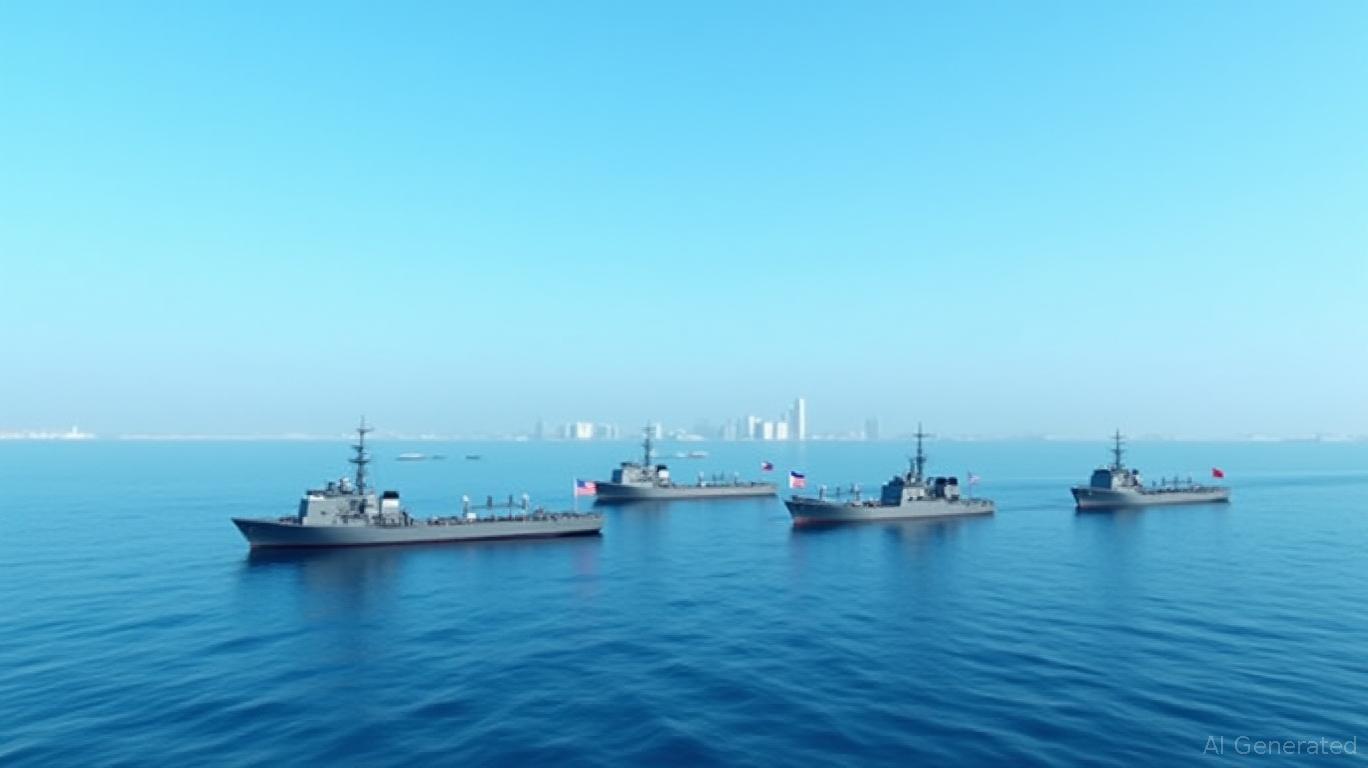
The headlines are screaming about a "standstill." Analysts are squinting at satellite feeds of the Strait of Hormuz, counting hulls like they’re waiting for the apocalypse. They see a dip in transits and scream "collapse." They see rising insurance premiums and scream "catastrophe."
They are wrong.
What the mainstream media calls a standstill is actually a masterclass in market optimization. The "crisis" in the Strait isn't a failure of global shipping; it’s a stress test that the industry is passing with flying colors. If you’re waiting for the world economy to grind to a halt because of a few skirmishes and some loud rhetoric, you don't understand how water and oil actually move.
The industry isn't paralyzed. It’s getting lean.
The Data Illusion of the "Standstill"
Standard reporting relies on raw AIS (Automatic Identification System) data. It’s lazy. When a tanker turns off its transponder, the "experts" mark it as a loss. They assume the ship has vanished or anchored in fear.
I’ve spent twenty years watching how commodities move when the lights go out. In reality, "dark" transits are at an all-time high. The volume of crude moving through the Strait hasn't evaporated; it has simply migrated to a grey market that doesn't care about your tracking software. To call it a standstill is to admit you can’t see the forest because you’re obsessed with the GPS on a single tree.
The bottleneck isn't physical. It’s psychological. The ships moving through right now are the ones with the highest risk tolerance and the most sophisticated evasion tech. We aren't seeing a shutdown; we are seeing a Darwinian culling of inefficient operators.
War Risk is a Necessary Market Correction
Everyone complains about "War Risk" surcharges. You see a $50,000-per-voyage spike and think it’s a tragedy. I see it as a filter.
For too long, the shipping industry has been bloated by "zombie" fleets—old, single-hull-adjacent rust buckets that depress freight rates and increase environmental risks. High-tension environments like the current Iran-Israel friction force these bottom-feeders out of the water.
- Insurance as an Audit: When Lloyd’s of London or the IG P&I Clubs hike rates, they aren't just profiteering. They are conducting a brutal, real-time audit of fleet quality.
- Efficiency Over Volume: A "standstill" forces charterers to consolidate. Why send three half-empty Aframax tankers when you can wait, mitigate the risk window, and send one fully loaded VLCC (Very Large Crude Carrier)?
The "traffic" might be down, but the ton-mile efficiency is actually sharpening. We are learning how to do more with fewer targets on the water.
The Pipeline Fallacy
You’ll hear "intellectuals" say we should just bypass Hormuz. They point to the East-West Pipeline in Saudi Arabia or the Abu Dhabi Crude Oil Pipeline.
This is amateur hour.
These pipelines have a combined capacity that handles barely a fraction of the 21 million barrels per day that transit the Strait. More importantly, pipelines are static targets. You can’t move a pipe once a drone is locked onto it. A tanker is a 300,000-ton piece of maneuverable steel.
The Strait of Hormuz remains the most resilient logistics hub on the planet specifically because it is a waterway. It cannot be permanently "broken" by a kinetic strike. It is self-healing. The moment the smoke clears, the water is still there.
The "Oil Shock" That Won't Happen
The PAA (People Also Ask) crowd wants to know: "Will gas hit $10 a gallon?"
The answer is a brutal no.
The market has already priced in the "Hormuz Closure" scenario a dozen times over. In 1984, during the Tanker War, ships were getting hit by Exocet missiles weekly, and the world didn't stop spinning. Today, we have the Strategic Petroleum Reserve (SPR), massive inventories in China, and a US shale machine that can turn on the taps the moment the price justifies the fracking fluid.
A standstill in the Strait is actually a bearish signal for long-term oil prices. Why? Because it accelerates the global transition away from Middle Eastern volatility. Every time a Houthi drone flies or an Iranian patrol boat makes a move, a boardroom in Munich or Seoul signs off on a faster renewable pivot or a long-term supply contract with Brazil or Guyana.
Iran and Israel are fighting over a 20th-century chokepoint while the rest of the world is building a 21st-century bypass that doesn't involve ships at all.
Stop Watching the Map, Start Watching the Margin
If you’re a logistics provider or a trader, stop looking at the "heat maps" of ship density. They are lagging indicators.
Look at the spread.
- The Dirty Tanker Index: If this is climbing while "traffic" is down, it means the operators who are brave enough to sail are making absolute bank.
- Bunker Fuel Spreads: Watch where ships are refueling. If Singapore is seeing a spike in activity while Fujairah slows down, it tells you the industry is rerouting its long-term strategy, not just hiding in a port.
The real tragedy isn't the standstill. The real tragedy is the companies that are sitting on the sidelines because they’re scared of a headline. The money is made in the friction.
The Counter-Intuitive Reality of Maritime Security
We’ve been told that increased military presence—Operation Prosperity Guardian and its ilk—is the solution.
It’s actually part of the problem.
Escorted convoys create a predictable rhythm. Predictability is the enemy of security in a high-threat zone. When you group ten tankers together with a destroyer, you’ve just created a massive, slow-moving target.
The most successful operators right now are the "loners"—the ships that use deceptive lighting, spoofed AIS signatures, and irregular routing. The "standstill" is a facade maintained by those who want to keep their movements private.
The Logistics of Fear
Let’s perform a thought experiment. Imagine a scenario where the Strait of Hormuz is truly, 100% closed for 30 days. No grey market. No dark transits.
What happens?
The world doesn't end. We see a massive draw on floating storage. We see the "ghost fleet" of sanctioned Iranian and Russian vessels suddenly become the most valuable assets in the world because they are already tuned to operate outside the law.
The "standstill" is a filter for the weak. It rewards the agile, the technologically advanced, and the morally flexible.
If you’re reading the "data" and seeing a standstill, you’re looking at the graveyard of legacy shipping. Underneath that surface, the real industry is moving faster and more profitably than ever.
Stop asking when the traffic will return to normal. Normal was inefficient. Normal was a bubble. This tension is the new baseline, and it’s time to stop whining about the risk and start billing for it.
The Strait isn't closed. You're just not invited.