Geopolitics is a theater of the obvious, and the mainstream media is currently obsessed with the front row. The latest headlines regarding Donald Trump’s warnings to Iran over the Strait of Hormuz are treated as a return to "maximum pressure" or a stabilizing force for global oil markets. This narrative is not just lazy; it is dangerous. It assumes that verbal threats and the presence of a carrier strike group can dictate the terms of a 21st-century shadow war.
The "lazy consensus" suggests that a ceasefire in the region is a fragile glass ornament that Trump can protect by shouting at it. In reality, the ceasefire is a ghost, and the Strait of Hormuz is less a "chokepoint" and more a permanent site of asymmetric leverage that no superpower can fully switch off. If you think a few tweets or a sternly worded diplomatic cable will keep the tankers moving during a true escalation, you haven't been paying attention to the last decade of maritime warfare. For a different view, see: this related article.
The Myth of the "Protected" Sea Lane
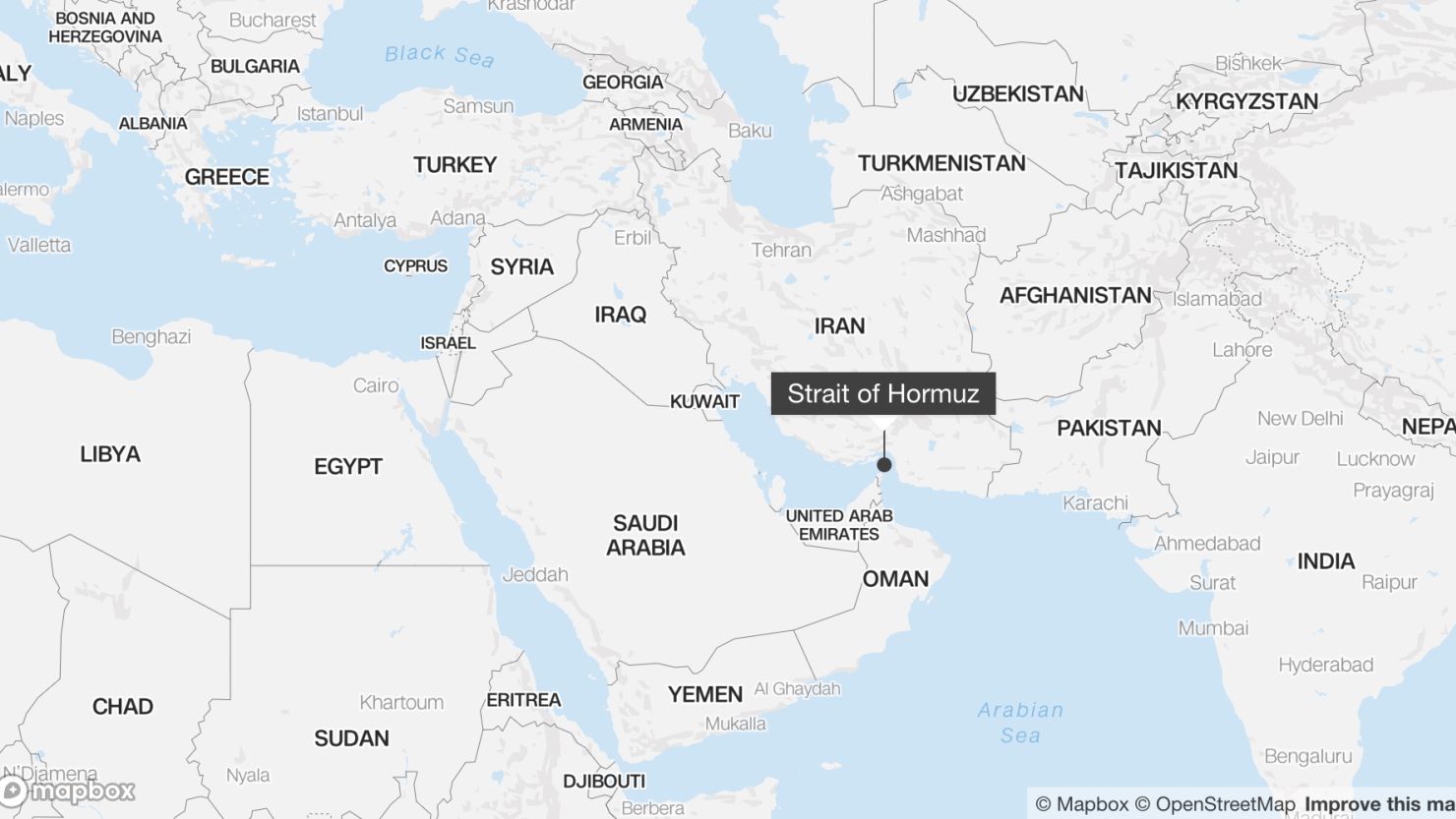
Most analysts talk about the Strait of Hormuz as if it’s a highway that can be policed by a patrol car. It’s not. It is a 21-mile-wide strip of water where geography favors the insurgent and the disruptor, not the hegemon.
The competitor's view focuses on Trump’s "warning" as the primary variable. This is a fundamental misunderstanding of Iranian naval doctrine. The Islamic Revolutionary Guard Corps (IRGC) does not intend to fight a conventional naval battle against the U.S. Navy. They operate through "swarming" tactics, limpet mines, and shore-based anti-ship cruise missiles. Similar reporting regarding this has been provided by BBC News.
When Trump says the ceasefire "must hold," he is operating on a 20th-century logic of state-vs-state deterrence. But the attacks on tankers aren't always claimed. They are deniable. They are "gray zone" operations. You cannot deter a shadow. I have watched analysts predict "total stability" right before a single $50,000 drone cripples a multi-billion dollar energy infrastructure project. The math of disruption is heavily skewed against the defender.
Energy Markets Are Pricing the Wrong Risk
Wall Street loves a strongman narrative. The moment a U.S. President talks tough, oil traders breathe a sigh of relief, thinking the "adult in the room" has handled the situation. This is a massive miscalculation of risk.
The real threat isn't a total closure of the Strait. That would be an act of suicide for Iran, as they also need to export their own (often illicit) crude. The real threat is a sustained increase in the "friction" of trade.
- Insurance Premiums: When tensions rise, War Risk Insurance surcharges skyrocket. This cost is passed directly to the consumer, regardless of whether a single drop of oil is actually spilled.
- Logistics Rerouting: Ships begin taking longer, more expensive routes or waiting for convoys, creating a "phantom" supply shortage.
- The Psychological Floor: These "warnings" actually create a floor for oil prices. Trump’s rhetoric, intended to project strength, often provides the very volatility that speculators use to drive prices higher—exactly what a President usually wants to avoid.
If you are looking at the "ceasefire" as a binary—either it's on or it's off—you've already lost the game. We are in a state of permanent, low-level kinetic friction. Trump isn't stopping it; he’s just narrating it.
The Asymmetric Math of Modern Blockades
Let’s look at the actual mechanics. The U.S. Fifth Fleet is a formidable force. However, in the narrow confines of the Persian Gulf, the $13 billion USS Gerald R. Ford is a massive target.
Imagine a scenario where 500 fast-attack craft, each armed with basic rocket launchers or acting as remote-controlled explosives, engage a carrier group simultaneously. The Aegis Combat System is brilliant, but every system has a saturation point. Iran’s strategy is built entirely on finding that point of saturation.
The consensus says Trump’s "unpredictability" keeps Tehran off balance. I’d argue the opposite. Tehran has spent forty years studying American "unpredictability." They know exactly which buttons to push to trigger a predictable American response: more sanctions, more troop deployments, and more rhetoric. Each of these responses plays into a long-term strategy of exhaustion.
Why the "Ceasefire" is a Red Herring
The competitor article treats the reported ship attacks as a threat to a specific ceasefire agreement. This misses the forest for the trees. In the Middle East, a "ceasefire" is rarely a peace treaty; it is a period of re-arming.
By framing the issue around whether a specific ceasefire "holds," we ignore the deeper structural reality: the regional powers are in a race for nuclear and conventional parity. A ceasefire in Yemen or a lull in tanker attacks is merely a tactical pause.
Trump’s insistence that the "ceasefire must hold" is a bit like demanding a forest fire stop burning because you’ve declared a "no-smoke zone." The underlying fuel—sectarian rivalry, the collapse of the JCPOA, and the rise of local drone manufacturing—remains untouched.
The Failure of "Maximum Pressure" 2.0
The assumption is that if Trump returns to the White House and cranks the pressure back to eleven, Iran will fold. History suggests otherwise.
During the first "Maximum Pressure" campaign, Iran’s economy took a massive hit, yes. But did their regional influence wane? No. Did they stop developing missile technology? No. In fact, they accelerated their enrichment programs.
The "tough talk" approach treats Iran as a rational corporate entity that will settle when the "price" gets too high. But the IRGC is not a board of directors. They are an ideological and military vanguard whose very existence is predicated on resisting "Arrogance" (their term for U.S. hegemony). When you threaten them publicly, you give them the domestic political capital they need to justify more aggression.
The Hidden Player: The Dark Fleet
While the media focuses on Trump and the IRGC, the real action is happening in the "Dark Fleet"—the thousands of aging, uninsured tankers that move sanctioned oil across the globe.
These ships are the real danger to the Strait of Hormuz. They operate without AIS (Automatic Identification System) transponders, they engage in ship-to-ship transfers in the middle of the night, and they are often in terrible mechanical condition. A single accident involving a Dark Fleet tanker would do more to close the Strait than a dozen Iranian missiles.
Trump’s policy of sanctions actually expands this Dark Fleet. By pushing more oil into the shadows, we are making the world’s most sensitive waterway infinitely more dangerous and less transparent. You cannot "warn" your way out of a maritime environmental disaster caused by a ghost ship.
Stop Asking if Trump Can Stop the War
The question "Will Trump's warnings hold the ceasefire?" is the wrong question. It assumes the President of the United States has a "dial" he can turn to control Middle Eastern stability. He doesn't. He has a hammer, and not every problem is a nail.
The right question is: "How do we build a global energy economy that isn't hostage to twenty miles of water?"
Instead of obsessing over the tactical minutiae of ship attacks and presidential warnings, we should be looking at the structural failure of our energy security.
- Strategic Reserves are Not Enough: Sprinkling a few million barrels from the SPR is a band-aid on a gunshot wound.
- Pipeline Bypass Failure: The various pipelines built to bypass the Strait (like the Habshan–Fujairah line) have nowhere near the capacity to handle the 20+ million barrels a day that move through the water.
- The Drone Proliferation: Any non-state actor with a 3D printer and a basic understanding of aerodynamics can now threaten a multi-million dollar vessel.
The Hard Truth About Deterrence
Deterrence only works if the other side believes you are willing to lose more than they are. In the Strait of Hormuz, Iran is playing in its own backyard. They are willing to accept economic ruin to maintain their strategic autonomy. Is the United States willing to enter another multi-trillion dollar conflict in the Middle East to keep the price of gas at $3.50 a gallon?
Trump’s rhetoric suggests he is, but his "America First" base is notoriously allergic to new wars. This creates a "deterrence gap." Tehran sees the gap. They know the threats are largely for domestic consumption—a performance for the base to show that a "strongman" is back in charge.
The "superior" article doesn't tell you that Trump will save the day or that Iran will back down. It tells you that we are entering an era of permanent instability where the old rules of "gunboat diplomacy" no longer apply.
The ship attacks will continue. The "ceasefire" will remain a polite fiction used by diplomats to justify their per diems. And the Strait of Hormuz will remain the world’s most effective trigger for global chaos, regardless of who is sitting in the Oval Office.
If you’re waiting for a "warning" to fix the global energy market, you aren't just an optimist—you're a target. Stop looking at the podium and start looking at the water. The era of secure seas is over, and no amount of political theater is going to bring it back.