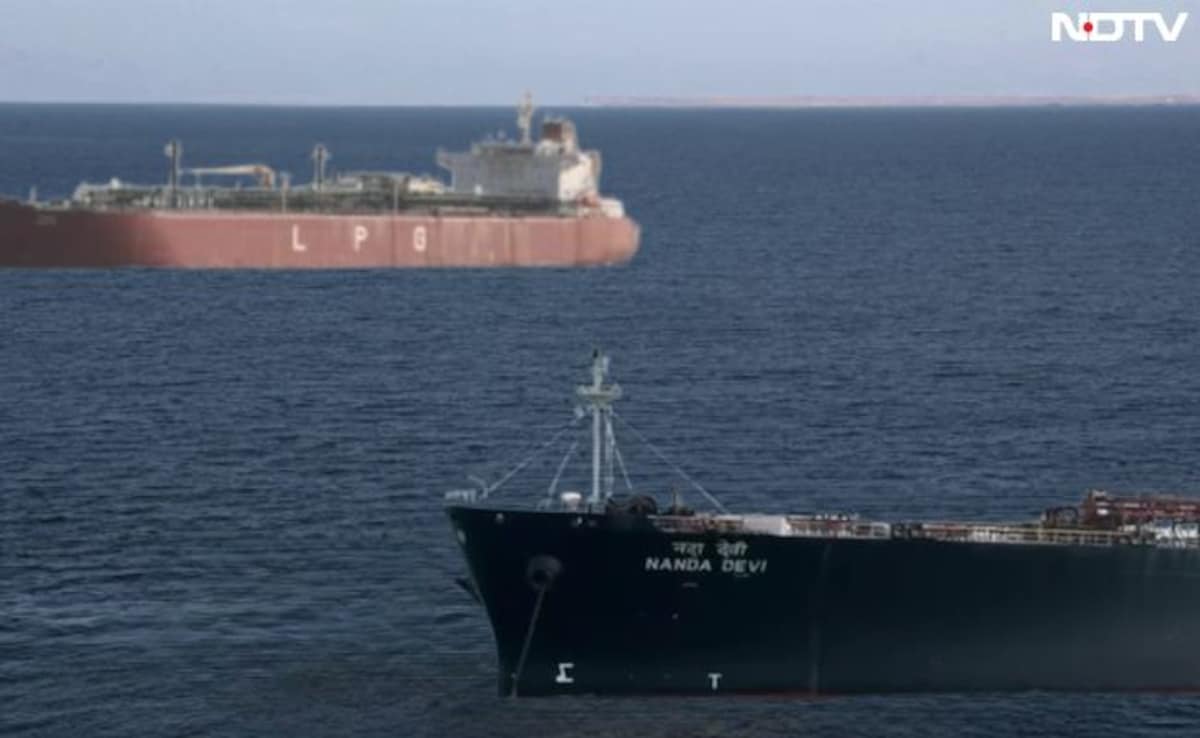
Two Indian-flagged tankers take heat in the Strait of Hormuz and the world panics. The mainstream media churns out the same five-point listicle logic: "Tensions are rising," "Global oil prices at risk," and "The Indian Navy is on high alert." It is predictable, shallow, and fundamentally misses the tectonic shift happening in maritime security.
The obsession with these specific kinetic strikes ignores the reality that the "Indian flag" is increasingly a geopolitical decoy. We are watching the death of traditional maritime sovereignty in real-time, and India is currently holding the bag for a system that no longer protects its own interests.
The Flag of Convenience Fallacy
The press loves to highlight the "Indian-flagged" status of these vessels as if it grants them a magical shield of national honor. It doesn't. In the shipping world, a flag is a regulatory choice, not a suit of armor.
While the MT Desh Vishal or similar vessels might carry the Tiranga, the ownership structures, insurance syndicates, and crew compositions are often so fragmented that "Indian" becomes a tenuous label. When we frame these attacks as an affront to Indian sovereignty, we play into a 20th-century narrative.
The real story isn't that India was targeted. The story is that the Strait of Hormuz has become a laboratory for low-cost, high-leverage asymmetric warfare where the identity of the ship matters less than the optics of the explosion. If you think the Indian Navy escorting these ships solves the problem, you haven't been paying attention to the math of modern naval attrition.
The Escort Myth: Burning Millions to Protect Pennies
The knee-sum reaction is always the same: Send the destroyers. Deploy the P-8I Poseidons. Show force.
I have watched naval budgets balloon for decades, and the ROI on merchant vessel protection in chokepoints is cratering. Deploying a $1.5 billion stealth destroyer to babysit a 20-year-old Suezmax tanker carrying $80 million in crude is a losing proposition.
- The Cost of Defense: A single interceptor missile used by a modern navy can cost between $2 million and $5 million.
- The Cost of Offense: A swarm of loitering munitions or a drone boat costs roughly $20,000 to $50,000.
The math favors the aggressor. Every time a "point-man" article suggests India needs to ramp up its presence in the Gulf, they are suggesting we dump taxpayer money into a bottomless pit of defensive escalation. We are using a sledgehammer to swat flies, and the flies are winning the economic war.
Stop Asking About Oil Prices
The "People Also Ask" sections of the internet are obsessed with one thing: "Will my petrol prices go up?"
The brutal truth is that the global oil market has already baked Hormuz instability into the cake. The market doesn't care about two ships; it cares about the concept of the Strait closing. These minor skirmishes are theatrical. They are designed to trigger algorithmic trading spikes, not to actually stop the flow of energy.
If Iran or any other regional actor actually wanted to stop the oil, they wouldn't fire warning shots at the hull of an Indian tanker. They would mine the deep-water channels. The fact that they are hitting Indian-flagged ships is a calculated choice to test the diplomatic resolve of a "neutral" power, not a genuine attempt to disrupt the global economy.
The India-Middle East Corridor is a Paper Tiger
While the media distracts you with drone strikes in the Gulf, they ignore the failure of the India-Middle East-Europe Economic Corridor (IMEC). These attacks in the Hormuz are the final nail in the coffin for the idea that we can bypass volatile maritime routes with simple trade agreements.
You cannot build a "corridor" through a war zone.
The competitor's narrative suggests this is a temporary hurdle. It isn't. It is a permanent shift in the risk profile of the North Arabian Sea. India’s strategic autonomy is being tested, and "Five Points of Fact" won't solve the reality that our maritime trade routes are hostage to a regional proxy war we have no power to settle.
The Insurance Racket
Let's talk about the E-E-A-T that journalists ignore: The London insurance market.
When a ship is fired upon, the real damage isn't the hole in the hull. It's the "War Risk" premium. I’ve seen shipping lines go under because their premiums jumped 500% overnight after a minor incident.
- Direct Hits: Easy to fix. Steel is cheap.
- Risk Assessment: Impossible to manage.
- The Result: Indian shipping companies will eventually de-flag. They will move to the Marshall Islands or Liberia to escape the "Indian" target on their back.
By making this a nationalistic issue, we are actually making Indian ships more vulnerable. We are giving the attackers a high-value political target. If these ships were flagged in a neutral, boring tax haven, nobody would care. By waving the flag, we’ve invited the fire.
The Asymmetric Reality
We need to stop treating these incidents as "incidents." They are the new baseline.
The obsession with "what we know" is useless. We know who did it. We know why they did it. What we don't admit is that we are powerless to stop it without a total regional realignment that India is currently unwilling to lead.
The Indian Navy's presence is a PR exercise. It makes for great photos of sailors looking through binoculars, but it doesn't change the fact that a $500 drone can render a billion-dollar shipping lane uninsurable.
Stop looking at the ships. Look at the balance sheet. India is being goaded into a maritime conflict it cannot afford, to protect a shipping model that is already obsolete. The "five points" of what happened don't matter because the premise—that we can secure the Strait through traditional naval power—is a lie.
The Strait of Hormuz is no longer a waterway; it is a toll booth operated by the most radical actors in the region. And right now, India is paying the highest price.
India's move shouldn't be more ships. It should be less dependence. Anything else is just rearranging deck chairs on a tanker that's already been sold for scrap.