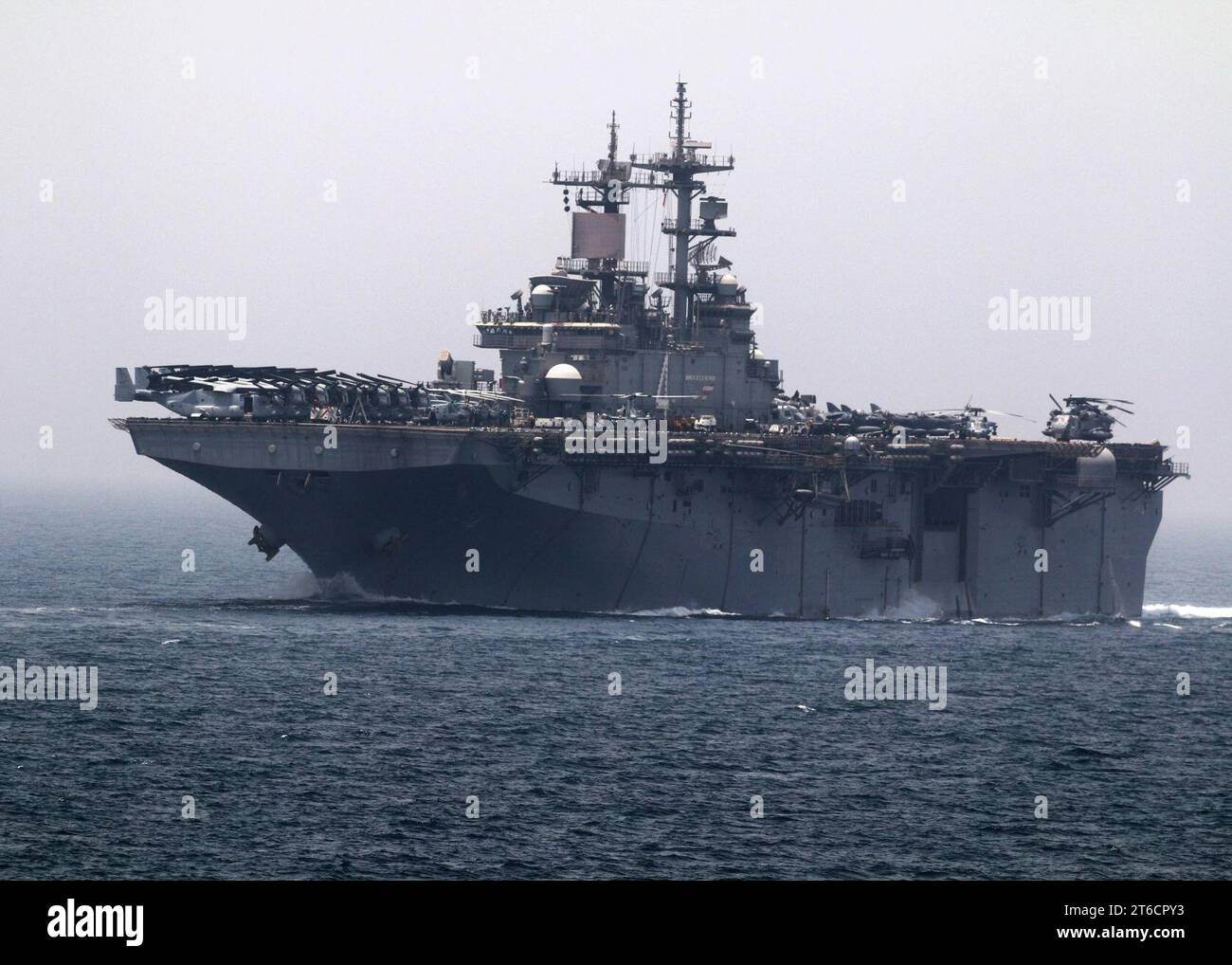
The headlines are screaming about "defiance" and "strength" because two U.S. warships finally bobbed their way through the Strait of Hormuz. The mainstream media treats this like a masterstroke of geopolitical chess. It isn’t. It is a desperate attempt to maintain the optics of control in a waterway where the math has fundamentally shifted against the carrier strike group.
If you think sending a billion dollars of hardware through a 21-mile-wide choke point is a "show of force," you are reading the wrong map. In modern naval warfare, that transit isn't a flex; it’s a gauntlet. We are watching the sunset of the "Blue Water" ego, and nobody in the Pentagon wants to admit the era of the big ship is being ended by cheap, disposable tech.
The Geography Of A Death Trap
Let’s talk about the physics of the Strait. At its narrowest, the shipping lanes are barely two miles wide. On one side, you have the jagged coastline of Iran, bristling with mobile missile batteries and subterranean "missile cities." On the other, shallow waters that limit where a deep-draft destroyer can actually maneuver.
The "lazy consensus" says these transits "ensure the free flow of commerce."
Wrong. These transits verify that the U.S. Navy is willing to bet a multi-billion dollar asset and 300 lives on the hope that the other guy doesn’t want a war today. It is reactive, not proactive. When you sail a destroyer through a literal shooting gallery, you aren't "projecting power." You are providing a target.
I have spent years looking at theater simulations where "superior" Western tech meets "asymmetric" volume. In every single honest wargame, the volume wins. You can have the best Aegis Combat System on the planet, but if the saturation attack exceeds the number of interceptors in your Vertical Launch System (VLS) cells, you become a very expensive artificial reef.
The VLS Math Problem Nobody Discusses
Every Arleigh Burke-class destroyer has a finite number of tubes. Once those interceptors are gone, that ship is a sitting duck. In a sustained engagement in the Strait, a swarm of $20,000 drones and $500,000 anti-ship cruise missiles (ASCMs) can easily deplete a $2 billion ship’s magazine.
The media focuses on the "transit." They should be focusing on the magazine depth.
- The Cost Imbalance: We are firing $2 million interceptors at $30,000 plastic drones.
- The Reload Reality: You cannot reload a VLS at sea in a combat zone. You have to retreat to a friendly, secure port.
- The Saturation Point: If 50 threats are in the air and you have 40 ready-to-fire interceptors, you lose.
This isn't about "bravery." It's about a failure to adapt to the democratization of precision-guided munitions. Iran doesn't need a blue-water navy to win in the Persian Gulf. They just need enough "good enough" missiles to make the insurance premiums for tankers go through the roof. The presence of two U.S. warships hasn't lowered those premiums. It has just signaled that the stakes are higher.
Stop Asking If We Can Transit (Ask If We Should)
The "People Also Ask" sections of the internet are obsessed with whether the U.S. can beat Iran in a naval war. That is the wrong question. The real question is: Can the U.S. afford the cost of a "win"?
If the Navy loses one destroyer—just one—it is a strategic catastrophe. It breaks the aura of invincibility that underpins the entire global maritime order. By sending these ships through the Strait during active hostilities, the U.S. is gambling the house on a hand of low-stakes poker.
We are using 20th-century tools to solve a 21st-century attrition problem.
The Illusion of Command of the Sea
Alfred Thayer Mahan, the father of modern naval strategy, argued that "command of the sea" is won by decisive battles between great fleets. That doctrine is dead in the Persian Gulf.
In the Strait of Hormuz, the "sea" is more like a river. It’s narrow, cluttered, and dominated by the land. When you are within 10 miles of a hostile shore, the distinction between "Naval Power" and "Land Power" vanishes. You are effectively operating in a coastal defense zone where the defender has every advantage.
- Information Superiority: Iran has land-based radar, civilian lookouts, and stationary sensors. They know exactly where those two destroyers are every second of the day.
- Mobility: Mobile missile launchers can hide in the mountains, fire, and relocate before a Tomahawk can find them.
- Cheap Kill Chains: A swarm of fast-attack craft (FACs) equipped with short-range missiles can approach from multiple vectors, overwhelming the ship’s situational awareness.
The Hard Truth About "Deterrence"
Deterrence only works if the other side fears the consequence more than they value the provocation.
By transiting the Strait now, the U.S. thinks it’s showing that it isn't intimidated. In reality, it’s giving the IRGC (Islamic Revolutionary Guard Corps) a free rehearsal. Every time a U.S. ship passes, the Iranian sensors are humming. They are collecting electronic signatures, timing response rates, and mapping out the "white space" in our defenses.
We aren't deterring them; we are training them.
The Unconventional Solution
If we actually wanted to secure the Strait, we’d stop sending massive, manned targets through it.
We would be flooding the zone with our own autonomous, low-cost "attritable" systems. Instead of two destroyers, we should have 200 underwater drones and 500 aerial loitering munitions. Make the environment so cluttered and dangerous for any aggressor that the cost of starting a fight becomes a suicide mission for their coastline assets.
But the Navy won't do that. Why? Because you can't have a change-of-command ceremony on a 15-foot drone. There is no "prestige" in a robot. The institution is addicted to the "Great Ship" image, even as that image becomes a liability.
The Battle Scars Of History
I’ve seen this play out before. In the 1980s, during the "Tanker War," the U.S. Navy patrolled these same waters. Back then, a single Iranian mine nearly sank the USS Samuel B. Roberts. A $96,000 mine almost neutralized a $250 million ship.
Fast forward to today. The "mines" fly at Mach 3 or swarm the surface in the hundreds. The price of the ship has gone up 10x, but the price of the "mine" has stayed the same or dropped.
We are playing a game where we spend millions to defend, and they spend thousands to attack. You don't have to be a math genius to see how that ends.
Why This Is A "PR Transit," Not A Military Move
This latest crossing was timed for news cycles, not tactical advantage. It’s meant to reassure nervous oil markets and jittery allies. But the markets aren't stupid. They see the Houthi rebels—effectively an Iranian proxy—shutting down the Red Sea with $2,000 drones while the world’s most powerful navy plays whack-a-mole with $2 million missiles.
The transit of the Strait of Hormuz by two destroyers isn't a sign that the U.S. is back in control. It’s a sign that we are out of ideas. We are doubling down on a 1945 strategy in a 2026 reality.
If you want to protect the global economy, stop sending targets. Start sending a message that we aren't afraid to ditch the big hulls for a swarm that can actually win an attrition war.
Until then, every transit is just a prayer dressed up as a patrol.
Get the ships out of the trap before the trap snaps shut.