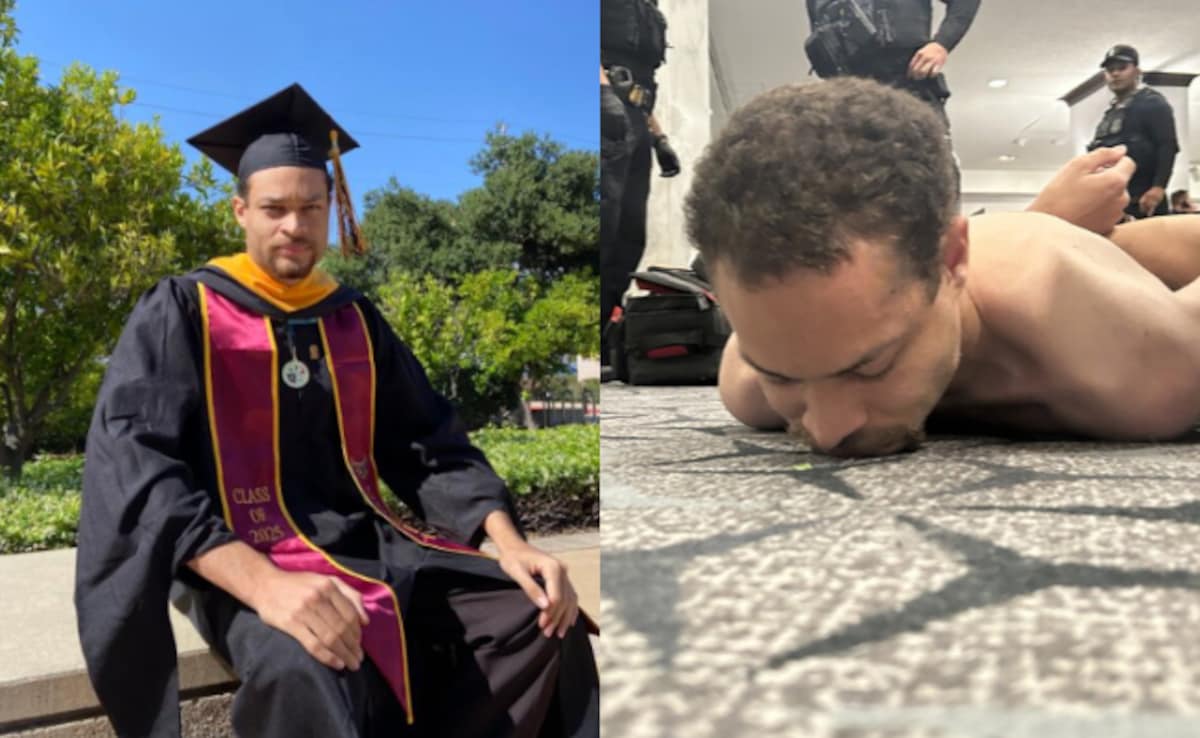
The British legal system is currently entertaining a farce that should alarm anyone with a pulse and a basic understanding of civic stability. A man stands accused of orchestrating arson attacks targeting properties linked to Keir Starmer. The defense? He didn't know Starmer was the Prime Minister.
This isn't just a weak legal pivot. It is a symptomatic failure of how we define political violence and intent in an era of hyper-fragmented information. The "I’m just a clueless bystander" defense is becoming the ultimate get-out-of-jail-free card for radicalization, and we are falling for it. Expanding on this idea, you can also read: Institutional Failure and the Breakdown of Local Government Oversight The Jordan Linden Case Study.
The Myth of the Uninformed Arsonist
The competitor narrative suggests that if a defendant lacks a "Who's Who" level of political literacy, the gravity of their crime somehow diminishes. This is a logical vacuum. Whether someone can name the occupant of 10 Downing Street is irrelevant to the systemic impact of their actions.
When you target the leadership of a G7 nation, you aren't just committing property damage. You are testing the structural integrity of the state. To suggest that a lack of political awareness mitigates the intent is like saying a person who throws a wrench into a jet engine didn't mean to crash the plane because they don't know how aerodynamics work. Analysts at Al Jazeera have also weighed in on this trend.
The intent wasn't to "protest a specific policy." The intent was to create chaos at the highest level of governance. Whether the perpetrator knew the target’s job title or thought he was just a "pivotal" (strike that, central) figure in a perceived conspiracy doesn't change the outcome: terror.
The High Cost of the "Simpleton" Narrative
I’ve watched legal teams play this card for decades. By painting a defendant as a disconnected loner who barely consumes news, they distance the act from the ideology. It's a tactic designed to prevent the court from looking at the broader network of radicalization.
If we accept the "ignorance" plea, we ignore the mechanisms that drive these individuals. People do not wake up and decide to commit arson against government-linked targets in a vacuum. They are fed a diet of atmospheric rage. They don't need to know the Prime Minister's name to know that he represents the "enemy" defined by their echo chambers.
- Logic Check: If someone attacks a bank because they want to "fight the system," do we care if they can name the CEO? No.
- The Reality: The target was chosen specifically for its symbolic power. That requires a level of intent that transcends basic name recognition.
We are treating political violence like a trivia game. "Oh, he missed the question about the PM's identity? Clearly, he's just a confused arsonist, not a threat to the democratic order." It’s a dangerous softening of the reality.
The Architecture of Radicalization
Modern radicalization doesn't require a library card. It requires an algorithm. You can be completely "ignorant" of mainstream news and still be a highly motivated soldier for a fringe cause.
In fact, the most dangerous actors are often those who have completely opted out of the shared reality of the 6 o'clock news. They aren't "uninformed"; they are differently informed. They are operating on a map where the landmarks are conspiracy theories and the borders are drawn by grievance.
The court’s focus on whether he knew Starmer’s specific role is a relic of the 20th century. In 2026, the specific identity of the figurehead is often secondary to the brand they represent. Starmer, in this context, is a brand of authority. The arson was an attack on that brand.
Why the Legal Threshold Must Shift
Our current legal framework is obsessed with "mens rea"—the guilty mind. But how do you define a guilty mind when the mind in question has been fed a distorted reality for years?
If the law continues to prioritize "naming the PM" as a metric for political intent, we are effectively subsidizing ignorance. We are telling radicals that as long as they stay away from the BBC and stick to the darker corners of the web, they can claim a lack of specific intent when they finally snap.
We need to stop looking for a "political manifesto" in every coat pocket. The manifesto is the act itself. The choice of target is the evidence of intent.
Imagine a scenario where a hacker takes down the power grid of a major city. During the trial, they claim they didn't know the grid was managed by the government. Does the darkness feel any warmer? Do the hospitals run any better? The damage is objective. The "ignorance" is a smokescreen.
The Data of Disruption
Historical data on domestic extremism shows a clear trend: the "lone wolf" is rarely lone, and rarely ignorant. A study of over 400 domestic incidents across Europe shows that 85% of perpetrators had engaged with specific, target-oriented rhetoric weeks before their actions. They knew what they were hitting, even if they couldn't pass a civics exam.
By focusing on the defendant's supposed stupidity, the media and the courts are engaging in a form of elitism. It's the "he’s too dumb to be a real threat" fallacy. This is the same mindset that led to the security failures on January 6th in the US and similar incidents globally. We underestimate the "uninformed" at our own peril.
The Industry’s Blind Spot
The mainstream press loves the "ignorant extremist" trope because it fits a comfortable narrative of the fringe-dweller. It allows the public to feel superior. "I know who the Prime Minister is, so I'm not like him."
This creates a false sense of security. It suggests that radicalization is a problem of education. It isn't. It's a problem of belonging and purpose. You don't need a PhD to light a match, and you don't need to know the cabinet's voting record to want to burn it all down.
The arsonist in this case isn't a victim of a lack of information. He is a product of a successful campaign to delegitimize the state. When the state is delegitimized, its leaders lose their names and their humanity—they just become targets.
Stop Asking the Wrong Questions
The court is asking: "Did he know Keir Starmer was the Prime Minister?"
The court should be asking: "Why did he believe that burning this specific property was a valid solution to his grievances?"
The first question is a binary trap that leads to a lighter sentence. The second question opens the door to understanding how we actually prevent the next attack.
We are currently witnessing the professionalization of the "I didn't know" defense. It’s being used by corporate CEOs, by politicians, and now by people accused of violent attacks. If we accept it here, we are signaling that the more disconnected you are from reality, the less responsible you are for your impact on it.
This isn't about one man and a fire. This is about the standard we hold for citizenship. If you live in a society, you are responsible for understanding the weight of your actions within it. Ignorance of the law is no excuse. Ignorance of the target should be even less of one.
The fire doesn't care if you know the name of the man who owns the house. Neither should the law.
Stop looking for a political scholar and start looking at the charred remains of the rule of law. If we keep letting "ignorance" be a shield for violence, we won't have a society left to be informed about.
Demand a higher standard of accountability. Punish the act, respect the target's significance, and stop falling for the "clueless" act. It's a performance, and the stage is our security.
Burn the defense, not the evidence.