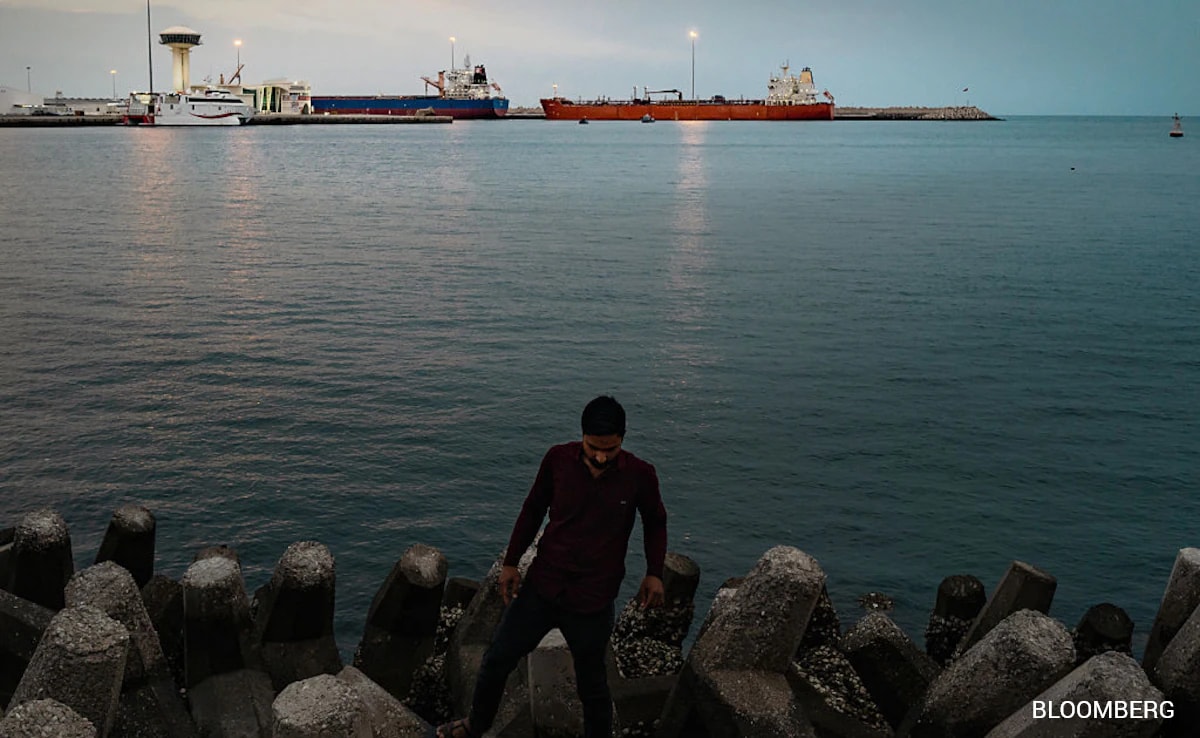
Eighteen Indian-flagged vessels carrying crude oil and Liquefied Petroleum Gas (LPG) are currently dead in the water or moving at a crawl near the Strait of Hormuz. These ships, vital to the energy security of the world’s most populous nation, find themselves caught in the crossfire of a Middle Eastern conflict that has rapidly moved from proxy skirmishes to a direct maritime threat. While the diplomatic rhetoric focuses on de-escalation, the reality on the water is one of mounting insurance premiums, anxious crews, and a supply chain that is fraying at the most critical chokepoint on the planet.
This is not a simple case of traffic congestion. It is a calculated paralysis. The Strait of Hormuz represents a 21-mile-wide needle’s eye through which roughly one-sixth of the world’s oil consumption must pass. For India, which imports over 80% of its crude requirements, any friction in this corridor is a direct hit to the national exchequer. The current standoff involves a mix of Suezmax tankers and large gas carriers that are either unable to secure safe passage or are being advised to hold positions as regional actors telegraph their next moves.
The Mechanics of a Maritime Standoff
Shipping is governed by risk. When a region is declared a "listed area" by the Joint War Committee (JWC) in London, the cost of doing business changes overnight. Owners of these eighteen vessels are currently staring at Additional War Risk Premiums (AWRP) that can reach tens of thousands of dollars per day. These costs aren't absorbed by the shipping lines; they are passed directly to the Indian consumer.
The stranded vessels are not merely victims of bad timing. They are the physical manifestation of a shift in how regional powers use maritime lanes as leverage. By creating a climate of "controlled instability," state actors can influence global oil prices and pressure international governments without firing a single shot at a land-based target. For the Indian-flagged fleet, the vulnerability is heightened because many of these ships lack the naval escorts that larger global powers occasionally provide for their commercial interests.
The Chokepoint Economics
When a ship stops, the clock doesn't. A standard crude carrier operates on a complex web of charter parties and delivery windows.
- Demurrage Charges: These are the penalties paid when a ship is delayed beyond its allotted time for loading or unloading. With 18 ships idling, the cumulative daily losses are staggering.
- Inventory Carry Costs: Oil that isn't moving is capital that isn't working.
- Refinery Schedules: Indian refineries at Jamnagar and Vadinar operate on "just-in-time" delivery models. A week-long delay in the Hormuz can lead to a reduction in refinery throughput, eventually hitting the pumps at local petrol stations.
Beyond the Official Narrative
The official word from New Delhi often emphasizes "monitoring the situation" and "ensuring the safety of Indian mariners." This is diplomatic shorthand for a frantic behind-the-scenes scramble. The Indian Navy’s Information Fusion Centre for the Indian Ocean Region (IFC-IOR) is likely in overdrive, but information alone does not provide a physical shield against anti-ship missiles or boarding parties.
There is a deeper, more uncomfortable truth regarding India’s energy dependence on this specific corridor. Despite efforts to diversify oil sources—including a significant uptick in Russian Urals purchases over the last two years—the Middle East remains the bedrock of India’s LPG supply. You can’t easily swap a Qatari gas contract for a Russian one when the infrastructure is built for specific regional grades and delivery routes.
The Human Element on the Bridge
We often discuss these events in terms of barrels and deadweight tonnage. We forget the humans. The crews on these 18 ships are living in a state of high-alert fatigue. Modern maritime warfare involves drones that are difficult to spot and even harder to intercept. Living in a steel box filled with millions of gallons of flammable liquid while loitering in a combat zone is a psychological weight that few industries demand of their workers.
Reports from the region suggest that AIS (Automatic Identification System) transponders are being turned off to avoid tracking. While this makes the ships harder to target for some, it increases the risk of collisions in one of the world's most crowded waterways. It is a desperate game of hide-and-seek played with billion-dollar assets.
The Illusion of Neutrality
For decades, India has relied on its "strategic autonomy" to navigate Middle Eastern tensions. The idea was simple: stay friends with everyone and the oil will keep flowing. That doctrine is being tested to its breaking point. In a theatre where "gray zone" warfare is the new norm, being a neutral party doesn't provide the immunity it once did.
The ships are stranded because neutrality is no longer a shield against the disruption of global trade. If a regional power decides to close or restrict the Strait, an Indian flag won't grant a hall pass. The 18 ships currently waiting for clarity are a signal that the old rules of maritime diplomacy have evaporated.
The Infrastructure of Vulnerability
The problem is structural. India’s Strategic Petroleum Reserves (SPR) are currently insufficient to cover a long-term disruption in the Hormuz. While countries like the U.S. or China have cushions that can last months, India’s reserve capacity is significantly tighter. This makes the 18 stranded ships not just a corporate headache, but a national security emergency.
Consider the path of an LPG carrier coming out of Ras Laffan. It has no choice but to pass through the Strait. There are no pipelines that can bypass this route for gas in the volumes India requires. When these ships are "stranded," the supply chain for cooking gas in millions of Indian households begins to twitch.
Alternative Routes and Their Failures
There is frequent talk of the International North-South Transport Corridor (INSTC) or land-based pipelines. Most of this is speculative fiction when applied to the immediate crisis.
- Pipeline Limits: The proposed pipelines from the Gulf to India have been stalled for decades due to the instability of the transit countries (Pakistan) or the technical impossibility of deep-sea trenches.
- Cape of Good Hope: While tankers can go around Africa to reach Europe, that route makes no sense for Gulf oil headed to Mumbai. There is no "around" for the Persian Gulf. You are either in or you are out.
A Failed Strategy of Dependence
The current crisis highlights the failure of the "Global South" to secure its own trade lanes. For years, the security of the Persian Gulf was effectively outsourced to the U.S. Fifth Fleet. As the U.S. pivots its focus toward the Pacific, a security vacuum has emerged. India has stepped up its naval presence with "Operation Sankalp," but the navy cannot be everywhere at once.
Protecting 18 specific ships across a volatile stretch of water requires a level of naval commitment that would leave other Indian maritime borders exposed. The reality is that the Indian merchant fleet is growing, but the naval capacity to protect it in distant blue waters is struggling to keep pace.
The Insurance Trap
Even if the physical threat remains unrealized, the financial threat is already a reality. Global ship insurers are increasingly wary of the "India-Middle East" route. If the Strait remains a "hot" zone, we will see a permanent hike in freight rates. This is a hidden tax on the Indian economy that will persist long after these 18 ships have finally offloaded their cargo.
The crisis is also driving a wedge in the ship-owning community. Owners are now questioning whether the Indian flag is an asset or a liability in these waters. Some are considering re-flagging to nations that might be perceived as "safer" or those that have more aggressive naval protection policies.
The Immediate Economic Fallout
If these ships remain idle for another fourteen days, the impact will manifest in the wholesale price index. Energy is the "input of all inputs." When the cost of transporting LPG rises, the cost of everything from glass manufacturing to tea stalls goes up.
- Currency Pressure: India must buy more dollars to cover the rising cost of oil and its transport, putting pressure on the Rupee.
- Credit Risk: Smaller Indian shipping firms, operating on thin margins, may face default if their primary assets (their ships) are stuck in a non-earning state for an extended period.
The situation is a reminder that in the modern world, "war" doesn't have to mean sinking ships. It simply means making it too expensive, too risky, and too slow to move them.
The Hard Reality of the Hormuz
The 18 ships are a symptom of a world where the sea is no longer a "global common" but a contested backyard. India’s reliance on the Strait of Hormuz is a geographic reality that cannot be changed by policy or prayer. The only way forward is a radical acceleration of the domestic energy transition and a massive expansion of the domestic tanker fleet under heavy naval protection.
Until then, those 18 crews will continue to scan the horizon for drones, while accountants in Mumbai and New Delhi watch the mounting costs of a delay they have no power to end. The ships are stranded not just by war, but by a decades-long failure to build a maritime strategy that accounts for the death of the old world order.
The standoff in the Hormuz isn't a temporary glitch in the system. It is the new operating system.