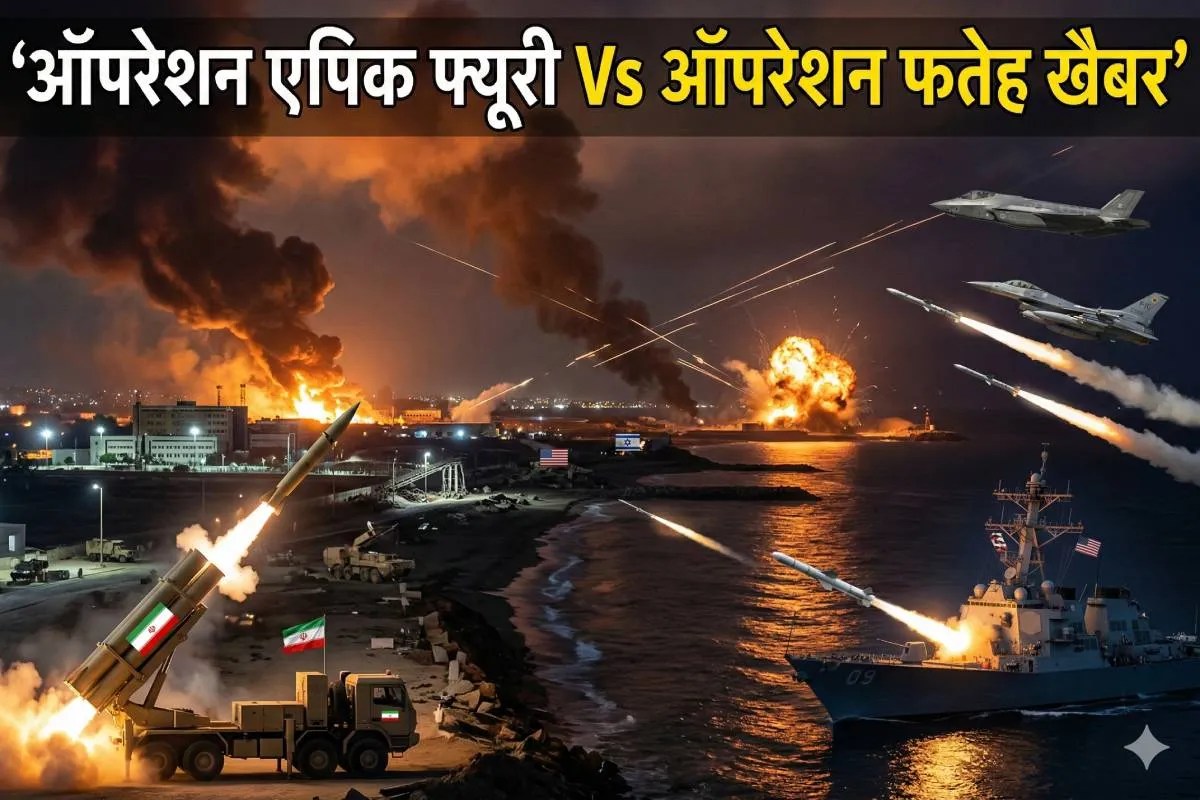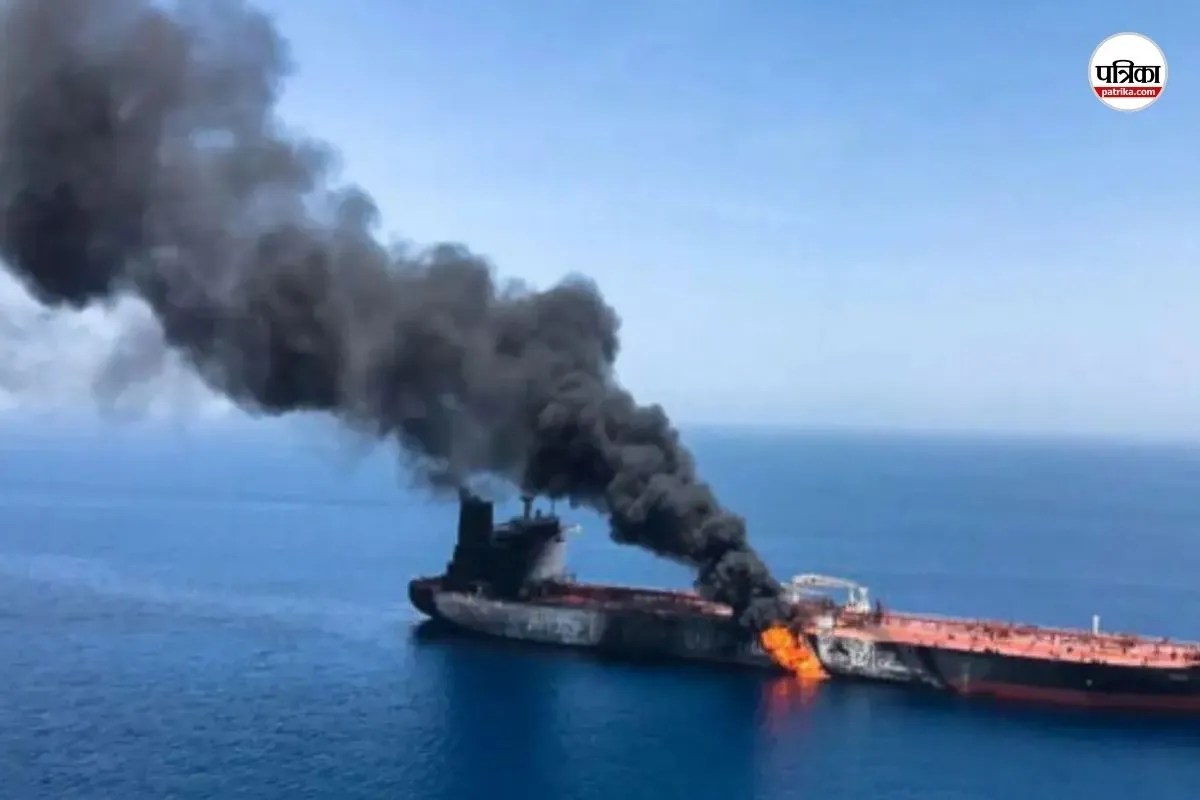
The headlines are predictable, sensationalist, and fundamentally shallow. "15 Indians trapped on tanker hit by Iranian missile." It’s the kind of clickbait that triggers nationalistic fervor and surface-level sympathy. But if you are looking at these maritime strikes through the lens of a hostage crisis or a direct military affront to New Delhi, you are missing the structural reality of how global energy logistics actually operate.
The mainstream media wants you to believe this is a story about sailors in peril. It isn't. It’s a story about the terminal decline of sovereign protection in international waters and the cold, hard math of "flags of convenience." In related news, we also covered: The Sabotage of the Sultans.
The Sovereignty Illusion
We hear the word "Indian" and assume the Indian state has a direct lever to pull. We assume the ship’s safety is a matter of bilateral diplomacy. This is a fairy tale.
Most of these tankers are owned by shell companies in the Marshall Islands, insured in London, managed by Greeks, and flagged in Liberia or Panama. They are "floating pieces of nowhere." When an Iranian missile or a Houthi drone hits a deck, they aren't attacking a nation; they are attacking a node in a decentralized supply chain. BBC News has also covered this important topic in great detail.
The presence of 15 Indian nationals on board is a statistical inevitability, not a strategic target. India provides roughly 10% of the world’s seafarers. You could hit almost any vessel in the high seas and find a dozen Indians, Filipinos, or Ukrainians. To frame this as an "attack on Indians" is to ignore the labor economics of the shipping industry. Shipowners hire Indian crews because they are highly skilled and, compared to Western counterparts, cost-efficient. These men are the "blue-collar backbone" of the ocean, and the industry treats them as such: vital but replaceable components of a logistical machine.
The Myth of the "Innocent Tanker"
The narrative often paints these vessels as "innocent bystanders" caught in a regional crossfire. Let’s get real. In the current geopolitical climate, no tanker in the Persian Gulf or the Red Sea is "innocent" of its associations.
Every drop of oil on those ships is tied to a specific financial ledger. If a ship is targeted, it’s usually because of its "shadow fleet" status, its past port calls in Israel, or its ultimate beneficial ownership (UBO) being linked to a nation currently in a shadow war with the IRGC.
The industry likes to pretend that maritime trade is a neutral utility. It’s not. It is an extension of warfare by other means. When you see a strike on a tanker, don’t ask "Why did they hit those poor sailors?" Ask "Whose insurance premium just went through the roof, and which London-based underwriter is currently sweating?"
Why the Indian Navy Can’t "Fix" This
There is a loud contingent demanding that the Indian Navy escort every ship with an Indian crew. This is a logistical impossibility and a strategic nightmare.
I’ve seen how naval deployments work from the inside. To provide a continuous "close-in" escort for the volume of traffic passing through the Bab el-Mandeb or the Strait of Hormuz would require a fleet size that neither India nor the United States currently maintains.
Furthermore, the moment a sovereign warship attaches itself to a commercial tanker, that tanker becomes a legitimate military target under various interpretations of international law. You aren't "protecting" the sailors; you are painting a larger bullseye on their backs.
The "lazy consensus" says more guns equals more safety. The reality? More guns in a narrow waterway equals a higher probability of a "hot" escalation that closes the strait entirely. If you think $90 a barrel is high, wait until a stray interceptor hits a VLCC (Very Large Crude Carrier) and shuts down 20% of the world’s oil flow for a month.
The Insurance Shell Game
If you want to understand the Red Sea crisis, stop looking at the missiles and start looking at the War Risk Surcharges.
Shipping is a game of risk-shifting. The physical ship and the human crew are the lowest priorities in the financial stack. The hierarchy of concern goes like this:
- The Cargo (The Money)
- The Hull (The Asset)
- The Environment (The Liability)
- The Crew (The Expense)
When a tanker is hit, the real "war" happens in the boardrooms of Lloyd’s of London. They decide which routes are "insurable" and at what price. By hyper-focusing on the "Indian sailor" angle, the media distracts from the fact that global trade is effectively being taxed by non-state actors and regional powers through insurance premiums.
We are seeing the democratization of sea-denial technology. A $20,000 drone can neutralize the utility of a $100 million tanker. The "nuance" the media misses is that Iran isn't trying to sink these ships. They are trying to make the cost of operating them unsustainable for their enemies.
The Brutal Truth for the Indian Government
New Delhi is in a bind, but not the one you think. It’s not about rescuing 15 people; it’s about the fact that India’s energy security is tied to a region it cannot control and a shipping industry that operates outside of national laws.
The "contrarian" take that no one wants to admit: India’s best move is to do exactly what it’s doing—nothing radical. Sending the INS Kochi or the INS Kolkata for a photo op is great for domestic PR, but it doesn't change the tactical reality on the water.
If New Delhi truly wanted to protect its citizens, it would demand a total overhaul of the "Flag of Convenience" system, forcing ships with Indian crews to be registered under Indian jurisdiction with full sovereign protection. But they won't do that. Why? Because it would make shipping prohibitively expensive and tank the economy.
Stop Asking the Wrong Questions
People ask: "Is the Red Sea safe for Indians?"
The answer is: "The Red Sea isn't safe for anyone, and it never was."
The maritime world is a high-stakes casino. The sailors are the dealers. They know the risks. They sign the contracts. They take the "Danger Pay." To treat them as helpless victims of a sudden geopolitical fluke is patronizing and factually incorrect. They are professionals operating in a combat zone because the global economy demands its cheap fuel.
The next time you see a headline about a missile hitting a tanker, don't look for the "human interest" story. Look for the "ownership" story. Look at the AIS data. Look at the P&I Club that covers the vessel.
The missile strike is just a symptom. The disease is a global trade system that relies on invisible ships, "stateless" crews, and the hope that no one notices the entire structure is built on a foundation of shifting sand and cheap insurance.
The era of the safe, neutral merchant mariner is dead. Welcome to the age of the collateral asset.