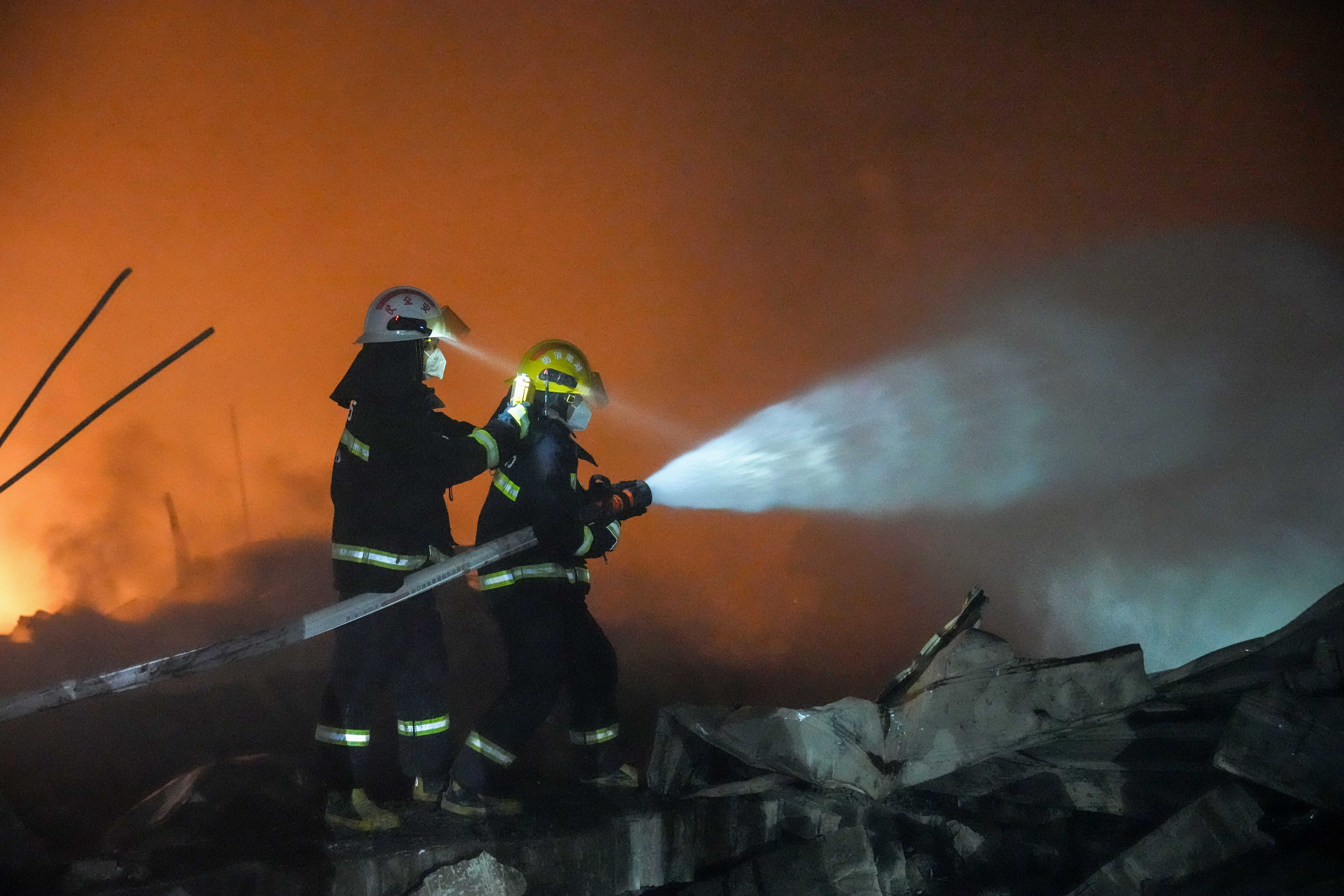
The structural failure of the Chinese pyrotechnics industry is not a matter of isolated accidents but a predictable outcome of the tension between high-energy chemical manufacturing and decentralized, low-margin labor models. When a fireworks factory in China suffers a catastrophic detonation resulting in 26 fatalities and dozens of injuries, the event marks the terminal point of a collapsed safety chain. The industry operates on a high-risk equilibrium where production speed, chemical volatility, and regulatory oversight form a precarious triangle. Understanding this tragedy requires moving beyond the surface-level reporting of body counts and into the forensic analysis of industrial risk management.
The Kinematics of Pyrotechnic Failure
The primary driver of mass-casualty events in fireworks manufacturing is the unintentional transition from deflagration to detonation. In a controlled environment, pyrotechnic compositions are designed to deflagrate—burning at subsonic speeds to produce light and sound. However, when these materials are confined or processed in bulk, a minor ignition source can trigger a shockwave that moves at supersonic speeds, leading to a high-order explosion.
Three specific variables dictate the severity of these events:
- Mass-Detonation Potential: The volume of "star" compositions and black powder stored in a single proximity determines the blast radius. Factories often violate storage limits to minimize transport time, inadvertently creating a massive, contiguous fuel source.
- Atmospheric and Friction Sensitivity: Many casualties occur during the mixing or "charging" phase. Variations in humidity can make chemical powders more prone to static discharge, while manual tamping of shells introduces friction.
- Structural Fragmentation: Most fatalities in these incidents are not caused by the primary fire but by the secondary effect of building collapse. Traditional factory designs in rural regions often lack the "blow-out" walls seen in modern hazardous material facilities, which are designed to direct blast energy upward rather than outward into worker zones.
The Economic Pressure of Seasonality and Scale
The fireworks industry in China is characterized by extreme seasonality. The demand spikes surrounding the Lunar New Year create a production vacuum that forces small-scale manufacturers to operate at 150% capacity for three months of the year. This surge pricing environment creates a "safety tax"—the cost of implementing rigorous protocols is viewed as a barrier to capturing peak market value.
The cost function of a typical pyrotechnics facility includes high variable costs in the form of raw chemicals and low fixed costs in the form of rural labor. To maintain margins, operators often decentralize production. This leads to the "subcontracting trap," where a licensed factory outsources dangerous assembly tasks to unregulated workshops or private homes in surrounding villages. This fragmentation makes centralized safety monitoring statistically impossible. Even when the central facility maintains standards, the satellite workshops operate in a regulatory blind spot, using makeshift tools and lacking fire suppression systems.
Regulatory Arbitrage and the Enforcement Gap
The Chinese government has attempted to consolidate the industry by closing thousands of small-scale workshops, yet the persistence of mass-casualty events suggests a failure in the enforcement mechanism. This gap is the result of three distinct systemic frictions:
- Local Revenue Dependency: In provinces like Hunan and Jiangxi, the fireworks trade is a primary source of local tax revenue and employment. Local regulators face a conflict of interest; rigorous shutdowns of non-compliant facilities threaten the economic stability of their jurisdictions.
- The Certification Paradox: Obtaining a safety license requires significant capital investment. Paradoxically, the high cost of compliance can drive smaller operators deeper into the "shadow economy," where they operate without any oversight rather than attempting to meet mid-tier safety standards.
- Traceability Deficits: Unlike the pharmaceutical or automotive sectors, the pyrotechnics supply chain lacks granular traceability. Once a shell is manufactured, identifying the specific batch conditions or the workshop of origin is nearly impossible after a detonation has leveled the site.
The Chemistry of Instability
At the molecular level, the transition from a stable manufacturing environment to a lethal blast site often involves the degradation of chemical precursors. Potassium chlorate, while effective for vibrant colors, is notoriously sensitive to impact and friction. While the industry has moved toward potassium perchlorate—a more stable alternative—the higher price point of perchlorate leads to the illicit use of cheaper, more volatile chlorate-based mixtures in low-tier factories.
The presence of moisture is another critical risk factor. If aluminum powder or other metallic fuels come into contact with water, they can generate hydrogen gas and heat. In a sealed container or a poorly ventilated drying room, this exothermic reaction can reach the auto-ignition temperature of the surrounding black powder. The result is a spontaneous combustion event that appears "causeless" to an untrained observer but is a basic failure of chemical storage protocol.
Operational Risk Categorization
To quantify the risk profile of these facilities, one must look at the "Work-Element Hierarchy." Each stage of production carries a different weight of potential lethality:
- Mixing and Sifting: The highest risk. Fine particulate matter creates an explosive atmosphere (dust explosion risk).
- Charging and Pressing: High risk. Mechanical pressure is applied to sensitive mixtures.
- Drying: Medium risk. Long-term exposure to heat sources; requires precise temperature control.
- Finishing and Packaging: Low risk. Finished products are generally more stable, though bulk storage remains a threat.
The 26 deaths and 61 injuries in this specific event suggest the failure likely occurred during a phase involving bulk storage or a high-traffic assembly area. The high injury-to-death ratio (roughly 2.3:1) indicates a significant secondary blast wave or structural collapse that affected personnel who were not in the immediate vicinity of the ignition point.
Forensic Infrastructure Analysis
A facility that suffers 61 injuries typically has a layout problem. In modern industrial engineering, hazardous material plants utilize "distance-to-weight" ratios. For every kilogram of explosive material, there is a mandatory minimum distance to the next workstation. When these ratios are ignored to increase throughput, a single ignition point triggers a "sympathetic detonation"—where the shockwave from the first explosion is sufficient to trigger the explosives in the next room.
The destruction of 26 lives is the direct result of a failure to compartmentalize. If the factory had been designed with reinforced concrete bunkers or earth-covered magazines, the loss of life would have been limited to the individuals in the immediate room of the accident. The scale of this casualty list implies a large, open-plan assembly hall, which is the most cost-effective but most dangerous way to manufacture explosives.
Strategic Realignment of Industry Standards
To break the cycle of industrial mass-casualty events, the pyrotechnics sector must move toward a model of "Automated Isolation." The current reliance on manual labor for the most dangerous phases of production—specifically the mixing and charging of shells—is an antiquated relic of the 19th-century industrial model.
The strategy for long-term stabilization involves:
- Mandatory Automation of High-Energy Phases: Removing human operators from the mixing and pressing rooms. This shifts the risk from human life to capital equipment.
- Digital Thermal Monitoring: Implementing IoT-based heat and humidity sensors in all drying and storage areas to provide early warning of exothermic degradation.
- Supply Chain Decentralization of Risk, not Production: Encouraging the manufacturing of stable components in separate facilities and only bringing them together for final assembly in highly controlled, automated hubs.
The transition from "fireworks as a craft" to "pyrotechnics as a chemical discipline" is the only path toward eliminating these spikes in mortality. Until the economic incentives for high-speed, low-cost manual production are replaced by a regulatory framework that mandates capital-intensive safety infrastructure, the industry will continue to experience these catastrophic failures at the intersection of peak demand and depleted oversight. The focus must shift from reactive post-event fines to the proactive engineering of the manufacturing environment itself.